When was the zipper invented?
Whitcomb Judson unveiled a prototype in the US in 1893, and Gideon Sundback perfected the modern form in the 1910s.
1893
Zipping up a jacket, opening a bag: we work zippers many times a day. Pull the little tab, and the teeth on either side lock neatly together. Come to think of it, it is a rather remarkable mechanism.
This handy device did not arrive in a single flash of inspiration. From the first prototype to the form we know today took more than 20 years.
An invention to make boots easier
Ideas resembling the zipper were around from the mid-19th century. In 1851, Elias Howe, the American known for inventing the sewing machine, patented a fastener for clothing. But Howe never seriously tried to market it.
The first device that deserves to be called a prototype was made by Whitcomb Judson, an engineer in Chicago. The boots of the day had to be fastened one clasp at a time, which made putting them on a chore. Judson devised a mechanism to do them all in one go and called it the “clasp locker.” He received a patent on August 29, 1893, and showed it off at the Chicago World’s Fair the same year.
It barely sold, though. The mechanism was complicated and is said to have often come apart unexpectedly.
Perfected by a Swedish-born engineer
The man who took up the invention and improved it was Gideon Sundback, an engineer born in Sweden. After joining a company Judson was involved with in 1906, he rethought the fastener’s design from the ground up.
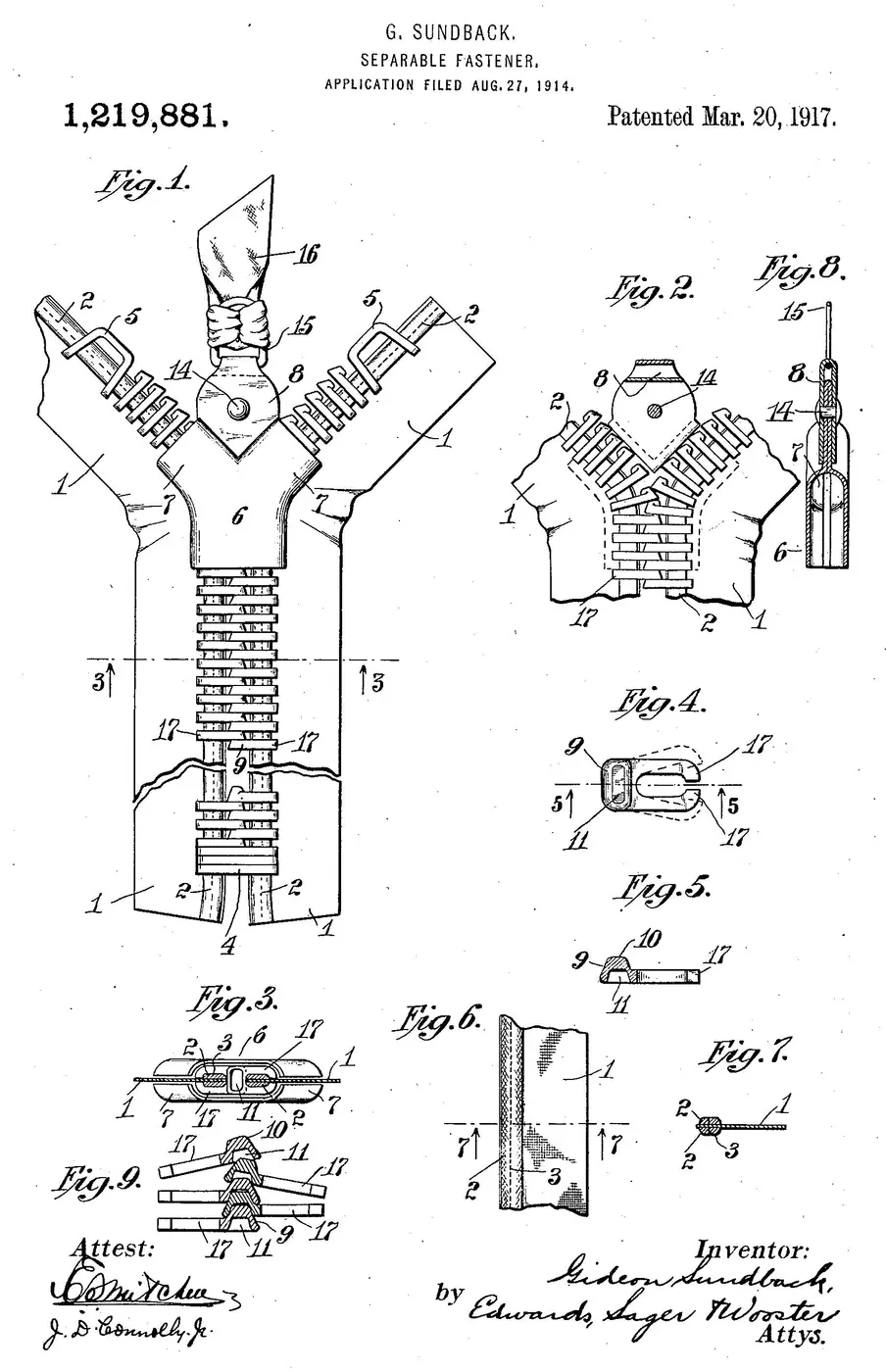

Sundback gave each small tooth a hollow on one face and a bump on the other, so that neighboring teeth would lock firmly together. He also increased the number of teeth from four to ten or eleven per inch (about 2.5 centimeters), making the fastener far less likely to come apart. The improved fastener went on sale in 1913, and in 1917 he received a patent for it as a “separable fastener.” The basics of the zipper we use today were in place by then.
“Zipper” was the name of a boot
Even so, it did not go straight into clothing. What spread its name was a rubber boot.
In 1923, the American tire maker B.F. Goodrich launched rubber galoshes fitted with Sundback-style fasteners. The boots were named “Zippers,” after the zip sound they made when opened and closed. Before long, the fastener itself came to be called a zipper too. “Zipper” was also a registered trademark of Goodrich.
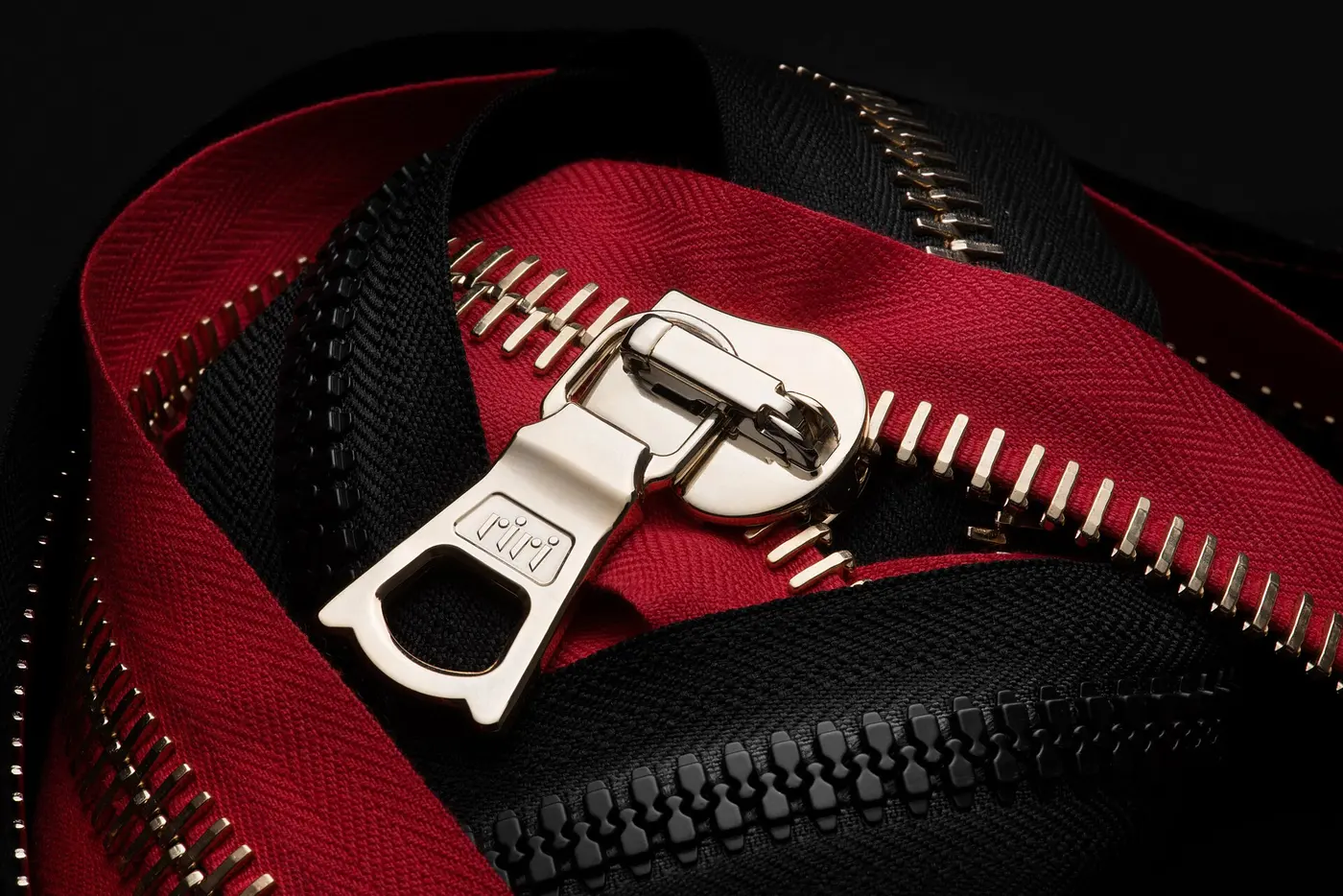

In the 1930s, zippers began to appear in children’s clothing, promoted as a convenient fastener that let kids dress themselves. Trouser flies saw a “battle” with buttons, too. Around 1937, helped along by French designers who adopted it, the zipper beat the button and spread to men’s trousers.
In Japan, it’s a “chakku”
In Japan, many people call a zipper a chakku. The name is said to come from zippers made around 1927 on Mukaishima, an island in Hiroshima Prefecture that is now part of the city of Onomichi, and sold under the trademark “Chakku-jirushi” (Chakku brand), a play on kinchaku, a traditional drawstring pouch.
Japan is also home to YKK, the world’s largest zipper maker. The company was founded in Tokyo in 1934 by Tadao Yoshida, and after World War II it imported machinery from the United States and rapidly expanded production. Today it is said to account for about 45 percent of the world’s zippers by value.