Did people use bread as an eraser before rubber?
Yes. Until rubber came into use around 1770, pencil marks were rubbed out with things like bread.
1770
If you have ever done a charcoal drawing in an art class, you may have been handed a slice of white bread to erase with. That is actually an old tradition. Before the eraser was invented, people in Europe used bread to rub out pencil marks.
So why did bread give way to rubber? According to the story, it all started with a simple mix-up.
Erasers before the eraser
Removing ink has always been difficult. Mistakes on parchment or papyrus were reportedly scraped away, surface and all, with rough stones such as pumice or sandstone.
Pencil and charcoal marks are different: they are just dark powder sitting on top of the paper. For those, people used lumps of wax, or bread with the crust cut off. Rub the soft, slightly moist inside of the bread over the marks, and the dark powder sticks to the bread and comes away.
Bread erasers were in use until surprisingly recently. One man who had been a student in Tokyo during the Meiji era (1868–1912) recalled that bread erasers were handed out in place of rubber ones, with no limit on how many you could take, so he and his classmates would eat the firm parts to take the edge off their hunger.
1770: the man who grabbed rubber instead of bread
The turning point came in 18th-century England. Natural rubber, which had arrived from South America, was still a curiosity, known as “gum elastic” or by its French name, caoutchouc.
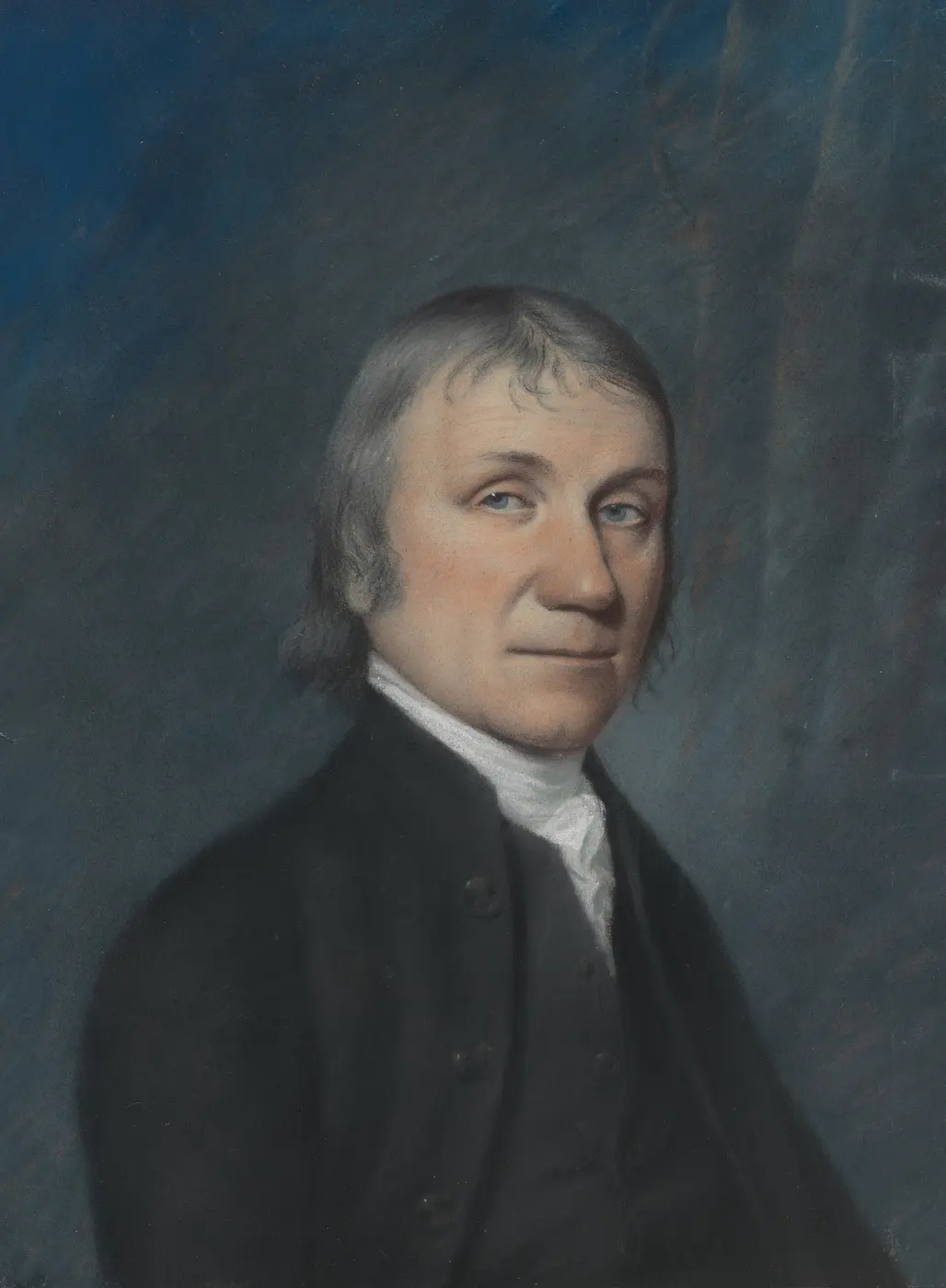

The London scientific instrument maker Edward Nairne is said to have reached for some breadcrumbs and accidentally picked up a piece of rubber instead. When he rubbed the paper with it, the pencil marks vanished. How much of this story, reportedly told by Nairne himself, is true is anyone’s guess, but there is no doubt that he began selling rubber erasers.
On April 15, 1770, the scientist Joseph Priestley, later famous for discovering oxygen, wrote in a footnote to one of his books that he had seen “a substance excellently adapted to the purpose of wiping from paper the mark of black-lead-pencil,” and noted that it was sold at Nairne’s shop. The price was three shillings for a cube about half an inch (1.3 centimeters) on each side. It was quite a luxury.
How “rubbing” gave rubber its name
Around this time, the material itself began to acquire a new name. In English, a “rubber” originally meant any object used for rubbing. Sometime between 1770 and 1778, the word is said to have become attached to this new substance. The English name for rubber came from the eraser.
Raw natural rubber, however, was a difficult material: it melted and turned sticky in the heat and stiffened in the cold. The fix came in 1839, when the American Charles Goodyear discovered vulcanization. Add sulfur to rubber and heat it, and it turns into a springy, long-lasting material. With that, the eraser became a far more everyday item of stationery.
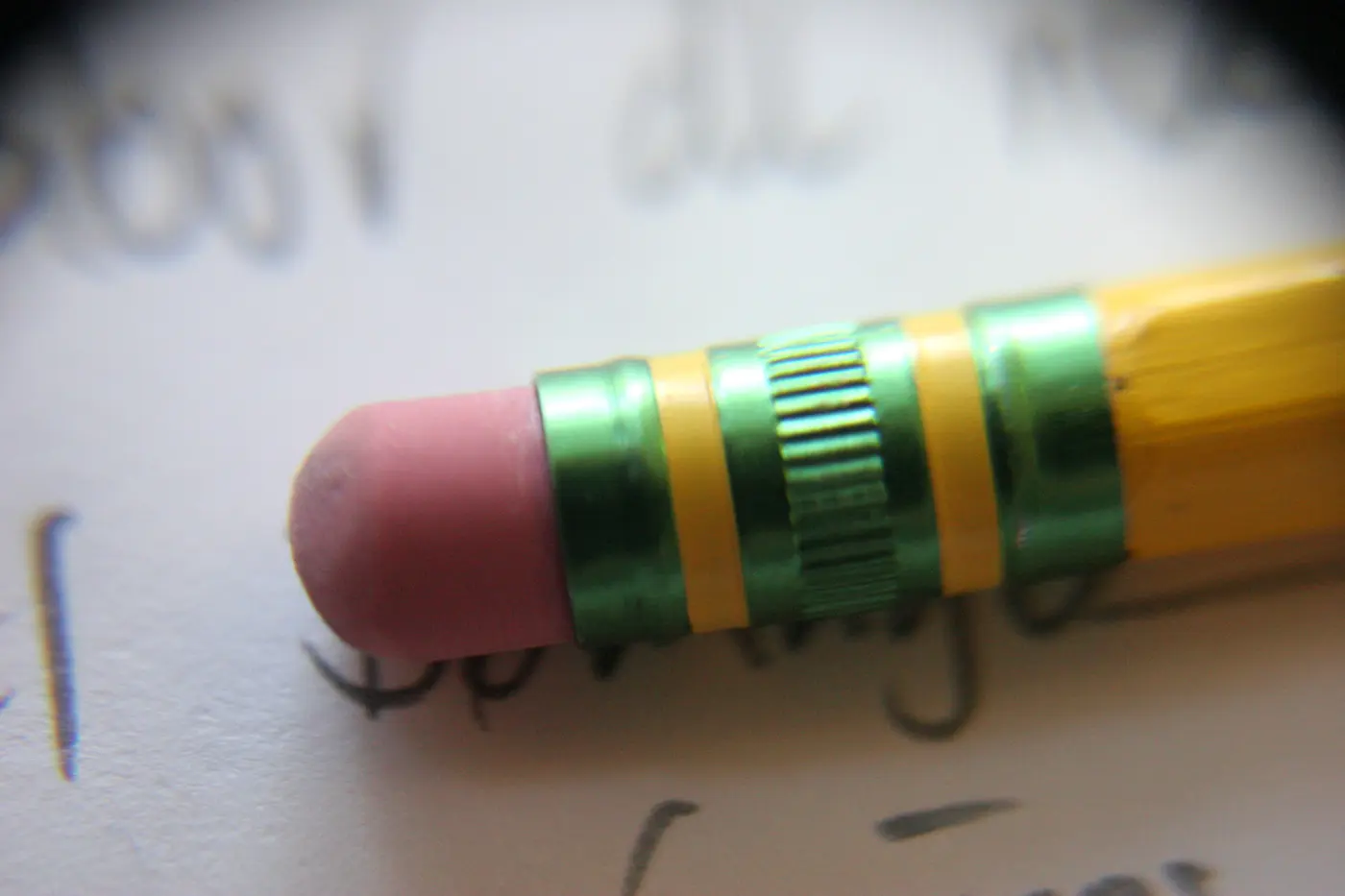

In 1858, Hymen Lipman of the United States received a patent for attaching an eraser to the end of a pencil. The patent was later struck down in court, on the grounds that it merely combined two existing devices.
Plastic erasers and Japan
Most of the erasers on sale in Japanese stationery stores today are not rubber at all but “plastic erasers,” made from materials such as PVC (vinyl). The crumbs wrap up the dark powder and carry it away, so they erase cleanly with a light touch.
A pioneer of this type is the Japanese stationery maker Seed. The company says it began producing plastic erasers in 1956, ahead of the rest of the world. There were also patents for vinyl-based erasers in the United States around the same time, and accounts differ on who came first, but there is no doubt that the plastic eraser truly flourished in Japan. It is a nice irony that the Japanese still call it keshigomu, literally “erasing rubber,” even though there is no rubber left in it.