Why don’t elevators fall?
They hang from several ropes, and an emergency brake automatically grabs the rails if the car goes too fast.
Riding an elevator in a tall building, have you ever found yourself thinking about what is under your feet? What if the rope holding up this box were to snap? In movies and TV dramas, an elevator plummeting down its shaft after the cable breaks is a familiar scene.
Real elevators have layer upon layer of safeguards against exactly that. It all began in the mid-19th century, with a small idea from a mechanic in the United States.
When a broken rope meant disaster
Steam- and water-powered hoists for lifting goods already existed in the first half of the 19th century. But if the hoisting rope broke, the platform simply fell. They were far too dangerous to be trusted for carrying people.
Around 1852, Elisha Otis, who was installing machinery at a bedstead factory in Yonkers, New York, fitted a hoist used to carry heavy equipment to the upper floor with a device to stop it from falling. Here is how it worked. A wagon spring was mounted on top of the platform and held compressed by the pull of the hoisting rope. If the rope broke and that pull disappeared, the spring snapped open, and catches at its ends hooked into saw-toothed rails fixed along both sides of the shaft. The moment the rope failed, the platform braked itself.
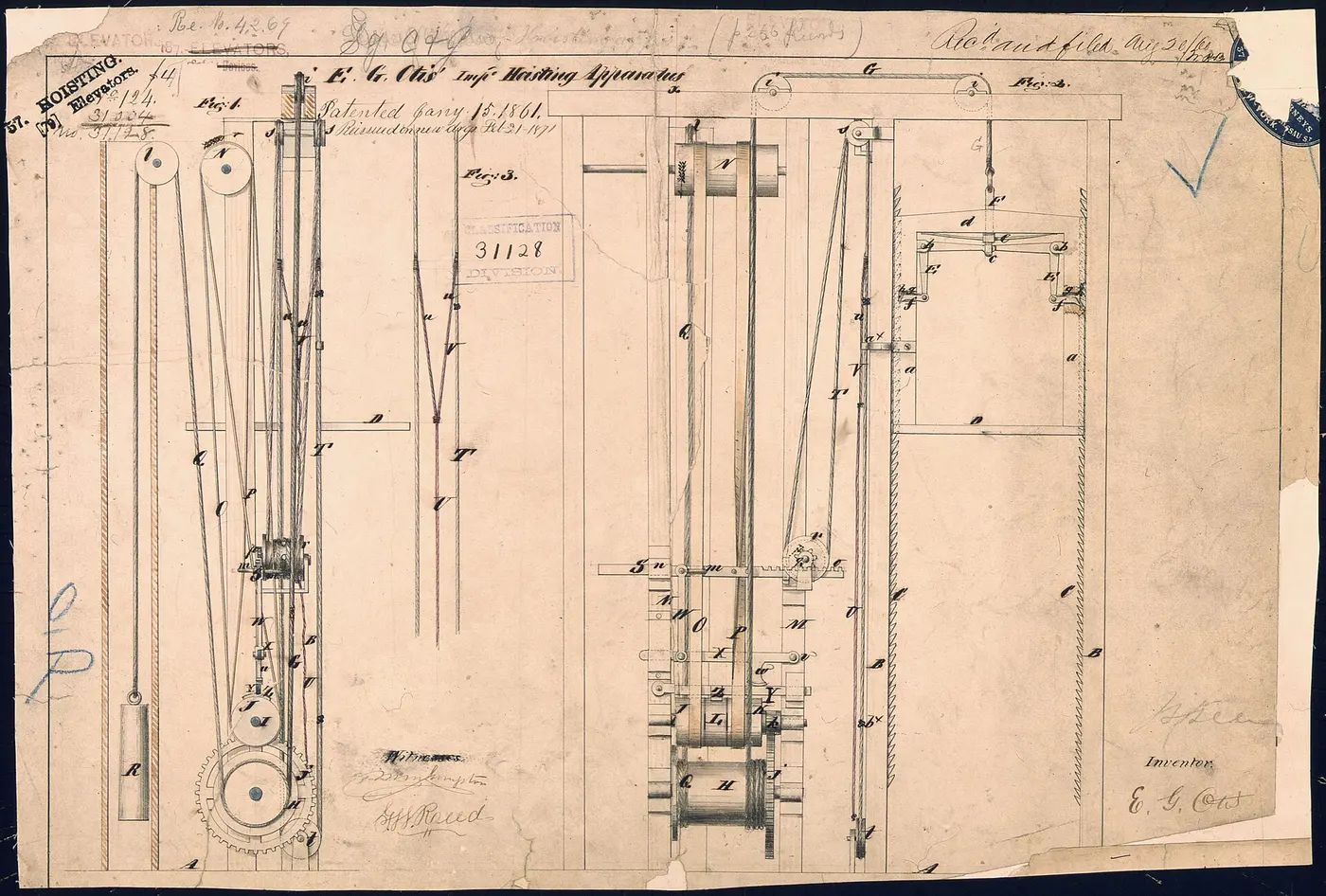

In 1854, Otis unveiled the device at New York’s Crystal Palace exhibition hall. In front of the crowd, he rode the platform high into the air and had the hoisting rope cut. The platform dropped only slightly before stopping. Otis is said to have doffed his hat and announced, “All safe, gentlemen.”
The device that opened the door to skyscrapers
On March 23, 1857, the first passenger elevator with Otis’s safety device was installed in the E. V. Haughwout Building, a china and glassware store at 488 Broadway in New York. The five-story building still stands on the same spot.
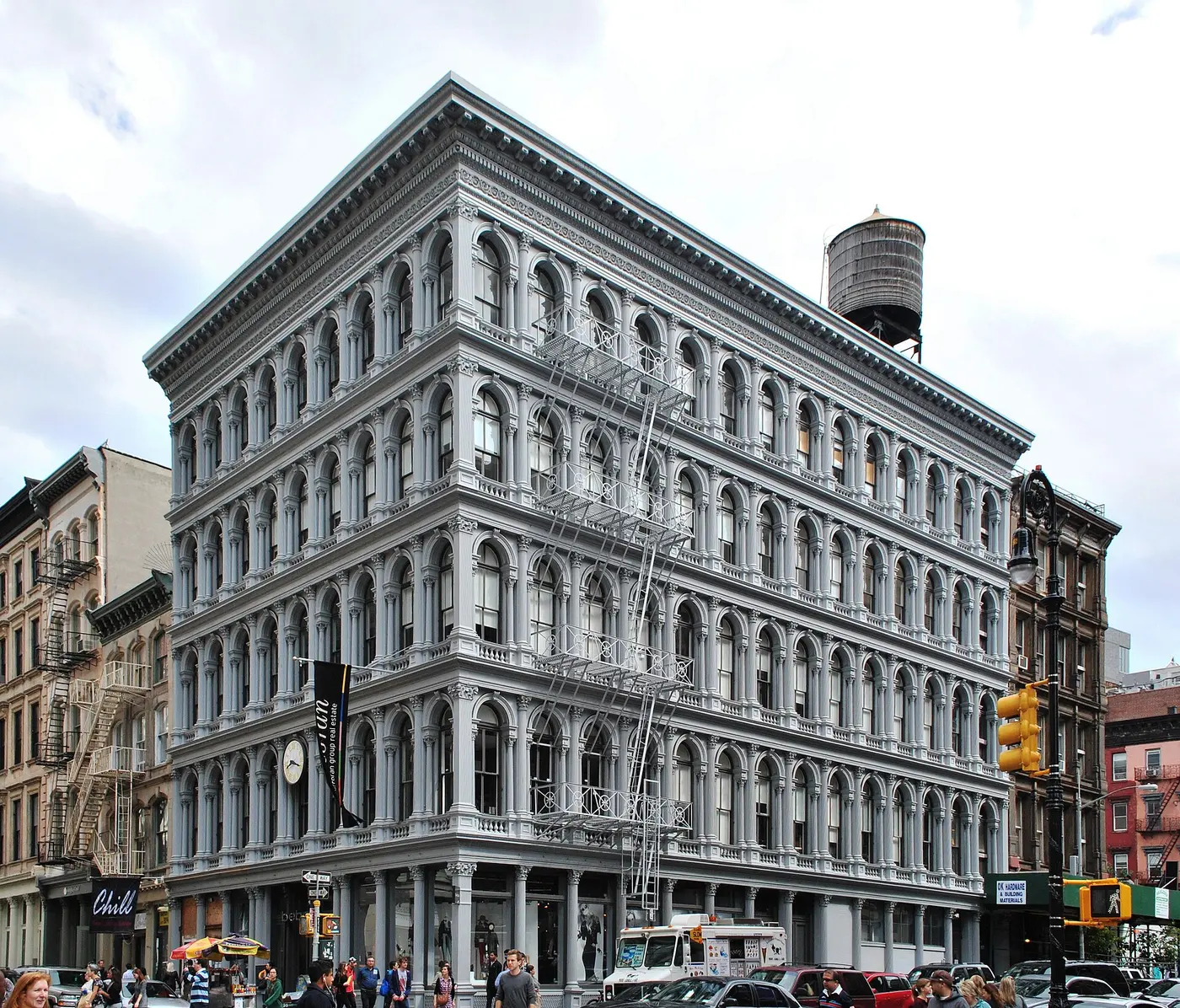

Letting people ride safely to upper floors changed the height of buildings themselves. There is a limit to how many stairs anyone wants to climb, but with an elevator, dozens of floors are no problem. The age of the skyscraper that began in the late 19th century is hard to imagine without this safety device.
The many layers of protection in a modern elevator
Modern elevators are protected even more carefully. To begin with, the car hangs not from one rope but from several, each built with a large margin of strength. In Japan, three or more ropes are standard, and the chance of all of them breaking at once is extremely small.
If, despite all this, the car starts moving too fast, the governor comes into play. It is a device turned by a separate rope that travels with the car, and when the speed climbs too high, centrifugal force trips it. Under Japanese standards, the governor cuts power to the motor and applies the brake before the car exceeds roughly 1.3 times its rated speed, and grips the governor rope before it exceeds 1.4 times. That triggers the safety gear beneath the car, which drives wedges against the rails and forces the car to a stop. At the very bottom of the shaft there are also buffers to soften any impact.
This has been put to the test. In 2011, all three ropes holding an elevator car at Heiwadai Station on the Tokyo Metro snapped. The car dropped a few meters before the safety gear stopped it, and the woman inside escaped with bruises.