Was the barcode born on a beach?
Yes. In 1949, Joseph Woodland is said to have come up with it by drawing Morse code in the sand at Miami Beach.
10billion+
At the supermarket checkout, the cashier passes an item over the scanner, there is a beep, and the price appears on the screen. Black-and-white stripes are printed on bags of snacks, milk cartons and the backs of books.
The idea behind the barcode, the story goes, came to a young engineer more than 70 years ago as he ran his fingers through the sand on a beach.
A supermarket boss’s problem
It began in 1948 at the Drexel Institute of Technology in Philadelphia. A graduate student named Bernard Silver overheard the head of a local supermarket chain asking the dean whether the school could find a way to capture product information automatically at the checkout. The dean turned him down, but Silver could not let it go and mentioned it to his friend Joseph Woodland, who was also at Drexel.
Keying in prices one by one at the register was slow and invited mistakes. Could products carry some kind of mark that a machine could read? The two set to work on the problem.
To concentrate on it, Woodland left Drexel for a while and moved into his grandfather’s apartment in Miami Beach, Florida.
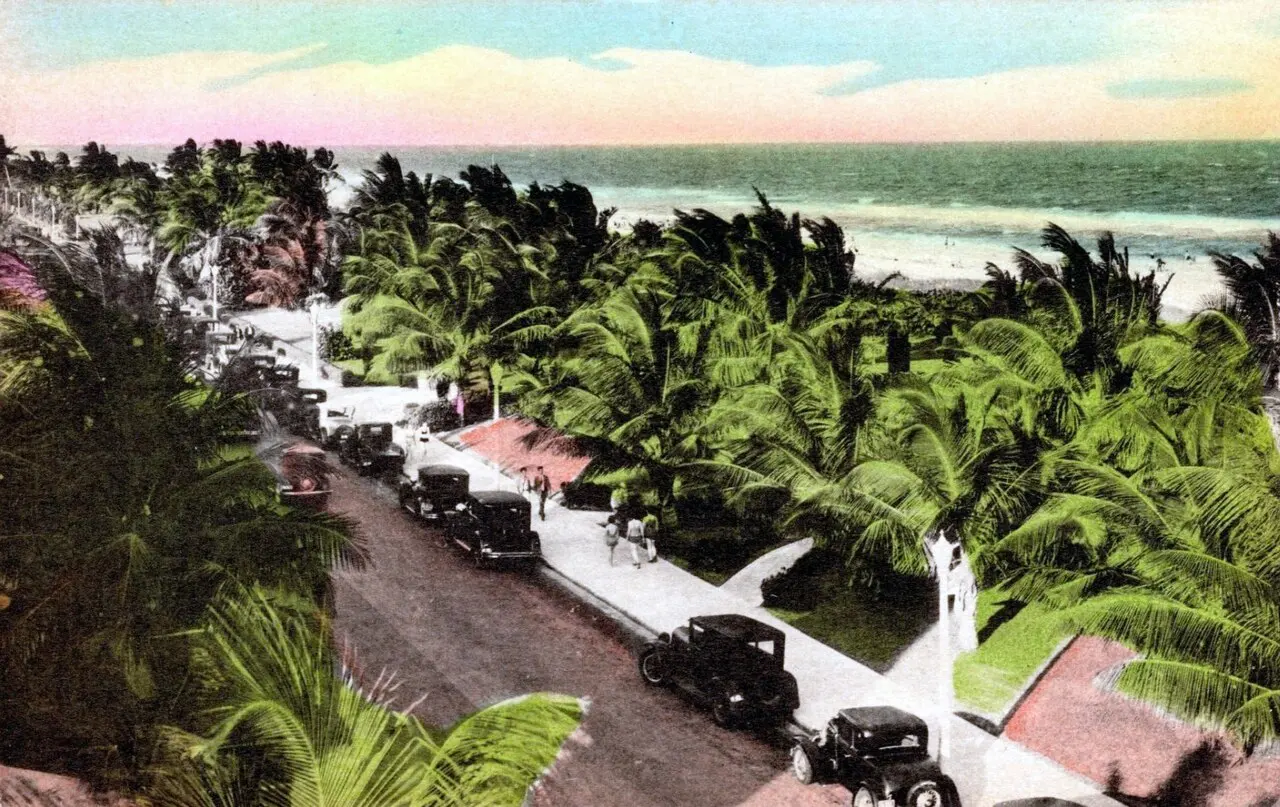

Morse code in the sand
His inspiration was Morse code, which he had learned as a Boy Scout: the system that spells out letters with combinations of dots and dashes.
One day in 1949, sitting on the beach, Woodland drew dots and dashes in the sand and then dragged them toward himself with his fingers. The dots became thin lines and the dashes became thick ones. He later recalled that he had been thinking about dots and dashes when he poked four fingers into the sand, pulled his hand toward him, and found he had four lines. Information expressed as a row of lines of different widths: that was the seed of the barcode.
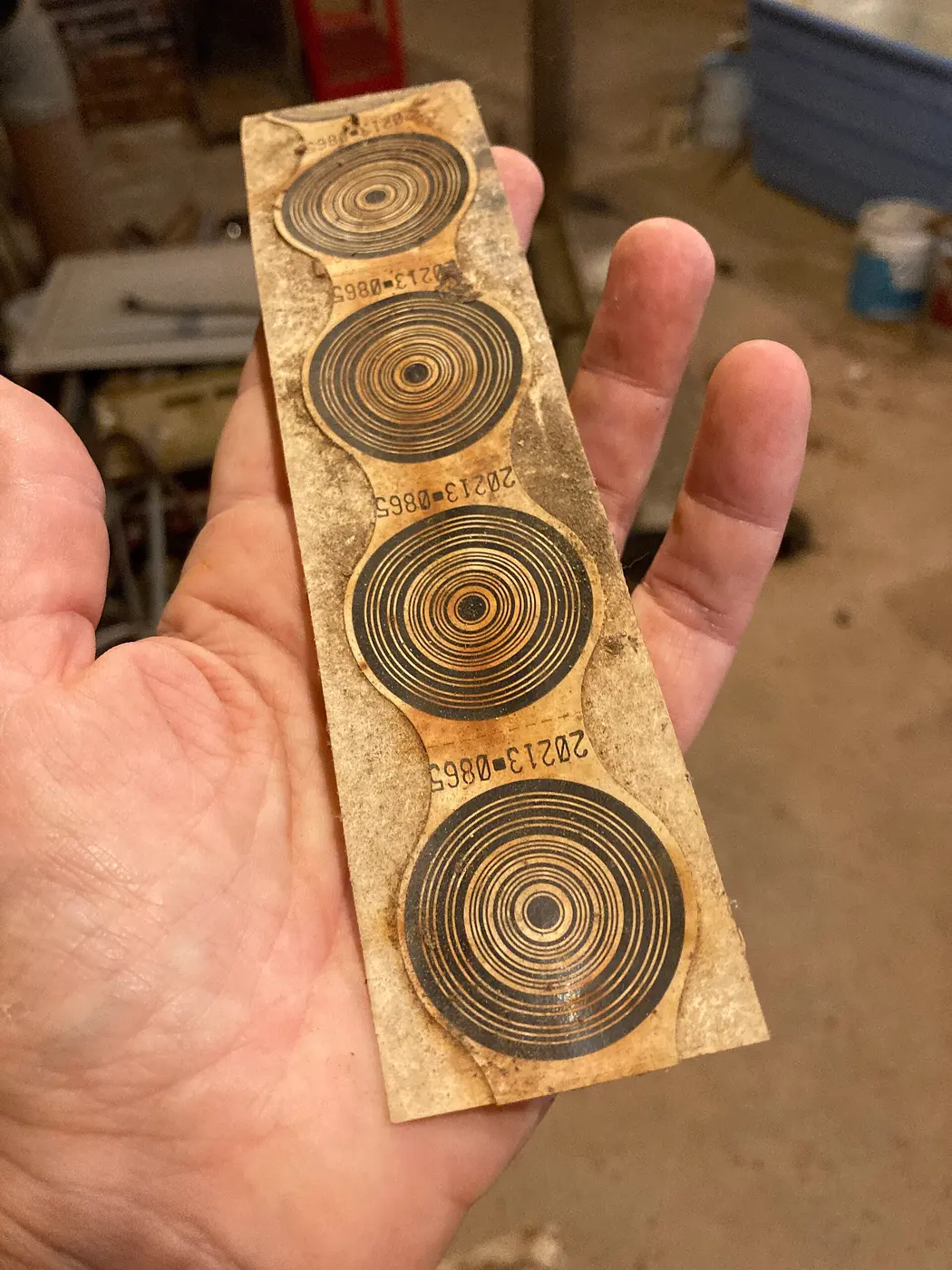
The two filed for a patent in October 1949, and it was granted in October 1952. Besides rows of straight lines, the patent included a design in which the lines were bent into closed circles, like a target. A circular code reads the same from any direction.
Twenty years for the world to catch up
The idea could not be put to use right away, though. There was not yet a light source that could reliably read fine printed lines, nor computers to handle the information once it was read. In 1952 the pair sold their patent to the electronics maker Philco for 15,000 dollars, and it later passed to RCA.

In the 1970s, advances in lasers and computers finally put the idea within reach. RCA tested its bull’s-eye code in a supermarket, but in 1973 the American grocery industry chose as its common standard a code of vertical bars designed by George Laurer at IBM, which printed more reliably. Woodland himself took part in IBM’s work on it. The result was the Universal Product Code, or UPC, still in use today.
The first beep was for chewing gum
Just after 8 a.m. on June 26, 1974, at a supermarket in Troy, Ohio, a product barcode was scanned at a checkout for the first time. The item was a 10-pack of Wrigley’s Juicy Fruit gum, and the register rang up 67 cents.
Japan adopted its own version of the European standard, known there as the JAN code, in 1978. In 1982, the convenience store chain 7-Eleven Japan introduced a barcode-based point-of-sale system and asked its suppliers to print barcodes on their products, and the codes spread rapidly. Today, barcodes following the standards of GS1, the international organization that manages them, are said to be scanned more than 10 billion times a day.