Did Alexander Graham Bell invent the telephone?
Bell got the patent, but several others were working on the telephone at the same time, and the debate goes on.
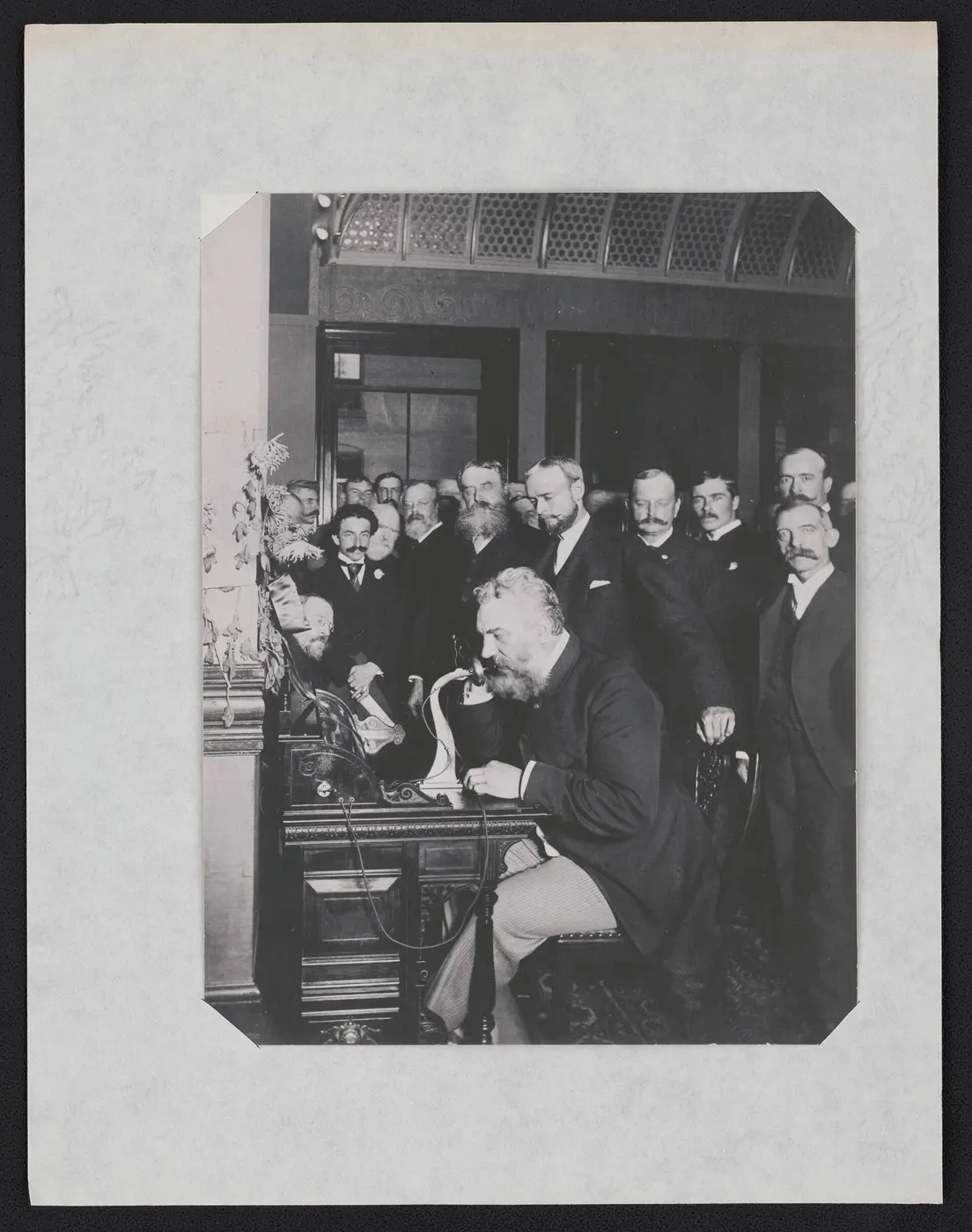
Who invented the telephone? Ask almost anyone and they will say Alexander Graham Bell. Equally famous is the story that the first words ever sent by telephone came in 1876, when Bell called to his assistant in the next room: “Mr. Watson, come here, I want to see you.”
Yet the story of the telephone’s birth has several other candidates for the leading role. One of them died convinced that he was the real inventor.
Two documents on the same day
On February 14, 1876, two documents concerning the telephone arrived at the patent office in Washington. One was a patent application delivered by Bell’s lawyer. The other came from the lawyer of Elisha Gray, an inventor from near Chicago: a caveat, a document that gave advance notice of an invention for which the inventor intended to apply for a patent.
Bell’s patent was granted on March 7. Three days later, on March 10, his experiment succeeded, and the famous “Mr. Watson” moment was born. But the transmitter Bell used that day, which dipped a needle into liquid to turn the voice into a varying electric current, closely resembled the design drawn in Gray’s caveat. Whether Bell had learned the contents of Gray’s document from a patent examiner was later fought over in court, but the testimony of those involved conflicted, and the question has never been settled.

The “telettrofono” of Staten Island
Go back further still, and you reach the Italian-born inventor Antonio Meucci. After settling on Staten Island, New York, in 1850, Meucci built a device that carried voices between his bedroom and his workshop. An improved version was named the “telettrofono,” and in 1870 he reportedly succeeded in sending a voice about a mile (roughly 1.6 kilometers).
In December 1871, Meucci filed a caveat with the patent office titled “Sound Telegraph.” He never filed a full patent application, however, and after 1874 he stopped renewing the caveat. It is often said that he could not afford to, but that explanation is disputed, since he was taking out patents on other inventions around the same time.
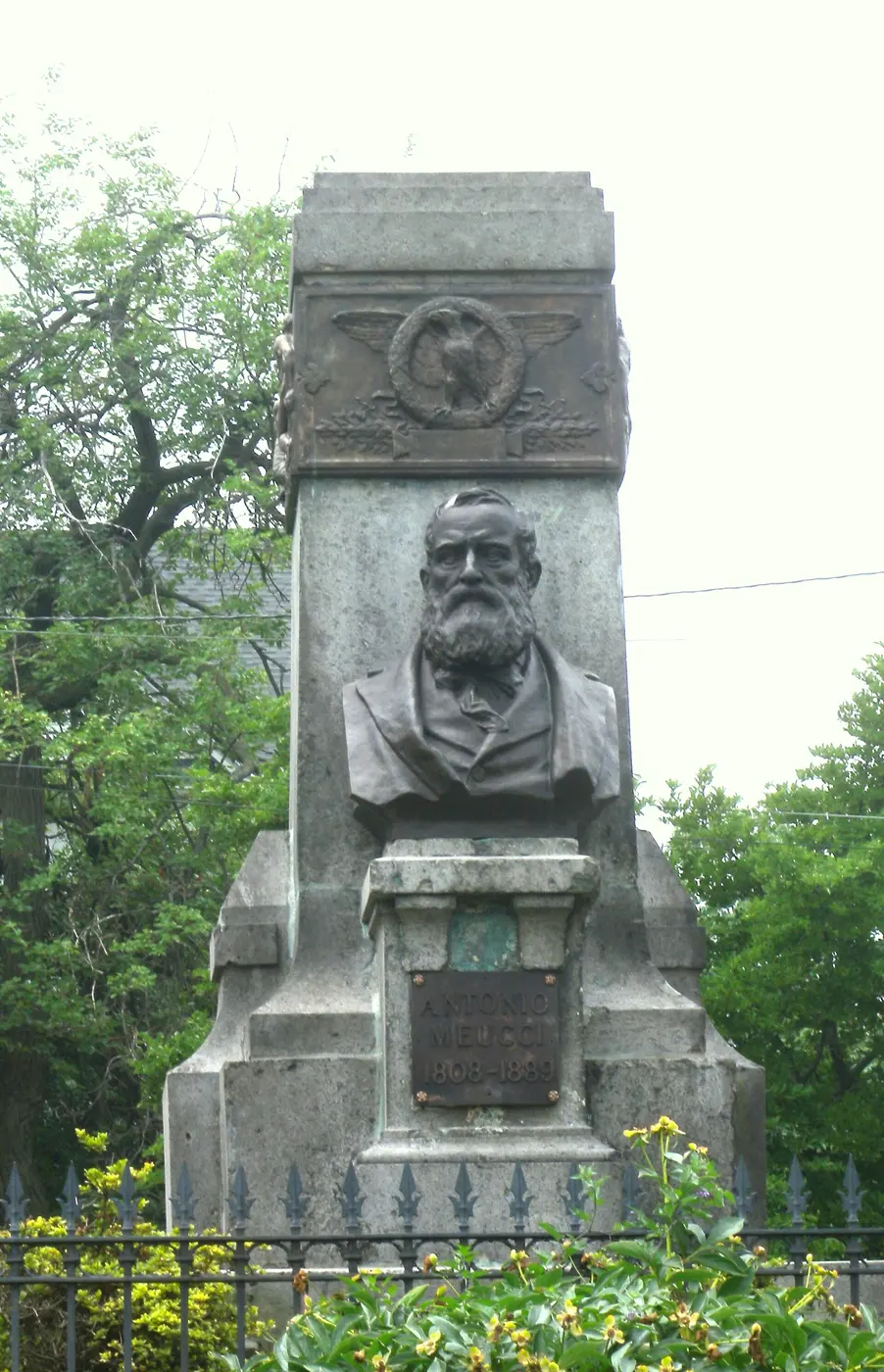

Meucci’s caveat, though, did not clearly describe a way of turning the voice into an electrical signal and sending it. In an 1887 court case, his device was judged to be merely mechanical, carrying vibrations along a taut wire. Meucci’s supporters objected, and the dispute carried on after his death.
What did the 2002 resolution actually say?
In 2002, the U.S. House of Representatives passed a resolution about Meucci. Its preamble states that “if Meucci had been able to pay the $10 fee to maintain the caveat after 1874, no patent could have been issued to Bell,” and it declares that his work in the invention of the telephone should be acknowledged.
The resolution is sometimes reported as having recognized Meucci as the inventor of the telephone. But what it actually refers to is “his work in the invention of the telephone”; it does not state outright that Meucci was the sole inventor. No vote was held on a similar resolution in the Senate, and shortly afterward the Parliament of Canada, where Bell had lived and continued his research, passed a motion declaring Bell the inventor of the telephone.
No invention is the work of one person
There were others, too. In 1861, Philipp Reis of Germany presented a device that transmitted sound electrically and called it a “Telephon.” Among the improvements that made the telephone practical, Edison’s transmitter played a major role. Bell’s patents are said to have been fought over in some 600 lawsuits.
So, did Bell invent the telephone? Perhaps the most accurate answer is: “Bell was the first to get the patent and opened the way to a practical telephone, but he was not the only one chasing that dream.”