Why is wombat poop cube-shaped?
Their intestinal walls have stiff and flexible sections that put corners on the drying, hardening feces.
100droppings
Walk through the forests of southeastern Australia or Tasmania, and you may come across a cluster of small brown lumps sitting on a rock or a fallen log. Look closely, and you’ll see they are cubes with neat corners, like dice.
They are the droppings of the wombat, a stocky marsupial that lives in burrows it digs in the ground. Why would something so square come out of a living creature?
Dice on a rock
The wombat in question is mainly the species known as the common wombat. It is about 1 meter (a little over 3 feet) long, eats grasses and roots, and is most active at night.
Its droppings are almost perfect cubes about 2 centimeters on a side, and a single wombat is said to produce around 80 to 100 of them in one night. What’s more, wombats don’t just drop them anywhere. They prefer to leave them in conspicuous places, such as on rocks and fallen logs or near the entrance to a burrow.
Wombats are said to have rather poor eyesight but a keen sense of smell. Their droppings are thought to serve as a kind of message board, using scent to tell others “who’s around here.”
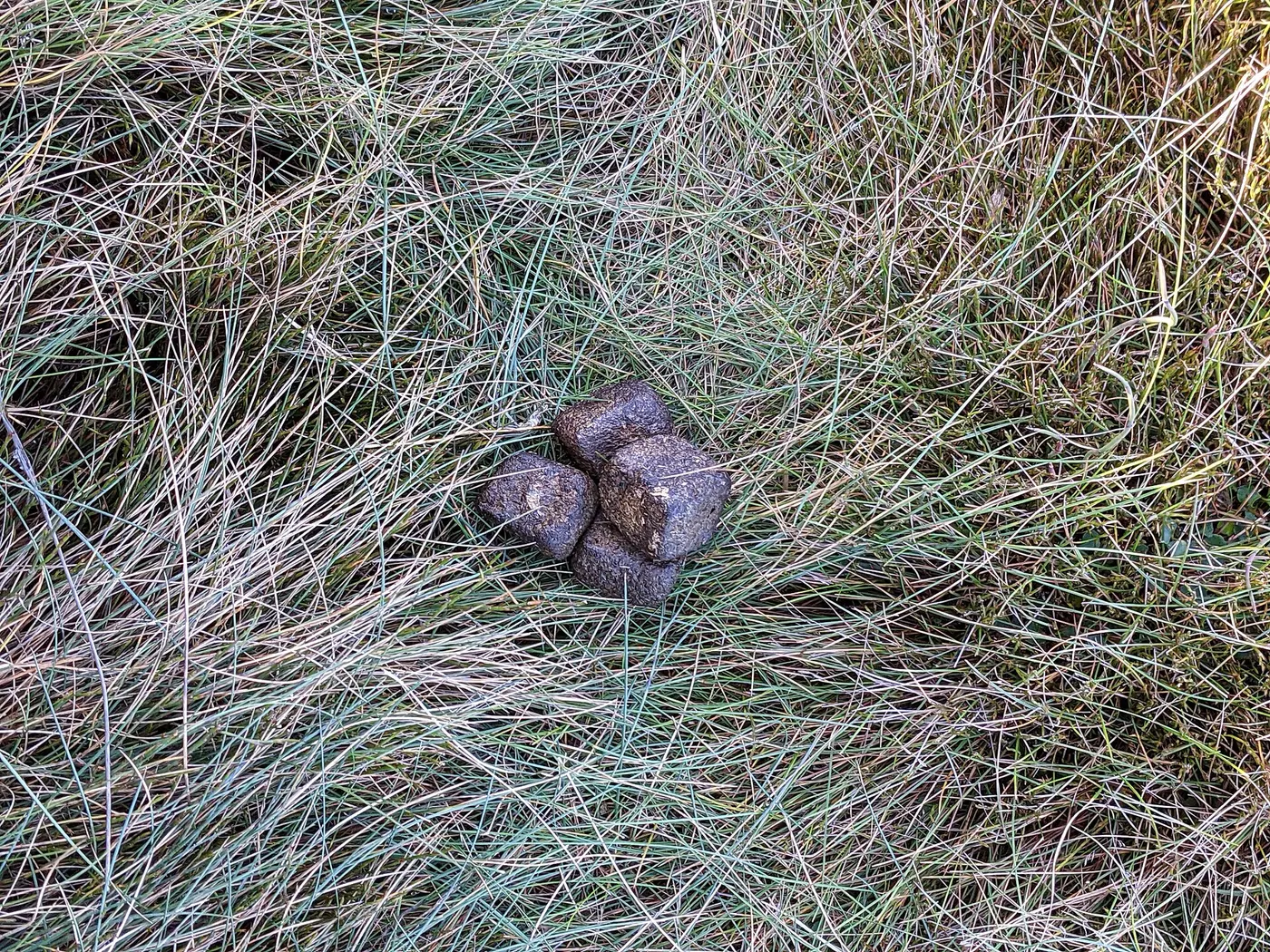

It’s not a square bottom
Hear about cube-shaped poop, and you might be tempted to imagine that the wombat’s exit is square. But a wombat’s anus is round, just like those of other mammals. The droppings are not shaped at the exit, as if pressed out of a mold.
The team that tackled the mystery in earnest was led by Patricia Yang, an engineer at the Georgia Institute of Technology in the United States who studies how animal bodies work. Working with researchers at the University of Tasmania in Australia, they closely examined the digestive tracts of wombats that had been euthanized after being hit by cars.
They found that through most of the intestine, the feces were still soft as mud and had no set shape. Near the end of the intestine, though, they suddenly lost water, hardened and separated into lumps with corners. The cube shape was being formed inside the intestine, not outside the body.
Stiff spots and soft spots in the intestinal wall
So how are corners made inside the intestine? The researchers emptied the intestines, inserted long, thin balloons and inflated them to measure where, and by how much, the intestinal walls stretched.
They found that the walls stretched differently in different places. According to a paper published in 2021, the intestine has two stiff regions and two flexible regions running around its circumference. When the intestine contracts to push the feces along, the stiff regions contract quickly and strongly, while the flexible regions move slowly. This difference is thought to give the feces their corners and flat faces.
The other key is how dry the feces are. A wombat’s intestines are about 10 meters (33 feet) long, roughly ten times the length of its body. Food takes much longer to travel through them than it does in humans, and along the way a great deal of water is absorbed. The resulting dry, hard feces hold on to the corners they acquired in the intestine as they emerge.
In 2019, this research won the Ig Nobel Prize in Physics, an award for research that “makes people laugh, and then think.” The researchers have also suggested that it might offer hints for new manufacturing methods for making angular shapes out of soft materials.
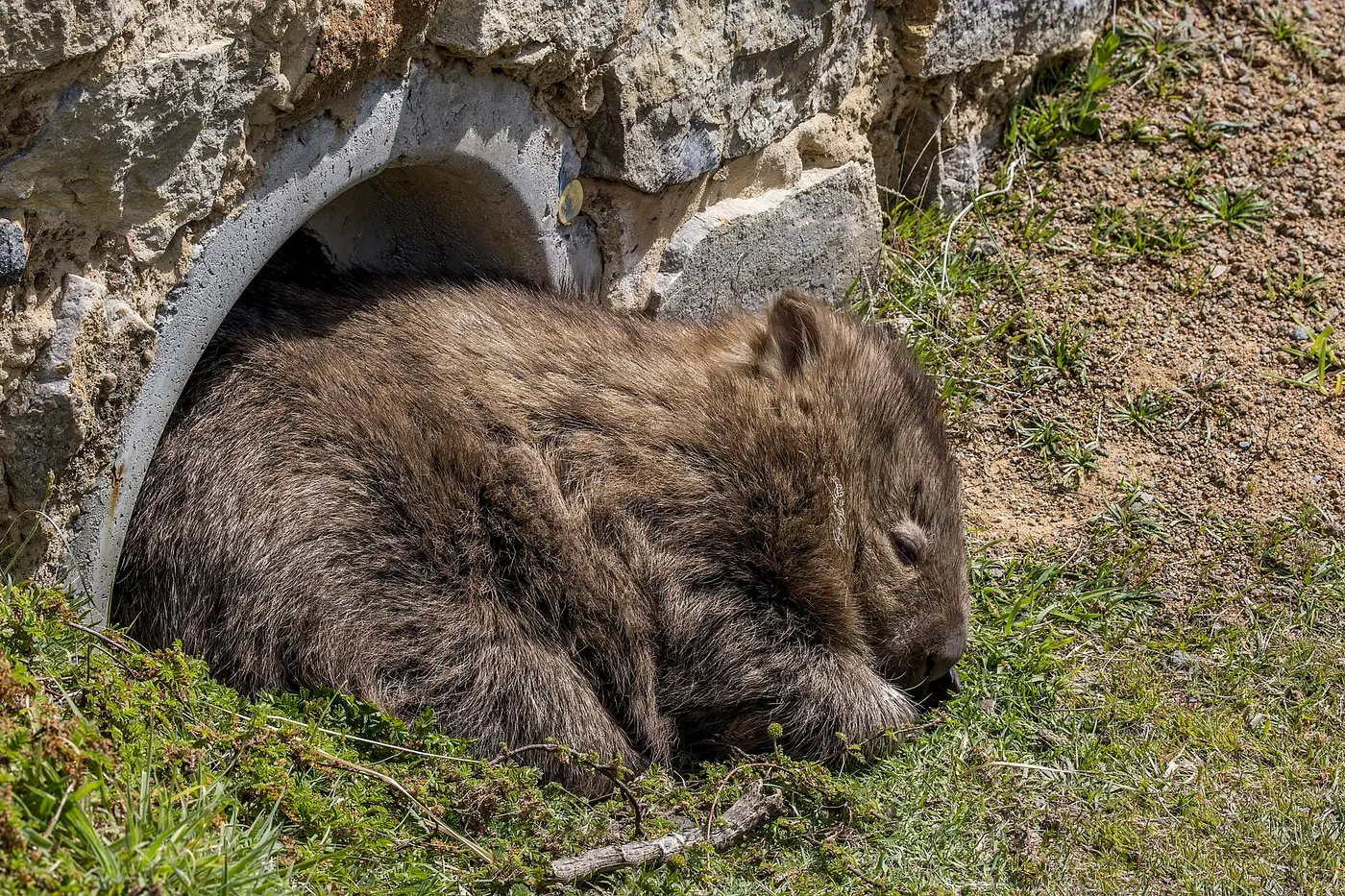

Why does it have to be square?
We now understand a good deal about how the shape is made, but the evolutionary reason for “why cubes?” is still unclear.
A commonly cited theory is that cube-shaped droppings are less likely to roll off when placed on a prominent rock or log. If you are using them as a scent message board, it helps if they stay where you put them. This, however, is only a leading hypothesis, not an established fact. As far as we know, the wombat is the only animal that produces cube-shaped droppings.