Do penguins have knees?
Yes. Their thighs and knees are hidden inside their feather-covered bodies.
Watch penguins at an aquarium and it is hard not to be charmed by the way they shuffle along on their short little legs. With feet that seem to sprout straight out of their bodies, it is easy to believe they have no knees at all.
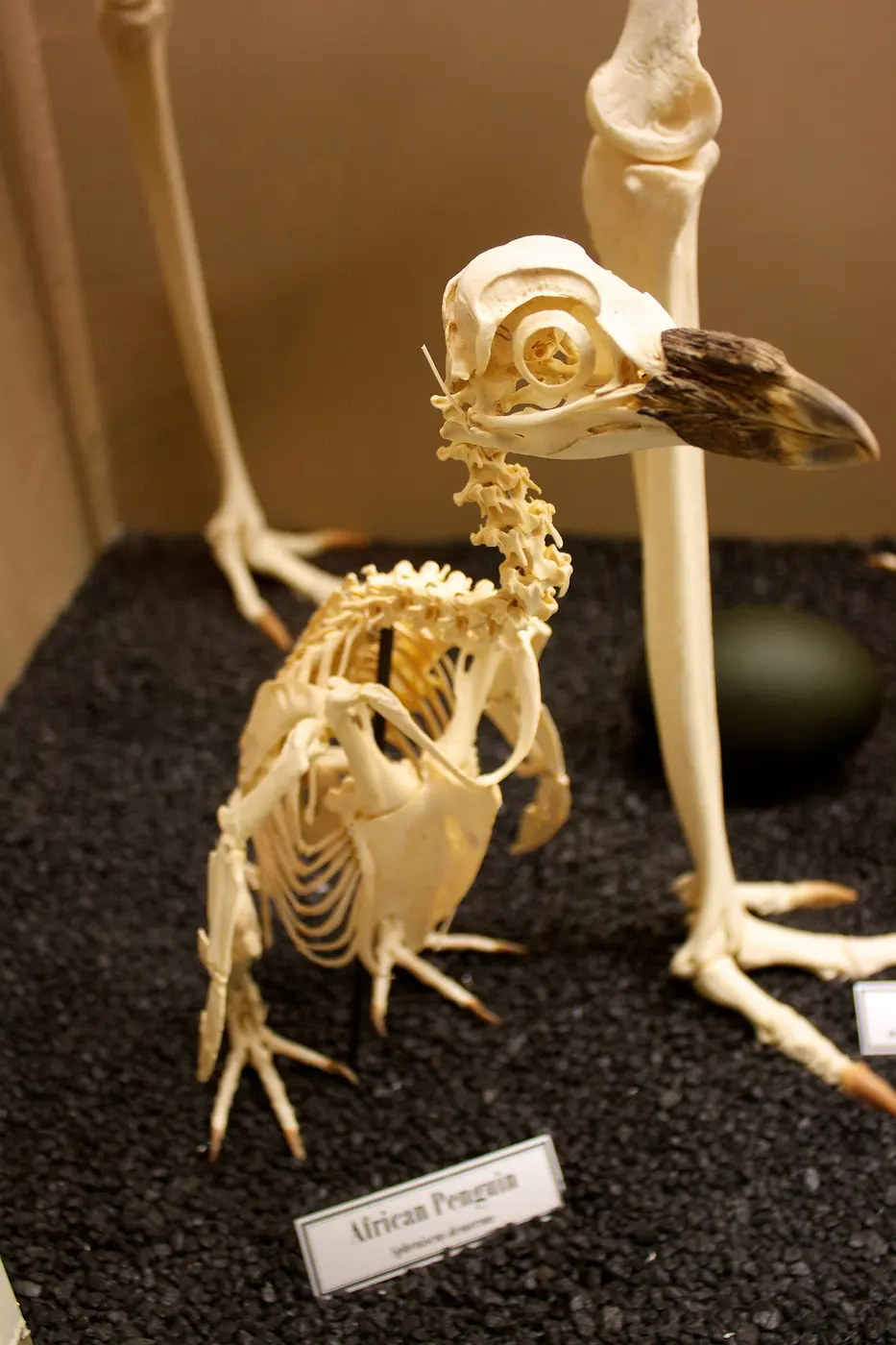
But penguins do have knees. What’s more, their legs are much longer than they look. We just can’t see the knees, because they are tucked away inside the feather-wrapped body.
A permanent wall sit under the feathers
The skeleton of a penguin’s leg is basically built the same way as any other bird’s. A thighbone, or femur, extends from the hip to the knee joint, followed by the shinbone and then the bones from the ankle down.
What’s different is the posture. A penguin’s thighs are folded up along its body, and its knees stay deeply bent, packed inside thick layers of fat and feathers. Whether standing or walking, if you look at the skeleton alone, the penguin is always in a low crouch. In human terms, it is a bit like holding a wall sit forever, without the wall.
The short “legs” we see from the outside are mainly the lower part of the shin and everything from the ankle down. Penguins look short-legged not because their legs are short, but because they keep most of their legs tucked inside their bodies.

A bird’s “backward knee” is really its heel
While we’re at it, let’s clear up a common misconception about birds in general, not just penguins. Look at the legs of a pigeon, a chicken or a flamingo, and you will see a joint that bends the opposite way from a human knee. Plenty of people take one look and conclude that “bird knees bend backward.”
In fact, that joint is not a knee at all but the heel, or ankle. Birds are, in effect, always walking on tiptoe. The long, slender part below the heel corresponds to the bones in the top of a human foot. The real knee sits higher up, hidden in the feathers, and it bends the same way ours does.
So every bird’s knees are hidden in its feathers to some degree. Penguins are simply an especially extreme case.
In water, folding up is the smart move
So why do penguins keep their legs tucked away like this? The main reason is thought to lie in their life in the water.
Penguins are birds that “fly” underwater, using their wings like flippers. If their legs dangled from their bodies, they would create a lot of drag. By folding the legs inside the body and letting only the short feet trail behind, the penguin takes on a streamlined, low-drag shape. While it swims, the feet and tail act as rudders to adjust its direction.
This shape is also thought to make sense as protection against the cold. The fewer parts that stick out from the body, the less heat is lost to icy water and wind.
The waddle actually saves energy
The trade-off is a peculiar way of walking on land: that famous waddle, rocking from side to side. At first glance it looks like a wasteful way to walk, but according to an American study published in the journal Nature in 2000, that may not be the case.
When researchers measured the walking of emperor penguins in detail, they found that by rocking from side to side, the birds swap potential energy and kinetic energy back and forth like a pendulum, efficiently recycling the energy used to walk. The recovery rate reached as high as about 80%, outdoing human walking (about 65%). Penguins do spend a lot of energy walking, but that is thought to be because they must move their short legs so quickly, not because of the waddle.
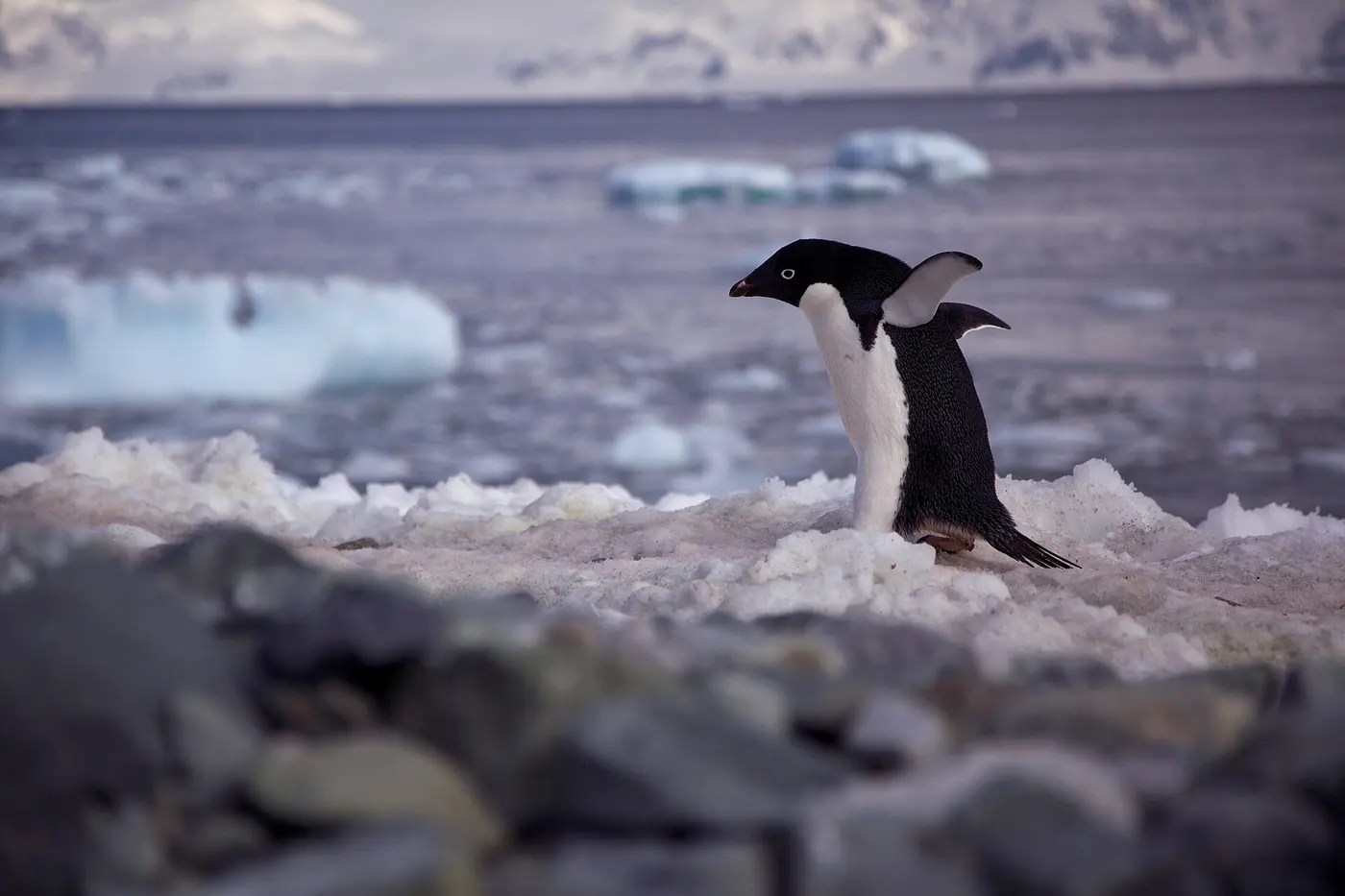

Then again, perhaps penguins themselves don’t consider walking their strong suit. When traveling long distances over snow and ice, they can often be seen flopping onto their bellies and pushing with their wings and feet, gliding along like sleds.