Why are sloths so slow?
They live on nutrient-poor leaves, and their whole body is adapted to use as little energy as possible.
8days
High in the rainforests of Central and South America, an animal hangs motionless from a branch by its long claws. This is the sloth. When it does move, even reaching out one arm takes so long that watching it can test your patience.
In Japanese its name, namakemono, means “lazy one,” and in English it is called a sloth, the same word as one of Christianity’s seven deadly sins. But sloths aren’t being lazy. Being slow is their survival strategy.
Leaves alone don’t give you much energy
Sloths fall into two groups: two-toed sloths, with two fingers on each front foot, and three-toed sloths, with three. Three-toed sloths in particular live almost entirely on tree leaves.
Leaves are everywhere and easy to get, but they are low in nutrients, full of tough fiber and hard to digest. Sloths have a stomach divided into several chambers, and with the help of the microbes living inside, they break leaves down little by little. It is said that food can take a month or more to make its way through a sloth’s body.
In other words, sloths are animals with very little energy coming in. That leaves just one way to survive: cut the energy going out to the bare minimum.
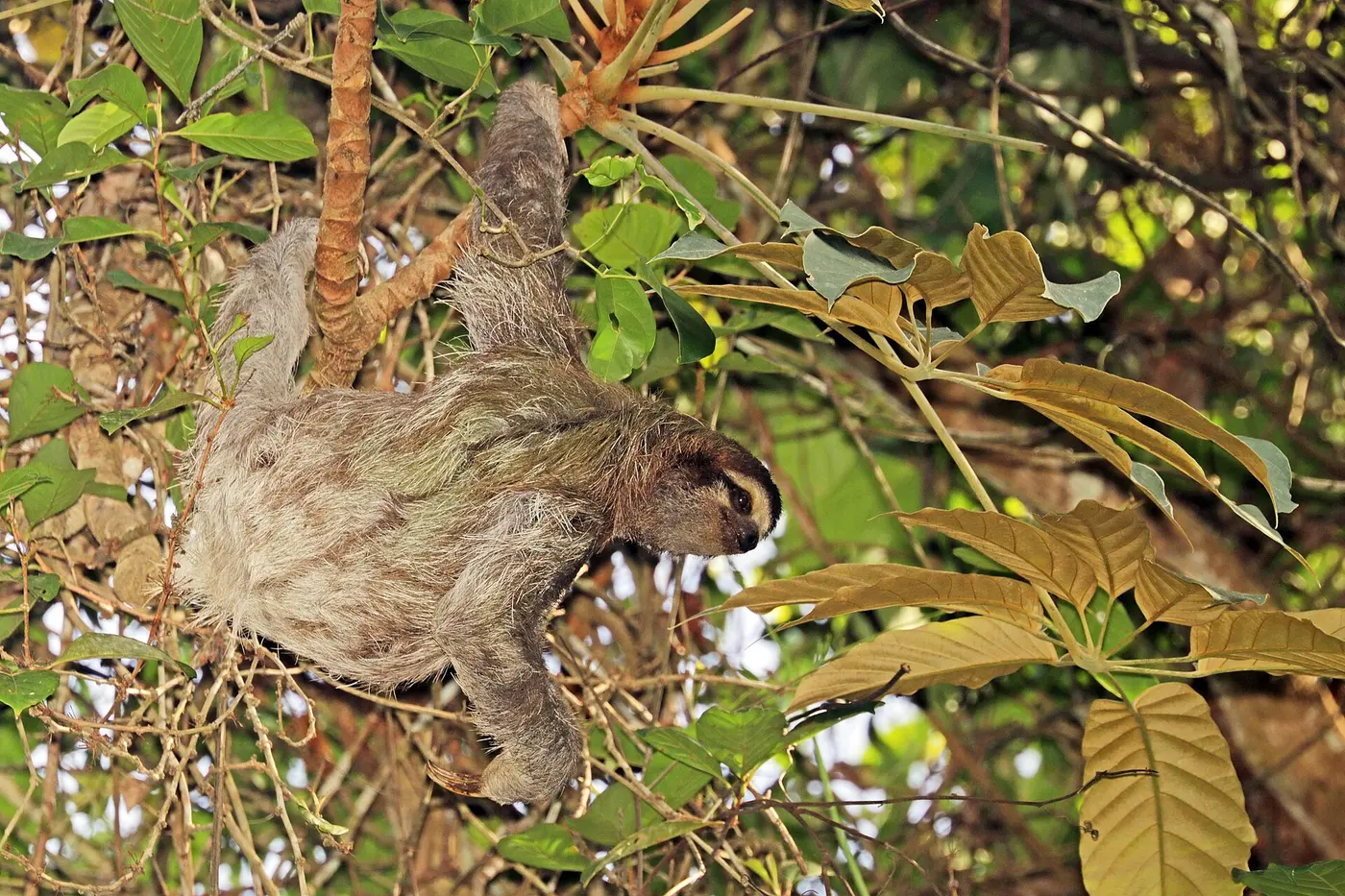

The most energy-efficient mammal
A sloth’s body is built for saving energy from top to bottom. Its resting metabolism is only about half of what would be expected for a mammal of its size. Muscle makes up only about 25 to 30% of its body weight, well below the 40 to 45% typical of other mammals.
In 2016, Jonathan Pauli of the University of Wisconsin and his colleagues measured how much energy wild sloths in Costa Rica actually use in a day. Three-toed sloths used 31% less than two-toed sloths, lower than any mammal ever measured, apart from those in hibernation.
Sloths handle body temperature in their own way, too. Even when active, their body temperature is a lowish 30 to 34°C (86 to 93°F), and it rises and falls with the air around them. Sunbathing at the top of a tree is thought to be a way of warming up. Algae grow in their fur, and the greenish tint is also said to help them hide among the leaves.
A weekly trip to the toilet
There is one thing that brings a sloth down from its tree: going to the bathroom. About once every week to eight days, a three-toed sloth climbs down to the ground, digs a small hole at the base of the tree, defecates, and covers it up again. The feces and urine it passes in one go are said to amount to as much as a third of its body weight.
Why climb all the way down when it could simply let go from the branches? This is one of the great mysteries of sloth research. In 2014, Pauli and his colleagues proposed that moths living in the sloth’s fur are involved. The moths lay their eggs in sloth dung, and the adults that grow up there fly back to the sloth’s fur. The idea is that the moths bring in nutrients that help the algae in the fur grow, and the sloth eats that algae to supplement its diet. This hypothesis is still disputed, however, and the question remains open.
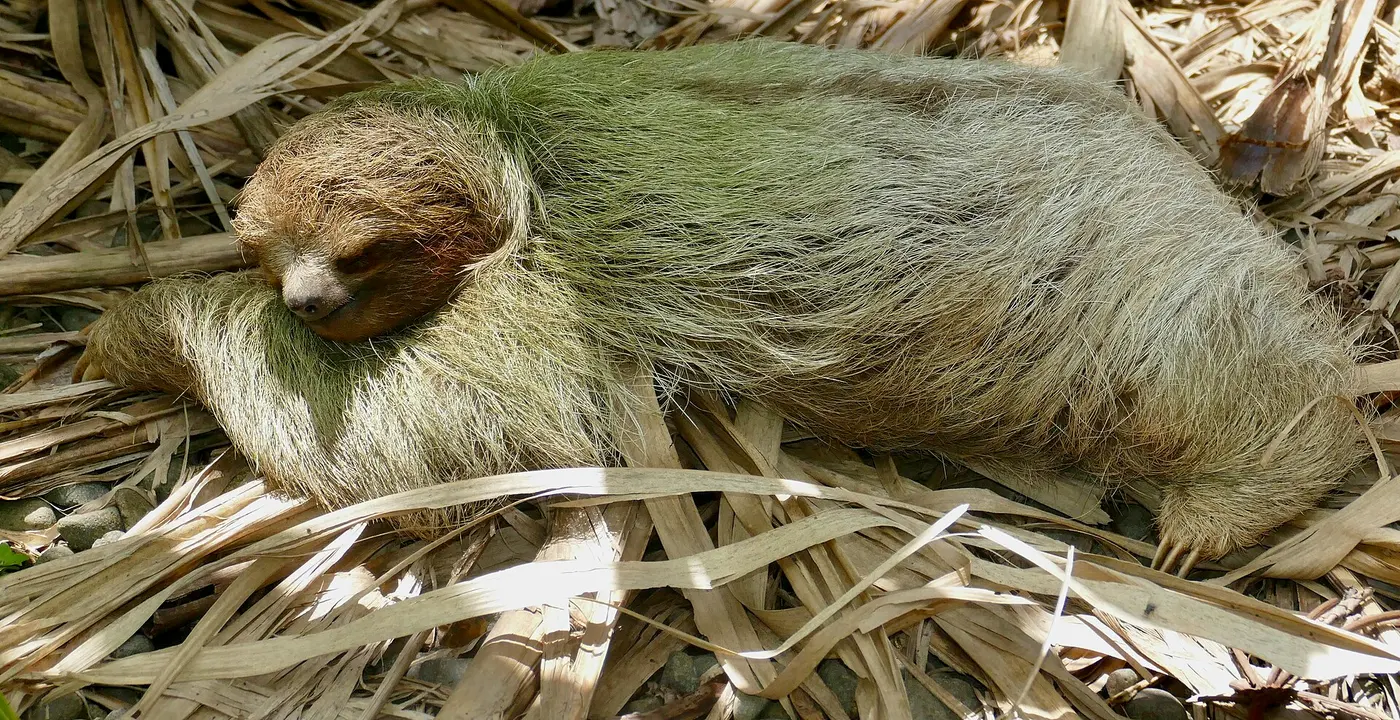

Always asleep? Not so fast
Sloths are often said to sleep more than 15 hours a day. That figure, however, comes mainly from observations of sloths kept in zoos and similar settings. A 2008 study that fitted wild brown-throated three-toed sloths with devices to record their brain waves found they slept about 9.6 hours a day on average.
Moving slowly, eating a little and sleeping a reasonable amount: rather than lazy, the sloth is a master of thrift, making do on a very tight energy budget.