Why do koalas sleep all day?
They live on eucalyptus leaves, which are low in nutrients and hard to digest, so they sleep to save energy.
22hours
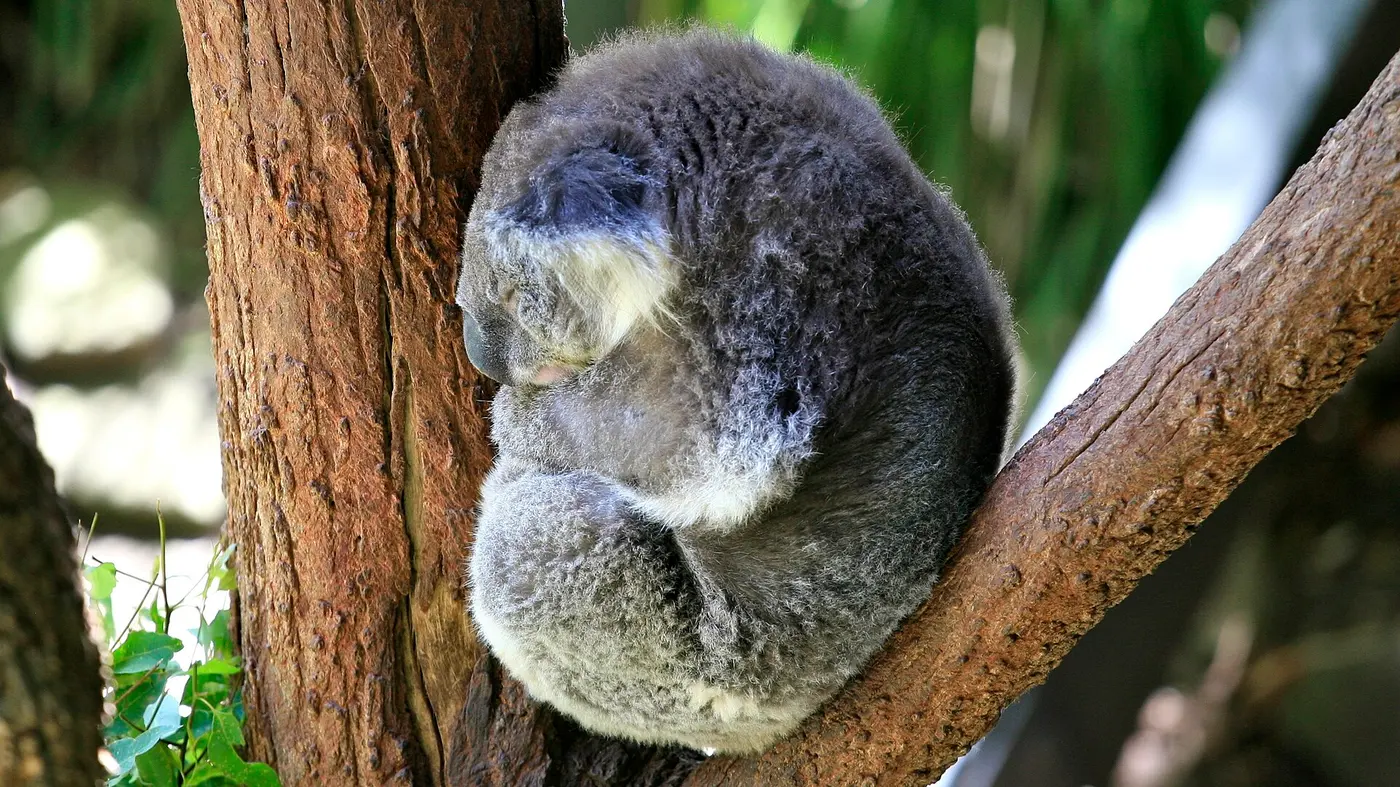
Stand in front of a koala enclosure and you will usually find the koala wedged into the fork of a branch, eyes firmly shut. Wait a while, and it barely moves. You might assume you have caught it on a sleepy day, but this is simply what koalas are like.
According to the Australian Koala Foundation, koalas sleep for 18 to 22 hours a day. They are awake for only the few hours that remain. So why do they sleep so much?
Awake mostly to eat
Koalas are marsupials that live in the forests of eastern Australia, and they are active mainly at night. Most of their waking time goes into eating eucalyptus leaves. They feed several times a day, getting through roughly 200 to 500 grams (7 to 18 ounces) of leaves in all.
By one estimate, they spend only about 15 minutes a day interacting with other koalas. Eat, sleep, eat again: that is more or less a koala’s whole day.

A diet that barely pays
The reason for all that sleep lies in those eucalyptus leaves. They are full of tough fiber yet very low in nutrients, and they contain compounds that are poisonous to most animals. Only a handful of mammals can live on them, among them the koala, the greater glider and the ringtail possum.
To squeeze what nourishment it can out of such awkward food, the koala has a special digestive organ. Its caecum, part of the large intestine, is about 2 meters (6.5 feet) long, and the vast numbers of bacteria living inside slowly break down the tough fiber. Even so, the koala absorbs only about a quarter of the fiber it eats.
If little energy comes in, the only option is to spend less. A koala’s metabolism is said to run at about half the rate of a typical mammal’s. It keeps food in its gut for a long time to extract every bit of nourishment while moving as little as possible. Long hours of sleep are a koala’s way of living within a tight budget.
Not drunk on eucalyptus
You may have heard that koalas look so sleepy because the toxins in eucalyptus make them “drunk” or “high.” That is a myth. The Australian Koala Foundation itself explains that gum leaves do not leave koalas drugged.
The koala’s body is built to deal with those toxins. An analysis of the complete koala genome, published in 2018, found that a group of genes for detoxifying enzymes (cytochrome P450) had multiplied, and that these genes are highly active in the liver. Koalas are not knocked out by the poison. They process it, and sleep to conserve energy.
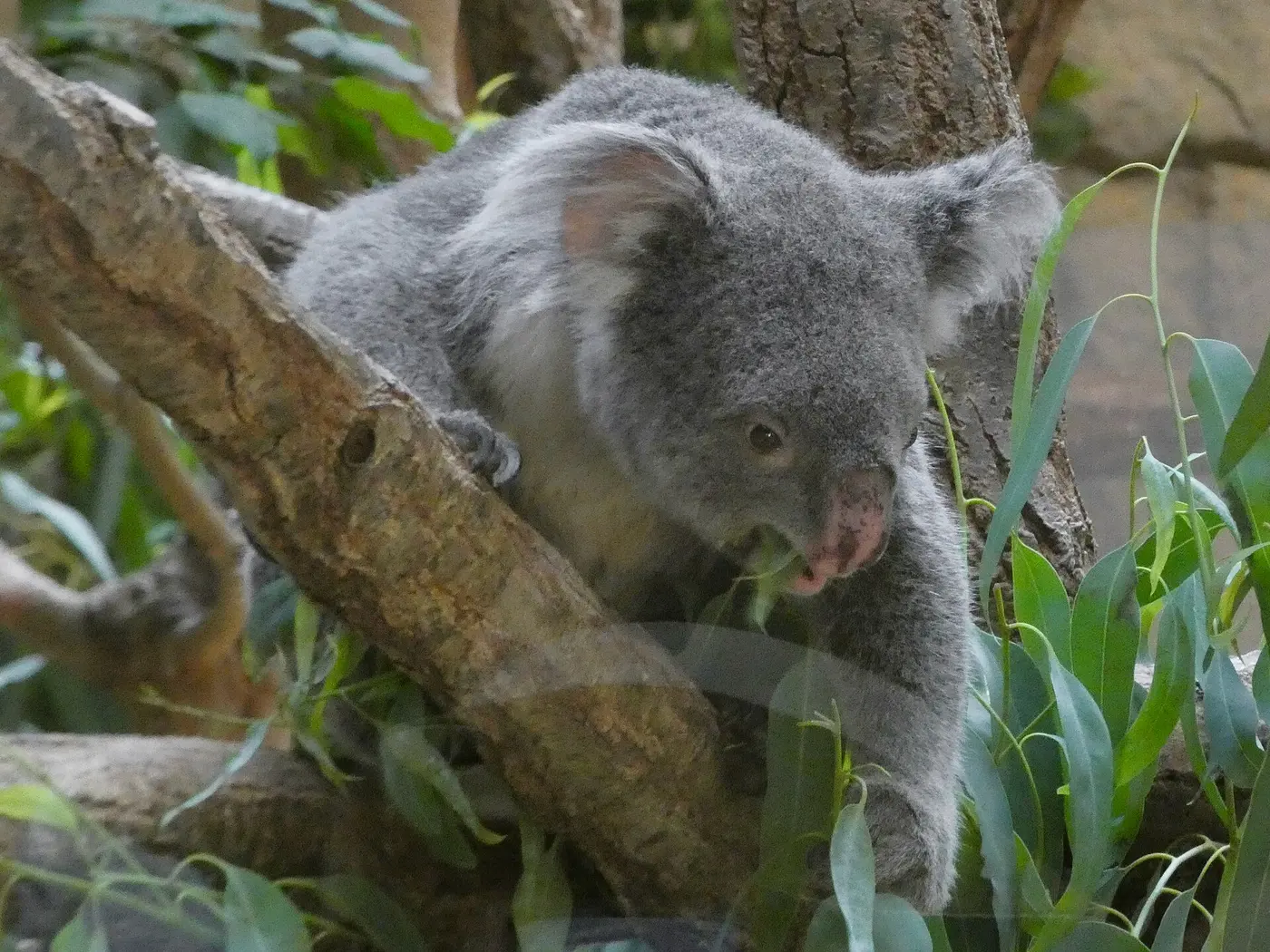

Australia has more than 600 species of eucalyptus, but koalas don’t eat just any of them. In a given area they mainly feed on only one to three species, which makes them very picky eaters. And when a young koala is being weaned, it eats “pap,” a soft form of droppings from its mother. This is thought to pass on the bacteria it will need to digest eucalyptus.
Hugging trees to keep cool
Koalas may sit still, but they do have a clever way of handling heat. A study published in 2014 by an Australian research team found that on hot days, koalas seek out tree trunks that are cooler than the air and press their bodies against them. Some trunks were more than 5°C (9°F) cooler than the surrounding air.
Shedding body heat into a cool trunk saves a great deal of the water a koala would otherwise use to cool itself, for example by panting. For an animal that rarely drinks, that matters. A koala hugging a tree in its sleep isn’t just cute; it is being remarkably sensible.