How many hours a day do giraffes sleep?
About 4 to 5 hours in zoos. But deep sleep, with the neck curled back, adds up to only a dozen or so minutes.
“Giraffes sleep only 20 minutes a day.” You may have come across that claim in a trivia book or on TV. It certainly suits the image of a giraffe: a towering animal forever keeping watch over its surroundings.
Follow the actual research, though, and the story gets more complicated. Depending on what you count as sleep, and on whether the giraffe lives in a zoo or in the wild, its sleep time can come out as a few minutes or as several hours.
Dozing on their feet
One classic study of giraffe sleep was published by Swiss researchers in 1996. They recorded eight giraffes living in zoos on video over a total of 152 nights.
The result: adult giraffes slept an average of about 4.6 hours a day. That may be longer than you expected. But most of that time is light dozing, either standing up or sitting with legs folded and neck held upright. Giraffes sleep in many short bouts, mostly at night. They also took a brief nap in the early afternoon.
Rather than sleeping soundly for hours at a stretch the way we do, giraffes piece their rest together out of short snatches. That is the basic pattern of giraffe sleep.
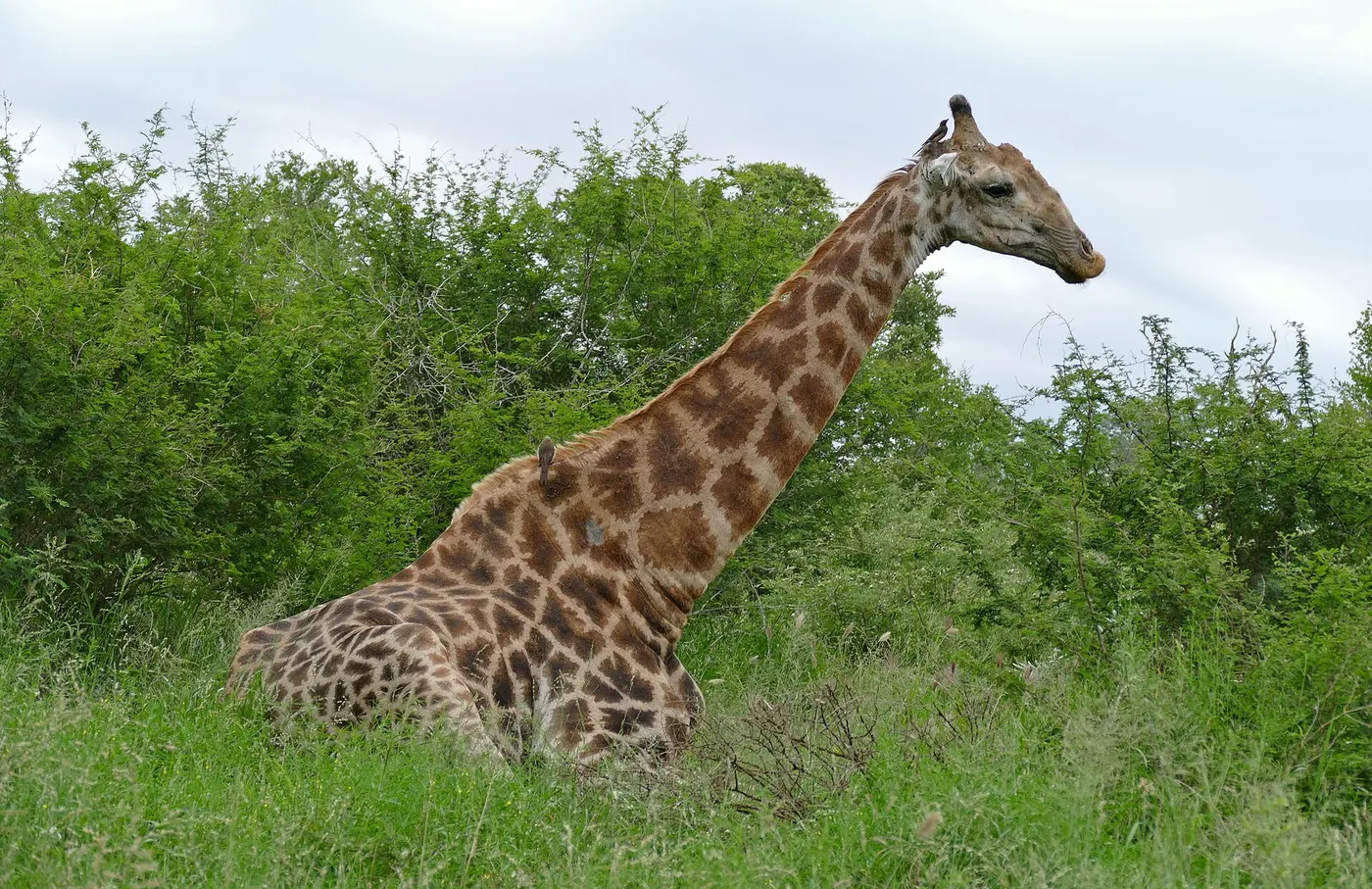

Deep sleep, neck curled around
The most striking sight in giraffe sleep is the animal settled on the ground with its long neck swung back in a curve, resting its head on its own rump or hind leg. The neck forms something like a big loop.
In this posture, giraffes are thought to be in paradoxical sleep, also known as REM sleep, the stage associated with dreaming. Because it is a deep sleep in which the muscles go slack, the giraffe presumably can’t hold its neck up and lets it rest on its body instead.
But this deep sleep is very short. In the zoo study, paradoxical sleep made up only about 4.7 percent of total sleep time. Do the math, and that comes to just a dozen or so minutes a day at most. The idea that giraffes barely sleep probably spread from an emphasis on how brief this deep sleep is.
How do wild giraffes sleep?
What about in the wild, where lions and other predators roam? For a long time, almost nothing was known about how wild giraffes spend their nights. Watching an animal sleep from a distance, in the dark, is hard.
In 2023, a study from Namibia in southern Africa was published in which researchers attached accelerometers to the ossicones, the horn-like knobs on the heads of three giraffes, and used the head movements to work out how they spent the night. The deep-sleep posture with the neck curled back appeared on average about twice a night, for a total of about 9 minutes. The giraffes spent around 8 hours a night resting motionless, but deep sleep was very brief and tended to come in two episodes, one after sunset and one before dawn.
Still, the study covered only three animals. And a method that identifies sleep from head movements alone may have missed the light sleep giraffes do standing up. How long wild giraffes really sleep is still not settled.
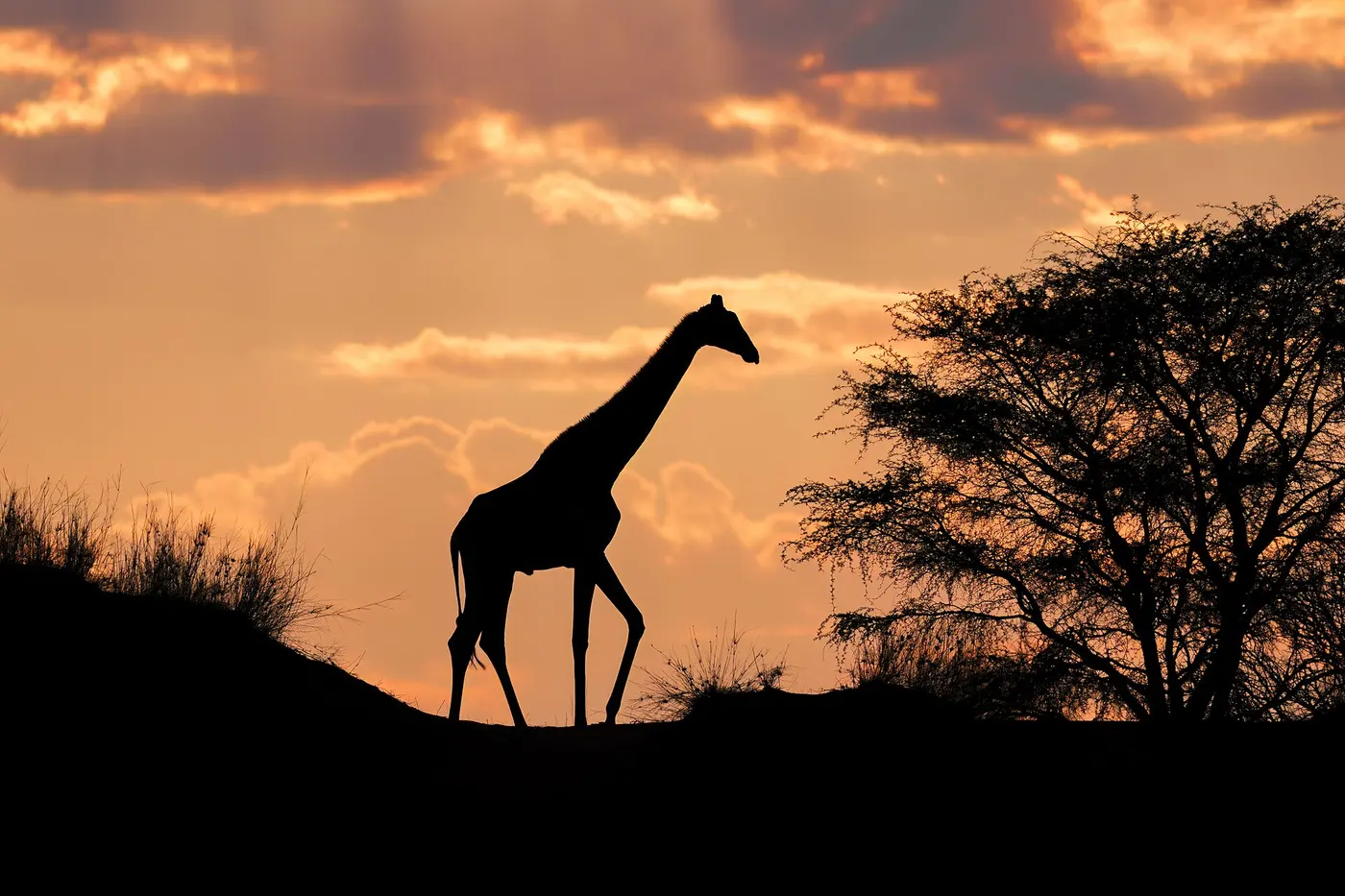

Why giraffes can’t sleep long
There are thought to be good reasons why giraffes keep their deep sleep so short.
One is that getting up takes time. For an animal with such long legs and neck, rising from a sitting position takes several moves, including swinging the neck to build momentum. If a predator attacked while the giraffe was asleep with its head resting on its body, it might not get away in time.
The other is that eating takes a long time. The leaves that make up most of a giraffe’s diet are not very nutritious for their bulk. To sustain such a large body, a giraffe has to spend much of the day eating.
Quite a few large plant-eating animals get by on little sleep. A study published in 2017 reported that wild African elephants slept an average of only about 2 hours a day. There may be some connection between a large body and short sleep.