How do bats fly in the dark?
They call out in ultrasound, too high for us to hear, and read their surroundings from the returning echoes.
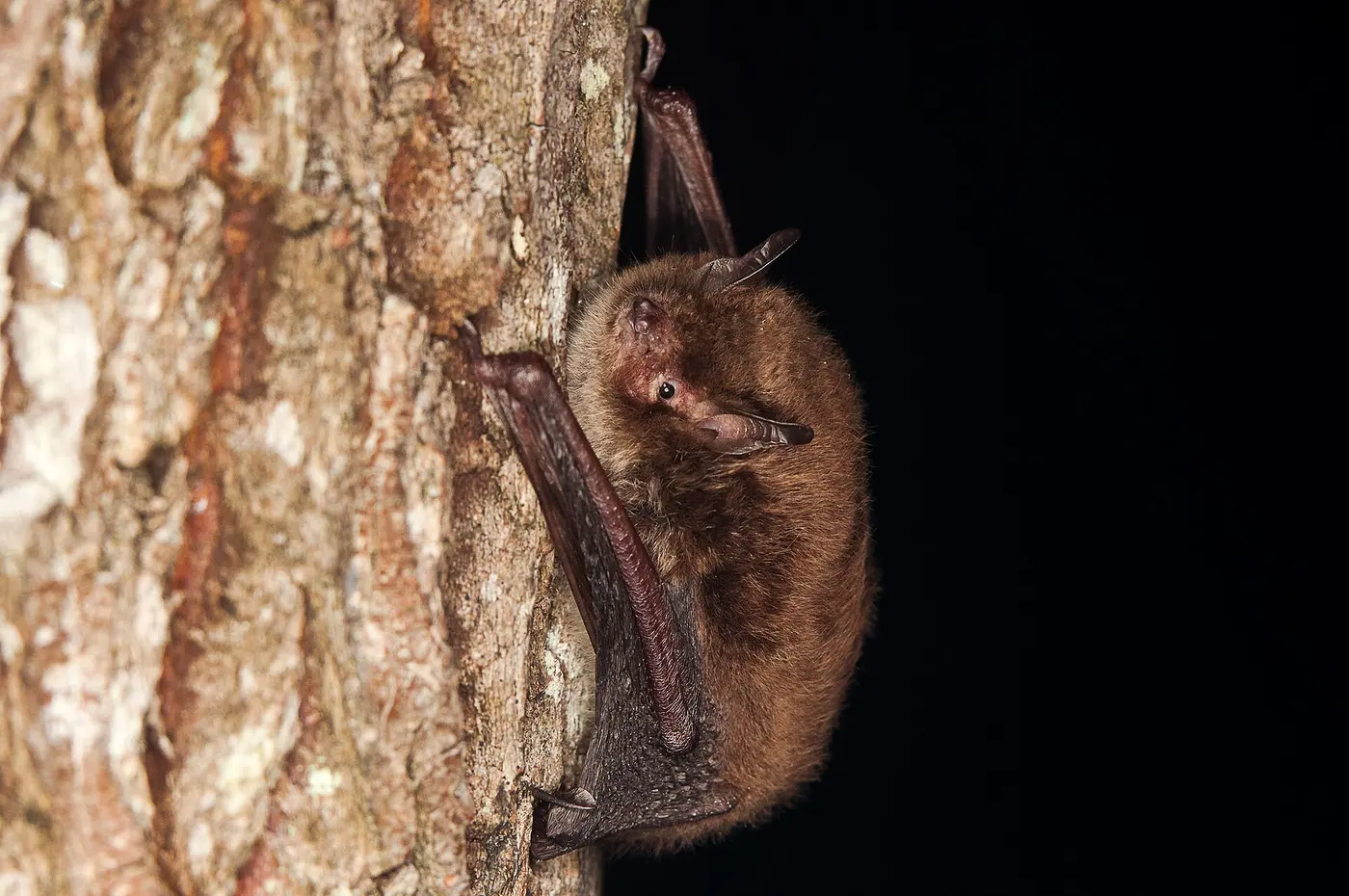
On a summer evening, you may spot small dark shapes flitting around a streetlight. In Japan these are often Japanese house bats and other small species that live right in the middle of towns and cities, quietly sharing our streets after the sun goes down.
Bats can fly through the depths of unlit caves and nighttime forests without bumping into walls or branches, picking off flying insects one after another as they go. They manage all this at speed, in conditions where we would be lucky to find the door. So how do they “see” where they are going in the dark?
Flying blind—and doing fine
The first person to tackle this mystery seriously was Lazzaro Spallanzani, an 18th-century Italian scientist. In 1793 he showed that bats deprived of their sight could still weave around obstacles he had strung up across a room. Whatever was guiding them, it was not their eyes. Bats, it turned out, did not need sight to fly.
Bats whose ears had been plugged, on the other hand, flew clumsily and crashed into things. Around the same time, the Swiss naturalist Charles Jurine reported similar results. Somehow, bats seemed to be “seeing with their ears.” Yet when a bat flies past, a human hears nothing at all. If bats were navigating by ear, what exactly were they listening to? The room seemed perfectly silent. That question went unanswered for nearly 150 years.

Discovering a voice no one could hear
The answer finally came in 1938. Donald Griffin, then a student at Harvard University, brought some bats to a physicist who had been building a device that could detect sounds too high for human ears. The device picked up something remarkable. The bats that seemed so silent were, in fact, calling constantly.
What they were producing was ultrasound, pitched above about 20,000 hertz, the upper limit of human hearing. A bat sends out these calls and listens to the echoes that bounce back off objects and insects around it. From those echoes it can work out where something is, how far away it is, how big it is, and even how it is moving. In effect, the bat paints a picture of the world out of sound. Griffin named the system “echolocation.”
We may not hear them, but the calls are extremely loud. Some species that chase insects in open air have been reported to produce calls of more than 140 decibels, measured near the mouth. If our ears could pick them up, summer nights would be a racket.
The closer the prey, the faster the calls
Bats are not just calling at random; they change the way they call to suit the situation. While searching for prey, they call at a leisurely pace. But once they find an insect and close in, the gaps between calls grow shorter and shorter, and just before the catch they are calling at a furious rate of more than 160 times per second. Because this final burst sounds like a buzzing noise on recordings, it is known as the “buzz.”
In 2011, a research team including scientists at the University of Southern Denmark studied Daubenton’s bats and other species and discovered that this rapid-fire calling is driven by special muscles in the throat. These muscles can contract up to around 200 times a second. They drew attention as the first “superfast muscles” ever found in a mammal.
A battle of wits with moths
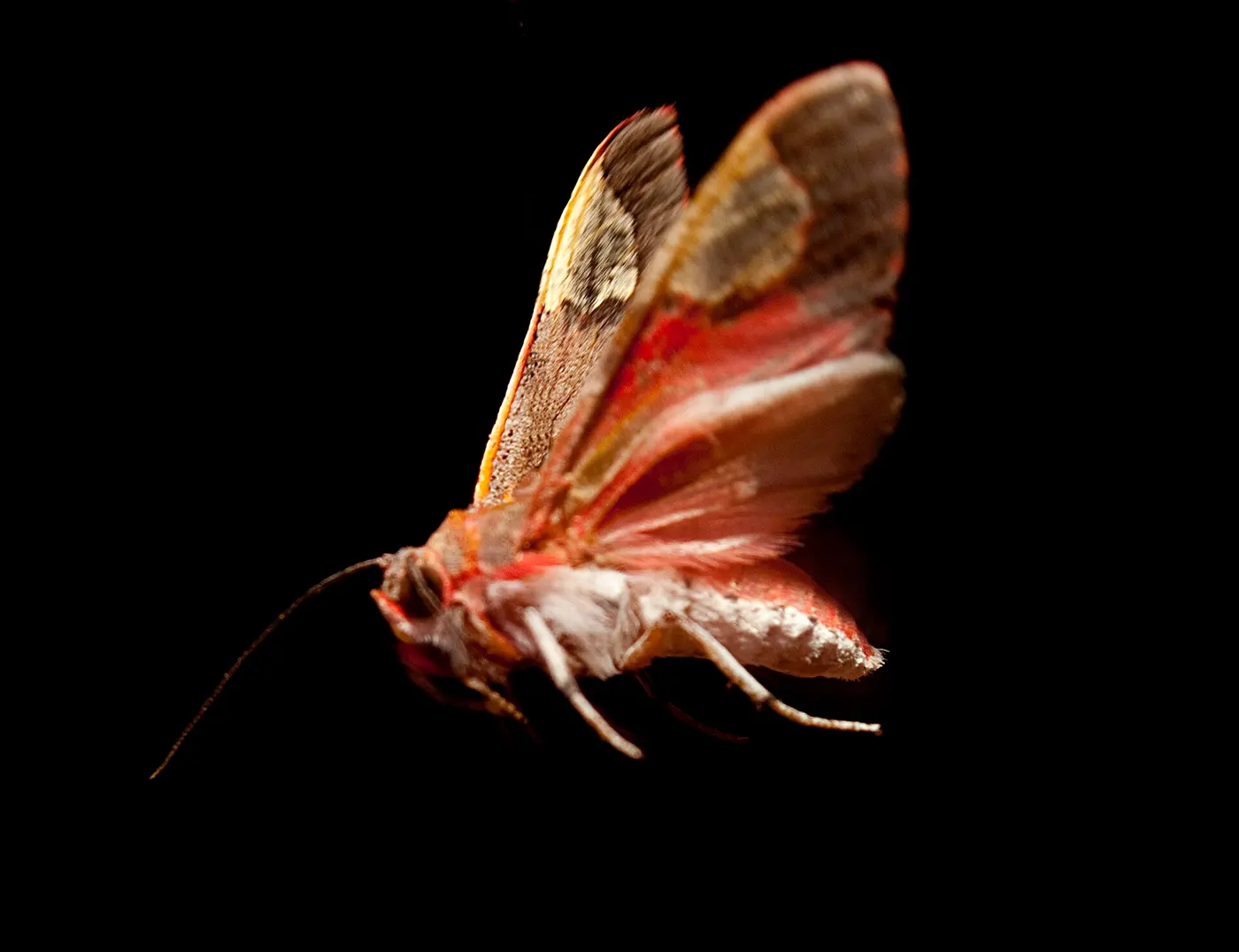
The insects on the menu, for their part, are not simply waiting to be eaten. Over the ages, some have developed defenses of their own. Many moths have ears that can hear ultrasound, and when a bat’s calls draw near they suddenly swerve or drop toward the ground to escape.
Even more surprising is a species of tiger moth that lives in North America. A 2009 study reported that just before a bat attacks, this moth fires off its own ultrasonic clicks, jamming the bat’s echolocation. In other words, the moth was using something very like the “jamming” tactics that militaries use to scramble enemy radar—an electronic-warfare trick, performed by an insect.