Why are plants green?
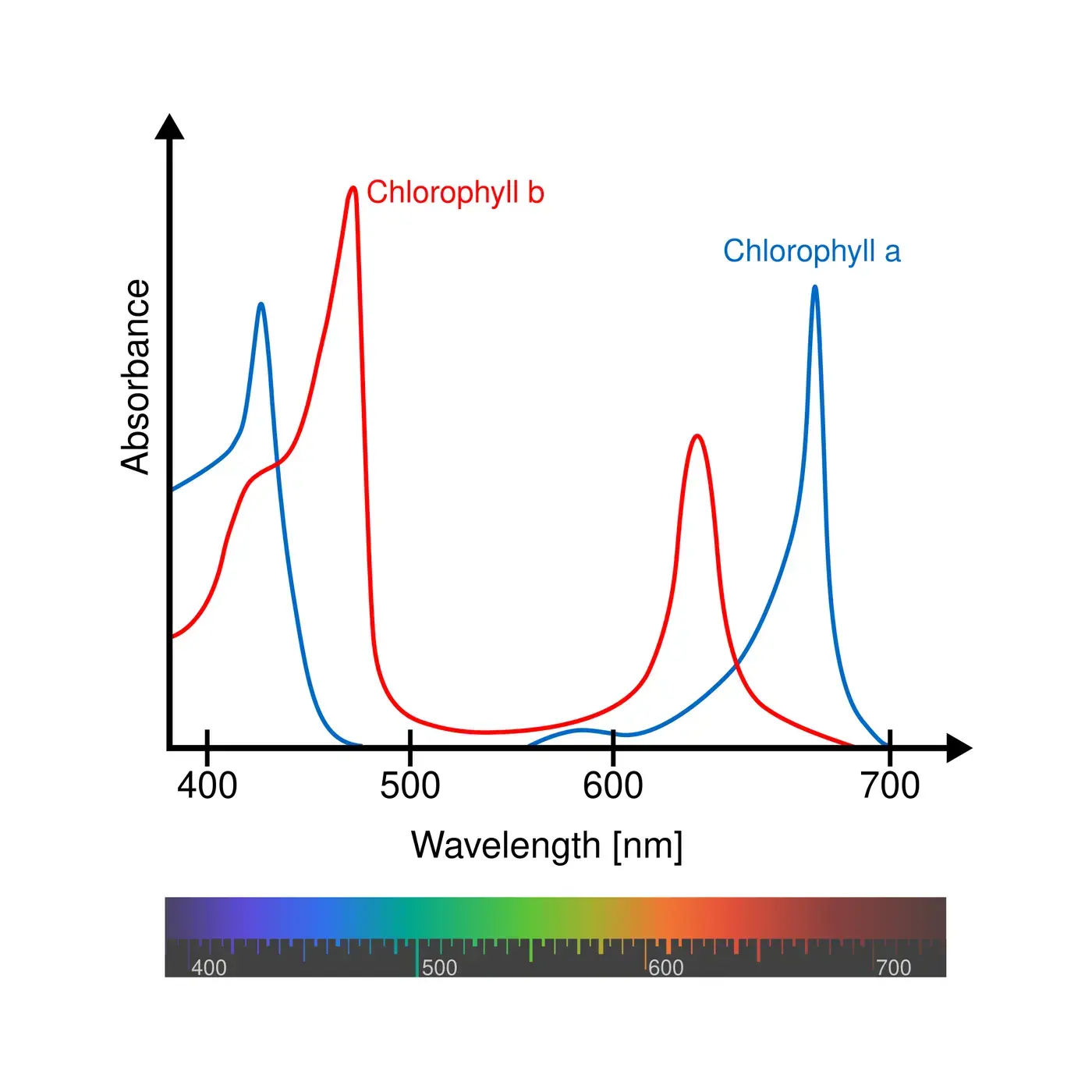
Chlorophyll absorbs red and blue light well but little green, which is reflected or passes through the leaf.
The street trees outside the window, the lawn in the park, the potted plants on the balcony: leaves are almost always green. It seems so obvious that we rarely stop to ask why.
Half the answer is exactly what we learned in school science class. The other half is a genuinely tricky question that researchers are still debating.
Green is the color left over
Sunlight looks white, but it is actually a mixture of every color of the rainbow. Objects appear to have a color because they absorb some colors of light and reflect or transmit the rest.
Inside leaf cells are many tiny bodies called chloroplasts, which contain a pigment called chlorophyll. The main chlorophylls used in photosynthesis come in two forms, chlorophyll a and chlorophyll b, and both absorb blue light and red light strongly. The green light in between, however, they absorb only weakly.
The green light that isn’t absorbed bounces off the leaf surface or passes through the leaf and reaches our eyes. That is why leaves look green.

So why aren’t leaves black?
This raises a simple question. Sunlight reaching the ground is, broadly speaking, especially strong in the middle of the visible spectrum, from blue-green to green. Why would plants leave this abundant green light unused? A pitch-black leaf that absorbed every color would seem to capture far more energy.
There are several hypotheses.
One is the “purple Earth” hypothesis. Very early in the history of life, the idea goes, microbes that harvested energy from light using a pigment other than chlorophyll flourished, and that pigment absorbed green light. Organisms with chlorophyll, which came later, had to make do with the blue and red light that was left.
Another comes from Nathaniel Gabor and colleagues at the University of California, Riverside, published in the journal Science in 2020. The amount of light changes from moment to moment as clouds pass or as sunlight flickers through the trees. Just as in an electrical power grid, if the energy coming in is too unstable, the system can’t work properly. The team showed through calculations that absorbing two narrow bands of color, on either side of the range where light is strongest, lets a plant gather energy steadily despite those fluctuations.
It is also known that too much light actually harms plants, damaging the machinery of photosynthesis. Not absorbing every bit of light may in fact help plants protect themselves. Which explanation is right has not yet been settled.
Green light gets used after all
What’s more, the very idea that green light goes unused has turned out to be a little too simple.
In a study published in 2009, Ichirō Terashima of the University of Tokyo and his colleagues looked at what happens to light inside a leaf. Blue and red light are almost entirely absorbed by chloroplasts near the leaf surface. Green light, which is absorbed less readily, penetrates deep into the leaf.
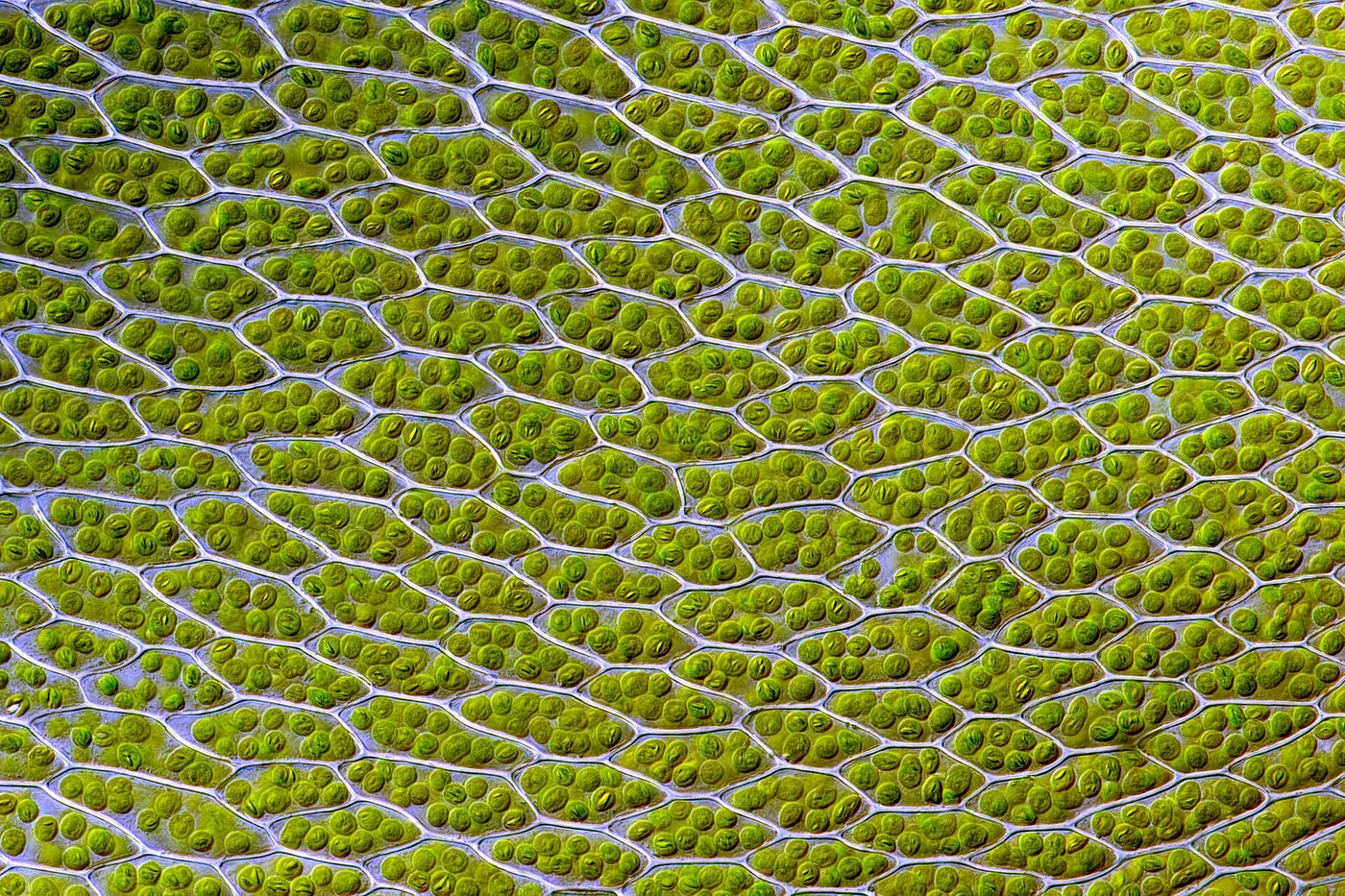

In experiments with sunflower leaves, they showed that under strong white light, green light drives photosynthesis more efficiently than red light does. Under strong light, the chloroplasts near the surface are already working at full capacity. Adding more red light there does little, whereas green light that reaches deep into the leaf can put the inner chloroplasts, which still have capacity to spare, to work. Leaves may look green not because they waste green light, but as a sign of how they spread light all the way through.