Are mushrooms plants?
No. Mushrooms belong to the fungi, and genetically they are closer to animals than to plants.
Shiitake, enoki, maitake. In the supermarket, mushrooms sit in the produce section, and in the forest they sprout from the bases of trees and from fallen logs. They stay put and never move, so it is easy to think of them as a kind of plant.
But mushrooms are not plants. They belong to the fungi, the same group of living things as molds and yeasts. Even in the world of food, Japan’s official Standard Tables of Food Composition list mushrooms as a separate group, distinct from vegetables.
Once filed under plants
In the 18th century, when the Swedish naturalist Carl Linnaeus systematized the classification of living things, life was divided into two great groups: animals and plants. Mushrooms, which do not move and grow out of the ground, were put on the plant side.
As research went on, however, it became clear that mushrooms and molds were very different from plants. In 1969, the American ecologist Robert Whittaker proposed dividing life into five kingdoms, separating the fungi from plants into a kingdom of their own. Today, it is standard biology that fungi are neither plants nor animals but a group in their own right.
How they differ from plants
First, fungi do not photosynthesize. They have no chloroplasts, so they cannot make food from sunlight. Instead they absorb nutrients by breaking down fallen leaves, dead wood and the bodies of other organisms. The reason forests are not buried under ever-deeper layers of leaves, which instead return to the soil, is partly that fungi are hard at work as decomposers.
Their bodies are built differently, too. Plant cell walls are made of cellulose, but the main component of fungal cell walls is chitin, the same material found in insect bodies and crab shells. And while plants store energy as starch, fungi store it as glycogen, just as animals do.

Genetically, relatives of animals
More surprising still are the results of genetic studies. In 1993, American researchers Sandra Baldauf and Jeffrey Palmer compared several proteins and found a feature shared only by fungi and animals. Many studies since have confirmed that fungi are more closely related to animals than to plants.
That does not make mushrooms animals, of course. After branching off from a common ancestor long ago, animals took the path of moving around and eating, while fungi took the path of spreading threads and breaking things down. Still, on the family tree, a mushroom is a closer relative of us humans than of the vegetables it is sold beside.
The mushroom is the fruit; the body is hidden
What we call a mushroom is only a small part of a fungus. It is an organ for producing and scattering spores, known as a fruiting body. In plant terms, it is the equivalent of a flower or fruit.
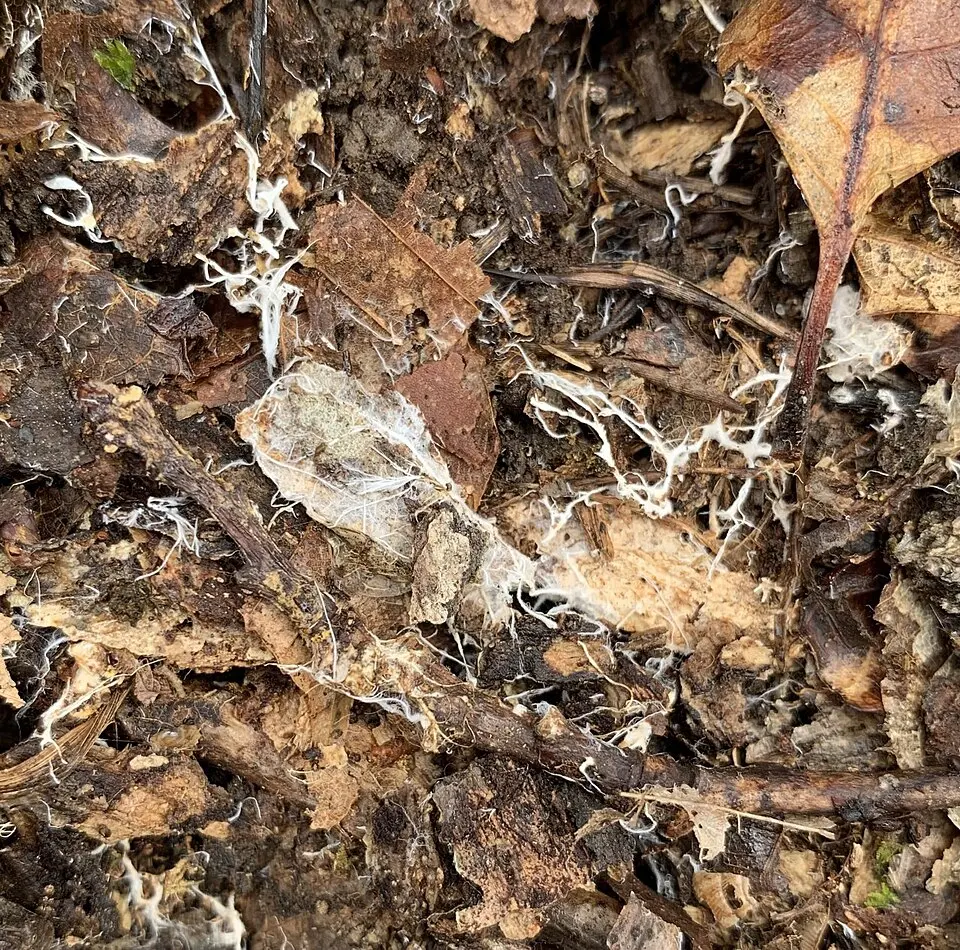
The main body is the mycelium, a mass of fine threadlike cells running through soil or wood. Normally invisible, the mycelium gathers together when conditions are right and pushes a mushroom up above ground.
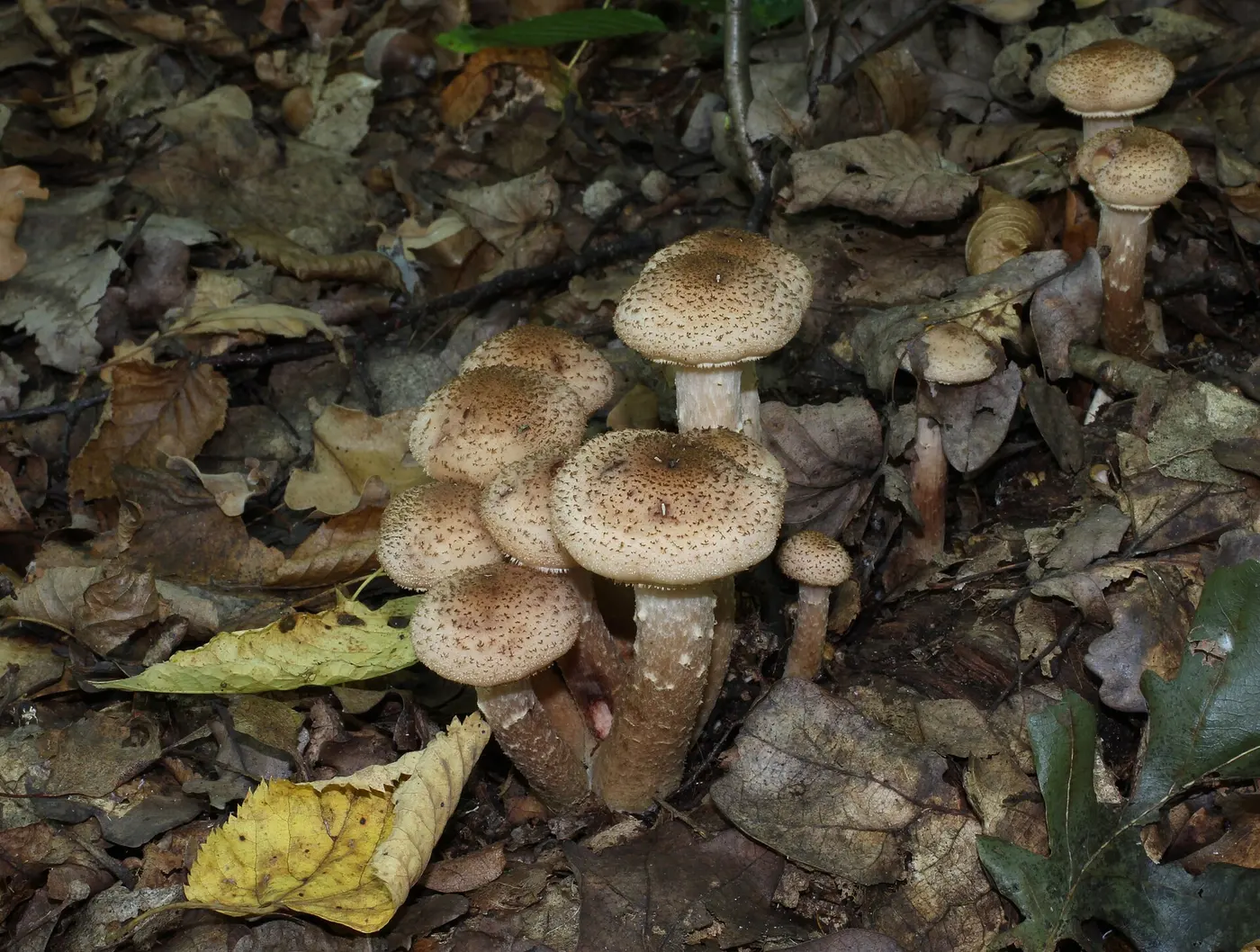

Mycelium can grow to staggering sizes. In a national forest in eastern Oregon, the mycelium of a single dark honey fungus was found to stretch across about 9 square kilometers (3.5 square miles) underground. Its age is estimated at several thousand years, by one estimate around 8,000, and it is often called one of the largest living things on Earth. All that shows above ground are the mushrooms that appear in autumn.
According to the Mycological Society of Japan, there may be an estimated 1.5 million species of fungi, most of which still have no name. Mushrooms are just the entrance to that vast and varied world.