Is it true that a banana plant isn’t a tree?
Yes. The banana is a giant herb, and what looks like a trunk is really a bundle of tightly wrapped leaves.
15m
Picture a photo of a tropical plantation. Thick trunks twice the height of a person send out enormous leaves, and beneath them hang heavy bunches of green bananas. By any ordinary standard, these are handsome trees.
Look through a botanist’s eyes, though, and the banana is not a tree at all. It is an herb—a plant without a woody stem—that just happens to grow to an extraordinary size.
That “trunk” is a bundle of leaves
The main thing that separates a tree from an herbaceous plant is whether its trunk turns hard and woody, thickening year after year as the plant lives on for many seasons. Cut through a banana “trunk,” and the inside is moist and juicy, with nothing like hard timber anywhere.
Look closely at the cut surface and you can see thin layers wrapped around one another again and again. These are leaf sheaths—the bases of the leaves—stacked into a tube. Because it looks like a stem but isn’t one, this part is called a “pseudostem,” or false stem.
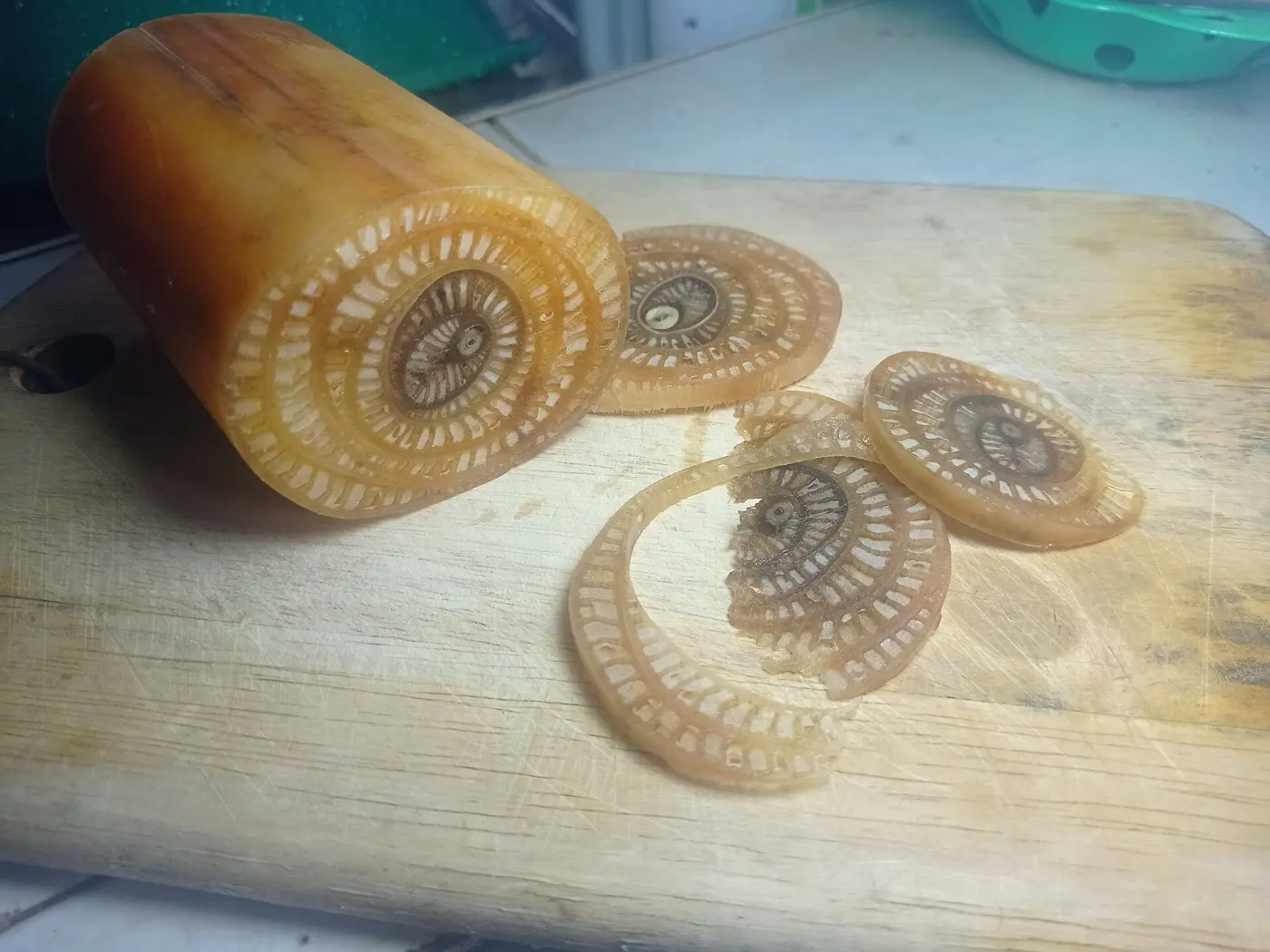

So where is the real stem? Underground. A banana’s true stem is a short, fat mass below the soil, and from it new leaves push upward one after another. Older leaves are pressed outward as fresh ones emerge from the center, and with each round the pseudostem grows thicker and taller.
One harvest, then the next generation
Eventually a flowering stalk rises from the underground stem, threads its way up through the middle of the pseudostem, and pokes out of the top. Flowers open at its tip, and the fruit develops from there.
Once the bananas are harvested, that pseudostem has done its job and dies back. This is a big difference from fruit trees that keep bearing for decades. But it isn’t the end of the plant. The underground stem keeps sending up suckers, young shoots that grow into new pseudostems and bear fruit in turn. On plantations, growers multiply their bananas by replanting these suckers.
Some members of the banana family grow astonishingly large. A wild species called Musa ingens, from the mountains of New Guinea, is said to reach about 15 meters (roughly 50 feet) in pseudostem alone and as much as 20 meters including the leaves, and it is often described as the largest herbaceous plant in the world.
The banana is a berry; the strawberry isn’t
The other surprise lies in the fruit itself. In botany, the banana is classified as a berry.
A berry, in the botanical sense, is a fruit that develops from a single ovary of a single flower, with the whole fruit wall becoming thick, soft flesh. By that definition, the berry club includes not only bananas but also tomatoes, grapes, kiwifruit, and even watermelons.
The strawberry, despite its name, is not a botanical berry. The red part we eat isn’t the fruit at all but the swollen receptacle, the base of the flower. The little specks on the surface are the true fruits, each with a seed inside.
Slice a banana crosswise and you’ll notice a ring of tiny black dots at its center. Those are the remnants of seeds that never developed. The varieties we eat today come from plants that happened to be unable to form seeds, which people selected and passed down. The fruit of a wild banana is packed with large, hard seeds and is hardly easy eating.
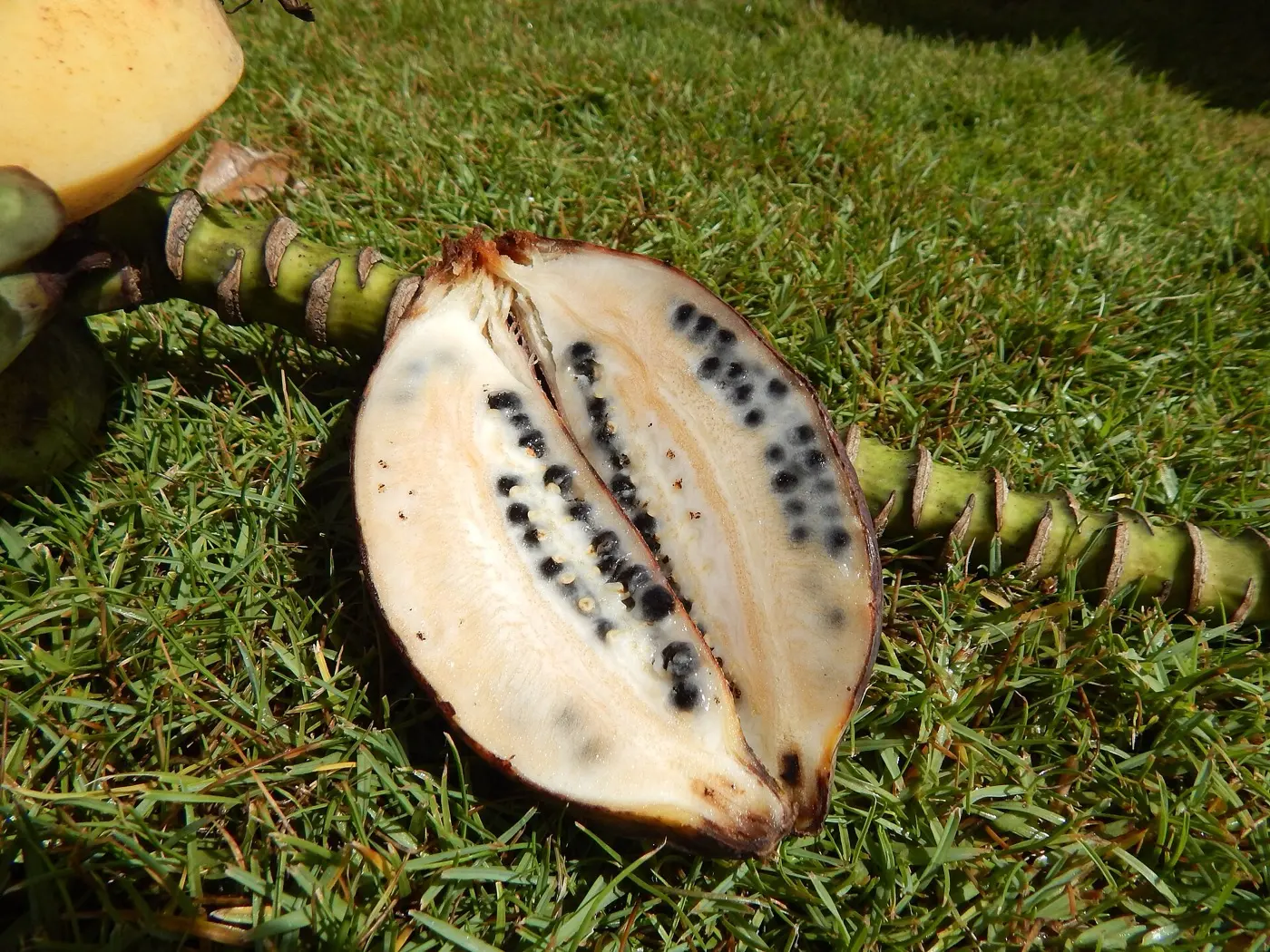

With no seeds to sow, cultivated bananas can only be propagated by planting those suckers. As a result, many of the bananas exported around the world are a single variety, the Cavendish, and are genetically almost identical copies of the same plant. That keeps their flavor and shape consistent, but it also leaves them vulnerable: a single disease can sweep through all of them at once. In fact, a different variety that once dominated the market was hit hard by a disease outbreak in the mid-20th century and lost its leading role to the Cavendish.