What is the biggest tree in the world?
By height, a coast redwood called Hyperion — about 116 meters tall.
116m
Near the coast of northern California lies a deep forest wrapped in fog. Somewhere inside it stands the tallest tree known on Earth. Its name is Hyperion, after one of the Titans of Greek myth, and it is a single coast redwood.
“Somewhere” is deliberate. The tree’s exact location has never been officially disclosed.
A giant hidden in the fog
Hyperion was found in 2006 by two naturalists who had spent years walking the forest in search of giants. Until then, no one had noticed it. Researchers later climbed the tree and dropped a tape measure from the top: about 116 meters, or roughly 381 feet. That is more than 20 meters taller than the Statue of Liberty, pedestal included.
The location is kept quiet to protect the tree. Once news of the discovery spread, visitors began tracking it down from clues posted online, trampling the soil around its roots and damaging the plants nearby. Today the area is closed to the public, and trespassers can face fines.
One reason redwoods grow so tall here is the fog. Lifting water from the roots all the way to the crown is hard work, but fog rolling in from the ocean dampens the leaves and eases the strain of drought. Even so, there is a physical limit to how high a tree can pull water, and a 2004 study estimated that trees probably top out at around 120 to 130 meters. Hyperion stands remarkably close to that ceiling.
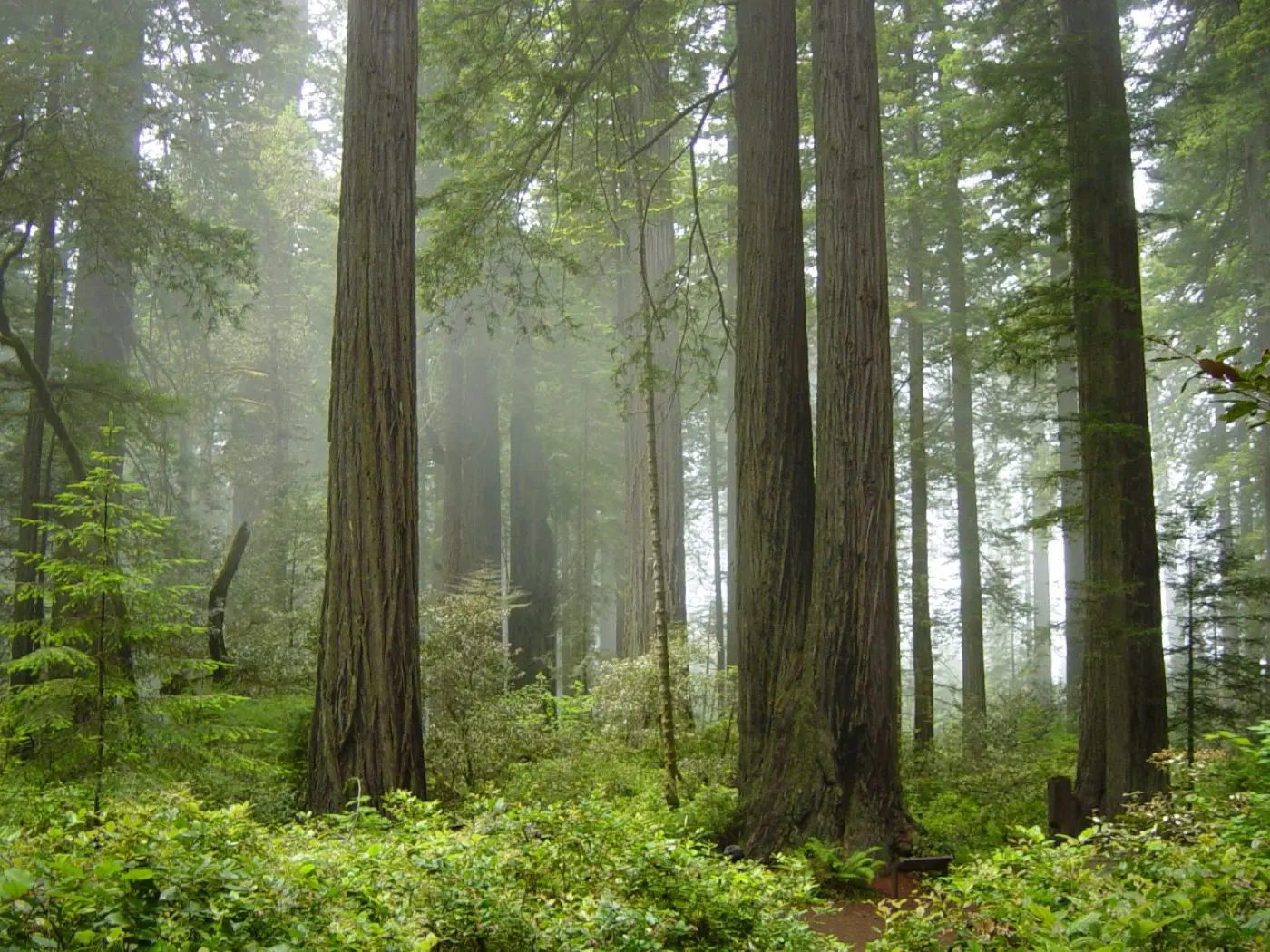

Measure by volume, and General Sherman wins
Compare trees by volume instead of height, though, and the crown passes to a different tree: a giant sequoia called General Sherman, in California’s Sequoia National Park.
At about 84 meters, it is far shorter than Hyperion. But its trunk is enormous, more than 30 meters around at the base, with a volume of about 1,490 cubic meters. That makes it the largest single-trunk tree in the world. It is thought to be more than 2,000 years old, although nobody knows its exact age.
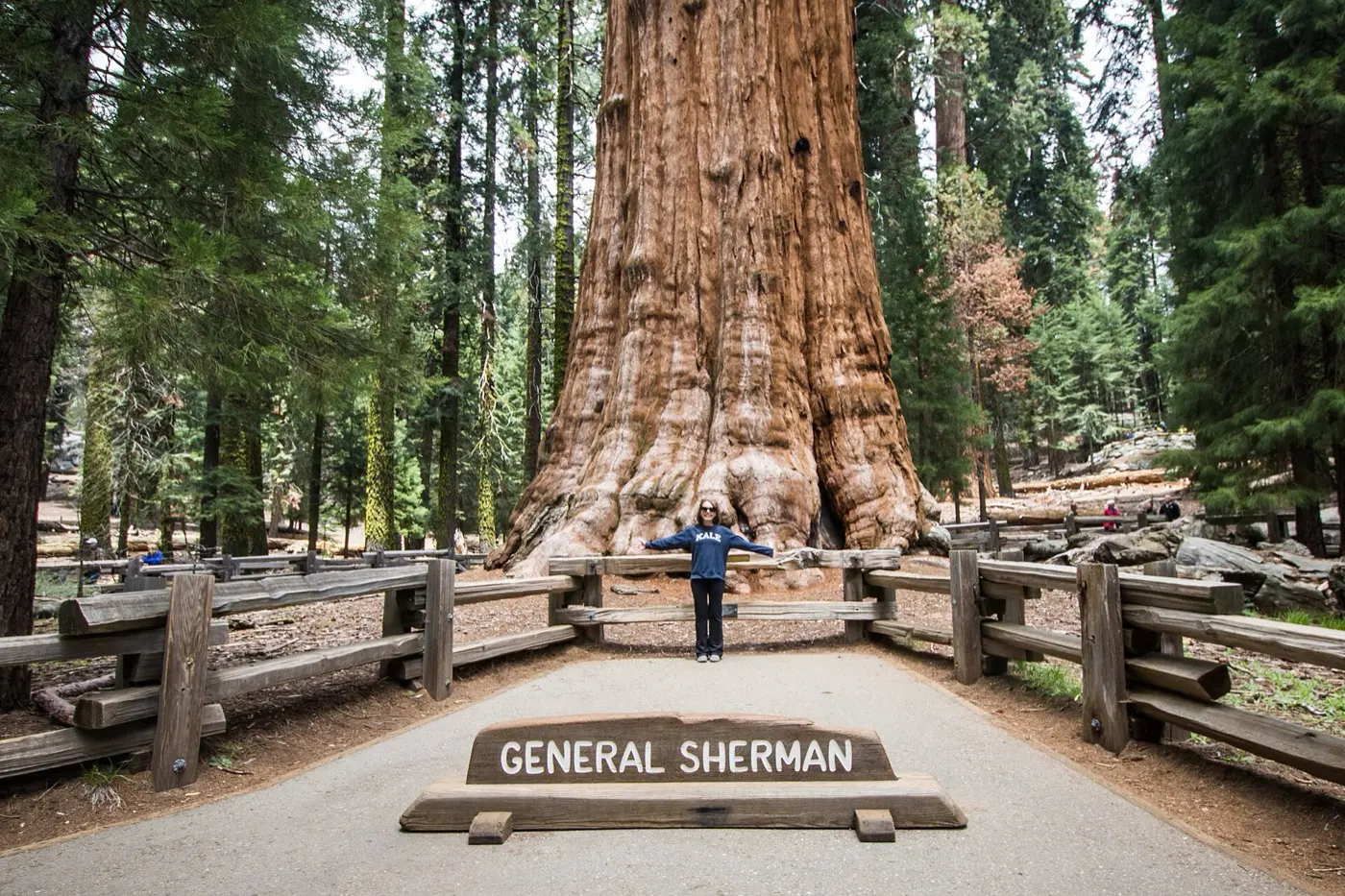

Hyperion and General Sherman are both called sequoias, but they belong to different species. The first is the slender coast redwood that grows along the shore; the second is the stout giant sequoia of the Sierra Nevada mountains. One went tall, the other went wide: two relatives that pushed “big” in opposite directions.
What if a whole forest were one tree?
Shift the point of view once more and an even stranger candidate appears: Pando, a grove of quaking aspen in Utah.
At first glance it looks like an ordinary stand of about 47,000 trees. Yet when scientists studied it, they found that every trunk sprang from the same connected root system and shared the same genes. It is a single organism. Pando covers about 43 hectares and is estimated to weigh around 6,000 tonnes. Seen as one living thing, it ranks among the heaviest organisms on the planet. Estimates of its age range from several thousand to tens of thousands of years.
Height, volume, or where one individual ends and another begins: depending on which yardstick you pick, the answer to “What is the biggest tree?” comes out completely different.