Do sunflowers really follow the sun?
Only while young, before they bloom. Once open, the flowers stay facing roughly east.
5times
In Japanese, the sunflower is written with characters meaning “facing the sun.” In English it is the sunflower; in French it is the tournesol, “turns toward the sun.” All around the world, this flower has been named for its bond with the sun.
Yet if you watch a sunflower field at the height of summer from morning to evening, you will almost never see the flowers swing from east to west. Sunflowers in full bloom hardly move at all. So is “following the sun” just a myth?
Sun-tracking is for the bud years
The answer is half right and half wrong. The sunflowers that follow the sun are young plants that have not yet bloomed.
The tip of a young sunflower’s stem faces east in the morning, then leans little by little toward the west as the sun moves across the sky during the day. Overnight, it swings back to the east. By the time the sun rises the next morning, it is already facing east, waiting.
This head-turning comes from differences in how the stem grows. During the day, the east side of the stem grows more, tipping the head west; at night, the west side grows more, bringing it back east. A study published in 2016 by a research team including the University of California, Davis showed that the plant’s internal clock is involved in this rhythm. Even when the sunflowers were moved indoors under a fixed light shining from directly above, they kept swinging east and west for several days. Rather than simply being tugged along by the sun, the plants were running on clockwork, getting ahead of the dawn and waiting for it.
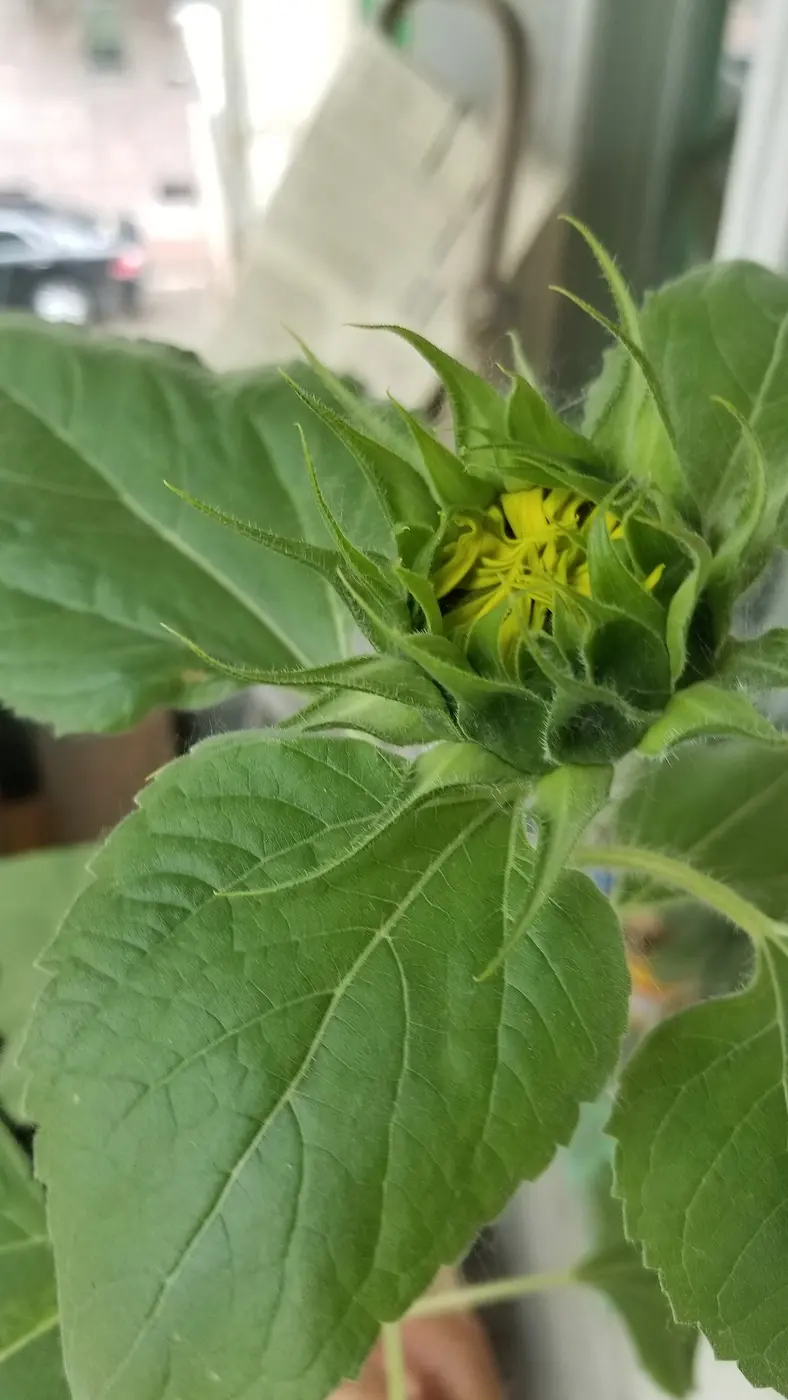

Once it blooms, it stops facing east
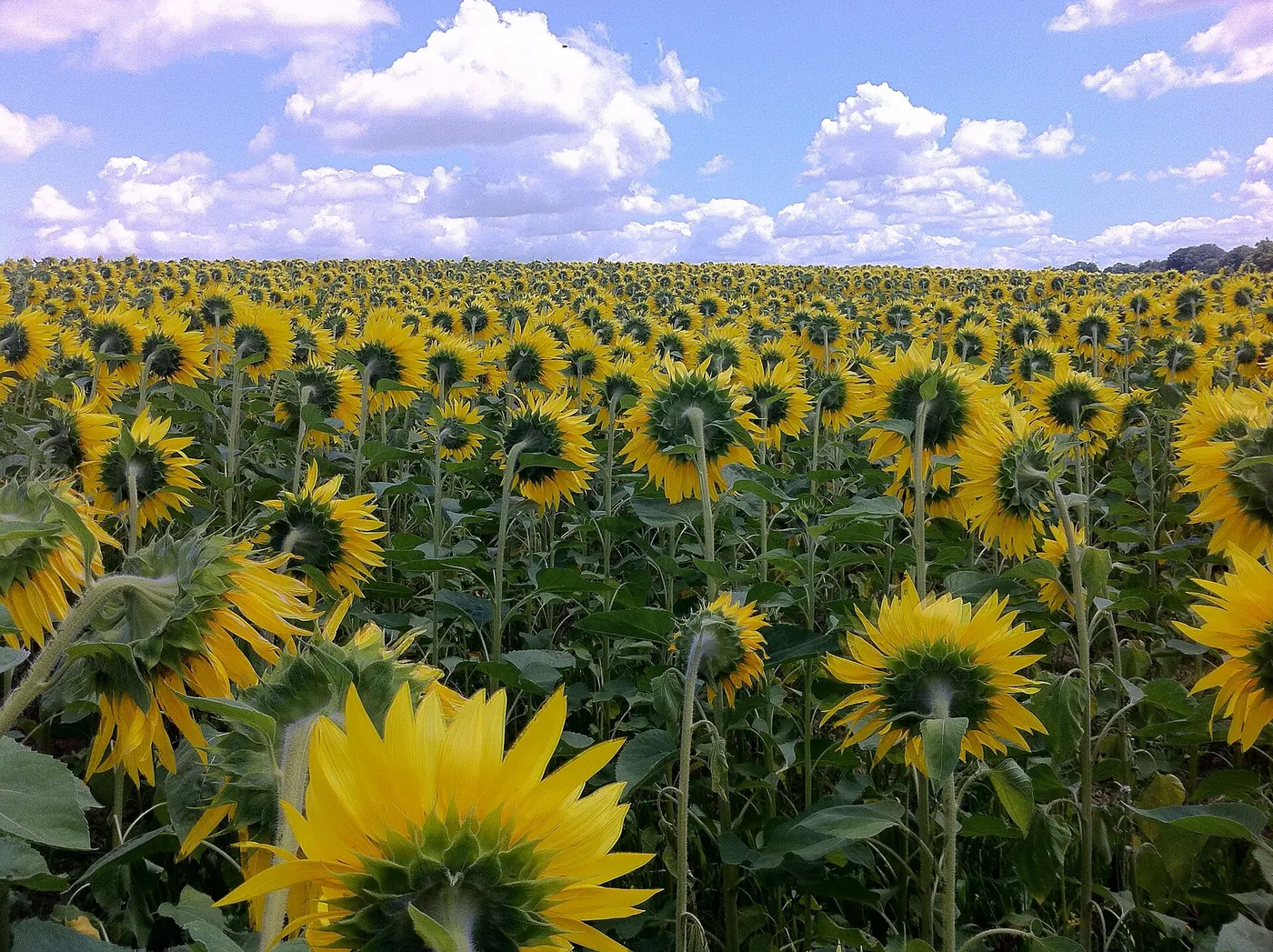
As the stem’s growth slows down, however, the swinging gradually becomes smaller. By the time the flower opens, it hardly moves at all. And in most cases, the direction it ends up facing is east.
Sunflowers in full bloom don’t follow the sun; they spend the summer facing the direction of the sunrise. When all the flowers in a field face the same way, it is because each one has come to rest facing east like this.
Facing east brings in the insects
So why bother facing east? The same research team ran experiments to find out.
They turned potted sunflowers so that some of the flowers faced west. Infrared cameras showed that the east-facing flowers warmed up quickly in the morning sun, and they were visited by about five times as many pollinating insects as the west-facing flowers. What’s more, when the researchers warmed west-facing flowers with a heater in the morning, more insects came to visit.
Bees and other insects can’t move about actively in cool morning air until their bodies warm up. East-facing flowers, the first to warm, must be an appealing spot for them. Grow while tracking the sun when young, then face east and wait for insects once in bloom: it seems the sunflower’s movements mean something different at each stage of its life.

How it “sees” the sun is still a mystery
The tendency of plants to bend toward light is familiar from any houseplant on a windowsill. In this phenomenon, a blue-light receptor called phototropin is known to play a central role.
In 2023, however, when the same research group studied sun-tracking sunflowers outdoors, they saw no sign of this familiar mechanism at work. Blocking blue light, ultraviolet light, red light and so on, one at a time, did not stop the head-turning. Several light-sensing pathways are thought to be involved, but the key genes have yet to be found. Even in the movements of a flower we see every summer, unsolved mysteries remain.