Why do we dream?
Nobody knows for sure. Several theories, including links to sorting memories and emotions, are still debated.
You’re flying. You’re late for an exam. You’re walking through a city you’ve never seen with a friend you haven’t met in years. You wake up thinking “What a weird dream,” and within minutes, most of it has evaporated like mist.
Everyone dreams. Even people who say “I never dream” are thought to simply not remember. Yet science still has no clear answer to the question of why we dream at all.
The “rapid eye movement” stage of sleep
Scientific research on dreams took off in 1953. Eugene Aserinsky and Nathaniel Kleitman at the University of Chicago reported that during certain periods of sleep, people’s eyes dart rapidly back and forth beneath their closed lids. This is REM sleep, short for “rapid eye movement.”
When sleepers were woken during these periods, many said they had been dreaming. In early studies, roughly 70 to 80 percent of people woken from REM sleep reported dreams, compared with about 20 percent of those woken from other stages of sleep (non-REM sleep).
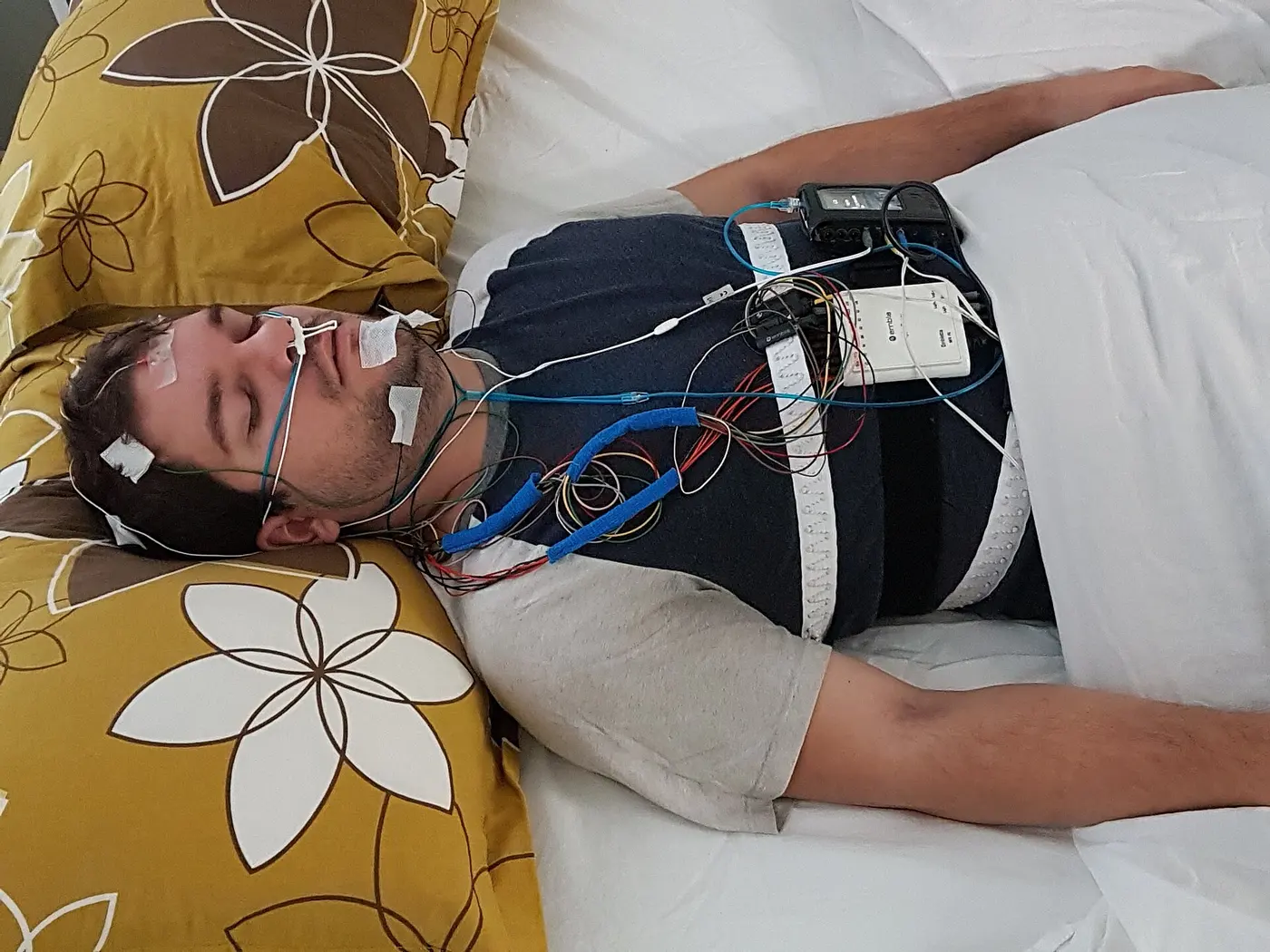

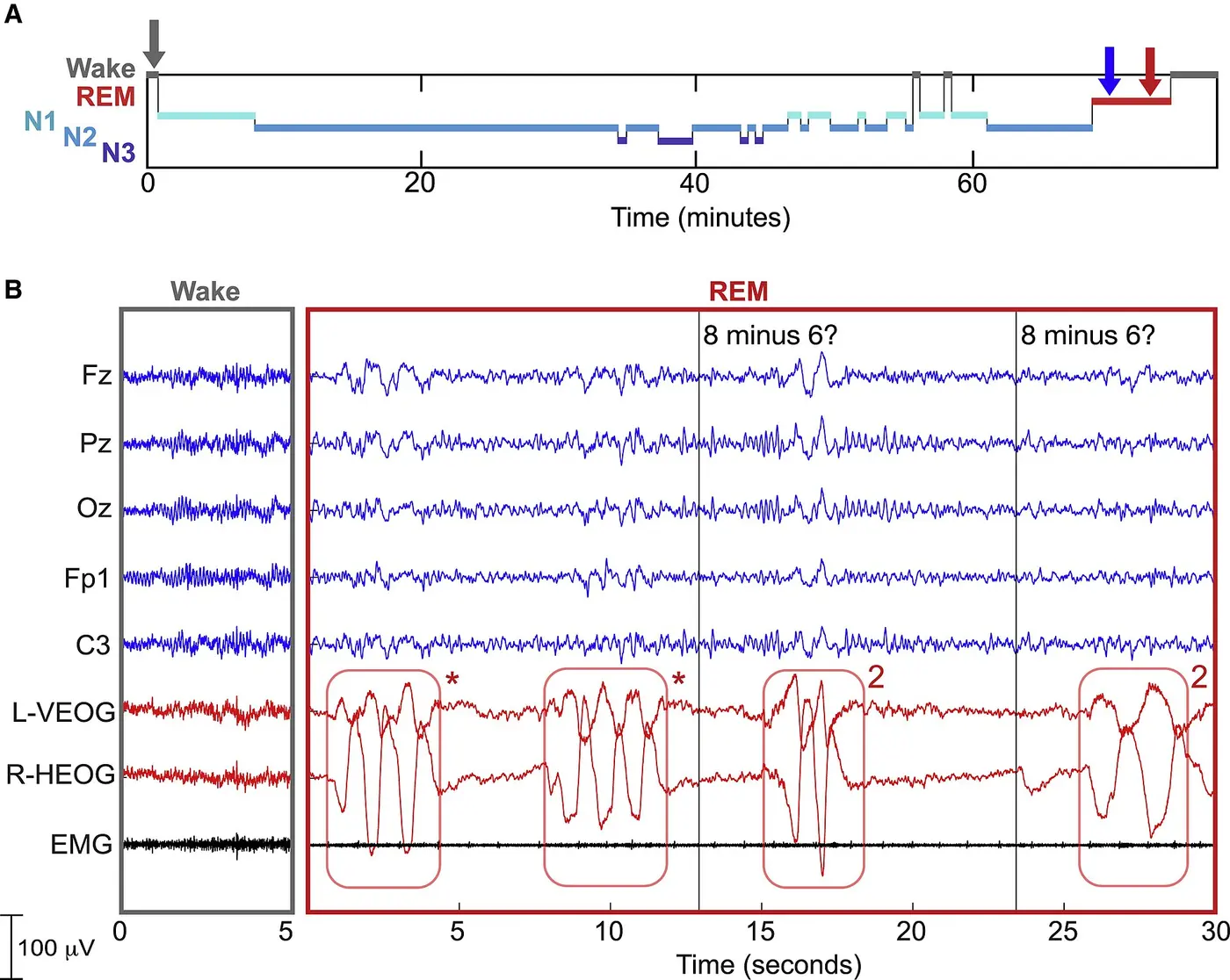
Over a night’s sleep, non-REM and REM sleep alternate in cycles of about 90 minutes, and the REM periods grow longer as dawn approaches. That is thought to be why we tend to remember dreams from the early morning. Later research, however, revealed that people dream during non-REM sleep too. Dreams are not exclusive to REM sleep.
A crowd of theories
So why does the brain go to the trouble of spinning stories while we sleep?
In 1900, Sigmund Freud, the founder of psychoanalysis, published The Interpretation of Dreams, arguing that dreams are repressed wishes appearing in disguise. The idea was hugely influential, but it is difficult to test scientifically, and modern neuroscience does not support it as it stands.
In 1977, the American psychiatrists Allan Hobson and Robert McCarley proposed the “activation-synthesis hypothesis.” In this view, during REM sleep the deep parts of the brain send up what are essentially random signals, and the cerebrum does its best to make sense of them by weaving them into a story. That story is the dream. The theory neatly explains why dream plots are so often incoherent.
Other theories hold that dreaming is linked to the process of sorting through the day’s experiences and consolidating them into memories, or that it helps soften painful emotions. There is also the well-known “threat simulation theory,” which sees dreams as rehearsals for dangerous situations. Perhaps, the idea goes, that’s why so many dreams involve being chased or failing at something.
Maybe there’s more than one answer
These theories aren’t a matter of one being right and the rest wrong. A growing body of research confirms that the brain processes memories and emotions during sleep. But whether the experience of dreaming that surfaces along the way has a role of its own, or is merely a by-product of the brain’s work, is still under debate.
One thing that makes dreams so hard to study is that only the dreamer can see them. All researchers have to go on are reports from people who have just woken up—“it was a dream like this”—and those memories fade fast.
Dreams are a world everyone visits every night, yet no one has ever looked into directly.
Even so, in recent years researchers have tried to infer what appears in dreams from patterns of brain activity. Others have attempted to communicate with lucid dreamers—people who realize “this is a dream” while still dreaming—using signals such as eye movements.

Little by little, the mystery of dreams is being lit from new angles. When an answer is finally found, we may come to see our own sleep a little differently than we do today.