Why are yawns contagious?
No one knows for sure. Links to empathy and social bonds are a leading idea, but the debate goes on.
The person sitting across from you lets out a huge yawn, and a moment later you are yawning too. It is something everyone has experienced, about as ordinary as human behavior gets. And yet science has still not fully explained why yawns are catching.
Stranger still, a yawn can spread without the real thing in sight. Looking at a photo of someone yawning, hearing the sound of a yawn, or even just reading a piece of writing about yawning is said to make people more likely to yawn. If your jaw is starting to feel a little restless right now, that may be part of the phenomenon.
What is a yawn for, anyway?
Before asking why yawns spread, it helps to ask what yawning does in the first place. The old, widely known explanation was that we yawn to take a deep breath when we run short of oxygen. But experiments have found that changing the levels of oxygen or carbon dioxide does little to change how often people yawn, and today this idea is no longer considered convincing.
Attention has shifted instead to the “brain cooling” hypothesis. The idea is that by opening wide, drawing in cool air and working the jaw hard, a yawn changes blood flow in the head and cools a warmed-up brain. There are reports that how readily people yawn changes with the air temperature, and the hypothesis has won a fair amount of support. Even so, it is not yet a settled conclusion.


The empathy theory, and its wobbles
For a long time, the leading explanation for contagious yawning has been a connection with empathy and social behavior. The thinking goes that the same capacity that lets us feel another person’s expressions and states as if they were our own might also be what passes yawns along.
Some observations support the idea. One study, for example, found that yawns spread more easily from family members and close friends than from strangers. And while children yawn from birth, they are said to start catching other people’s yawns at around age four, just when the ability to read other people’s feelings is developing.
On the other hand, there are contrary results too. In a 2014 experiment by a research team at Duke University in the United States involving just over 300 people, no clear link turned up between how easily people caught yawns and how empathetic they were. About the only notable trend was that the older people were, the less likely they were to catch a yawn, and even that explained only a small part of the differences between individuals.
That doesn’t mean empathy has been ruled out entirely. But the honest state of play today is that the story is not as simple as “people who catch yawns are kind people.”
Dogs and budgies yawn along too
Contagious yawning is not limited to humans. It has been reported in chimpanzees, which catch yawns from their companions, and it has been observed in wolf packs as well.
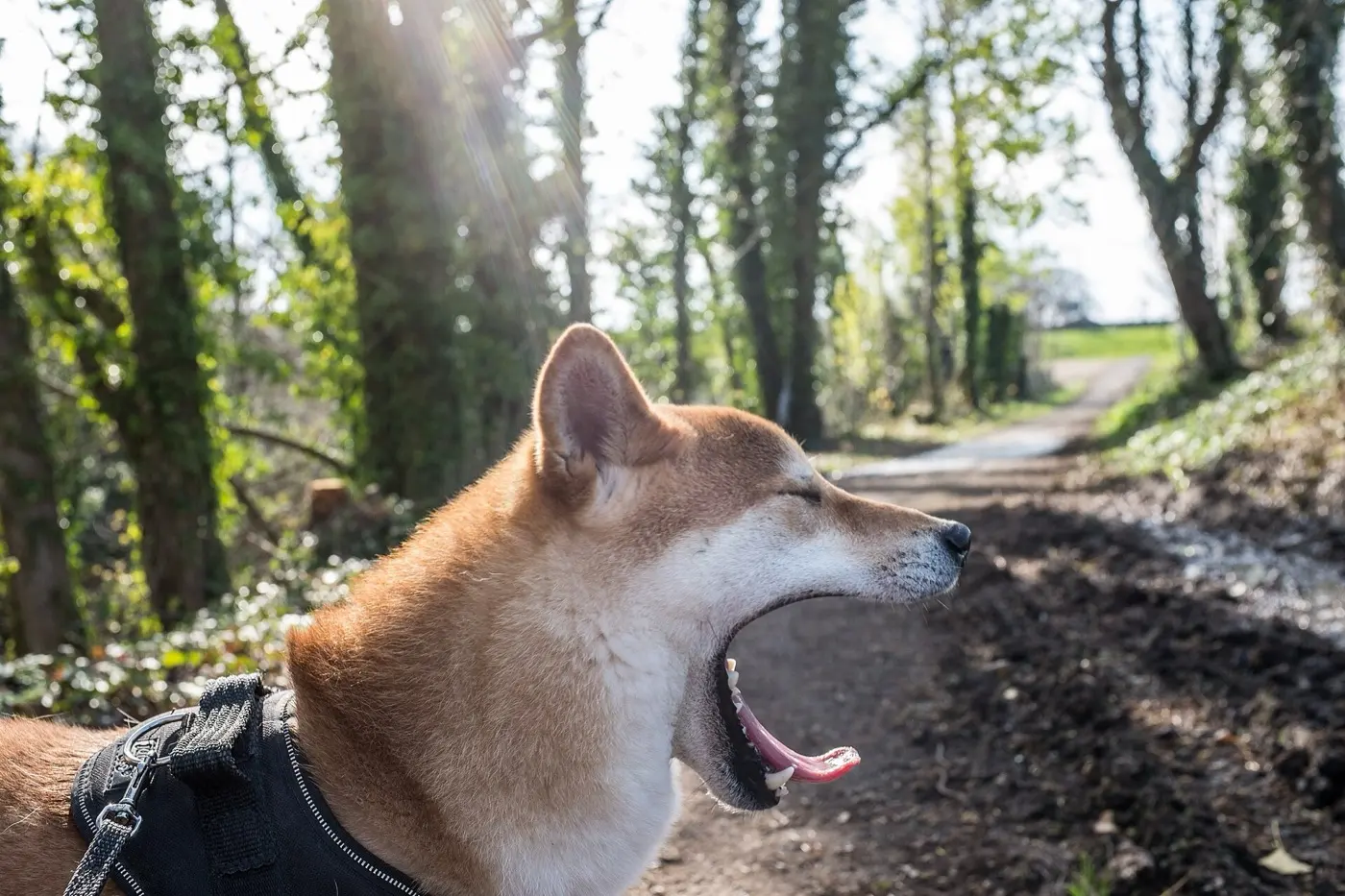
Closer to home, one study showed that dogs can catch yawns from their owners. Intriguingly, the results suggested that puppies younger than seven months hardly ever catch yawns, and become more susceptible as they grow. As with human children, the stage of development may play a role.

Beyond mammals, experiments with budgerigars have shown that they, too, catch yawns from one another. A study of young ravens, however, found no clear evidence of contagion. Which animals catch yawns and which don’t? Researchers hope that mapping those differences will offer clues to how the whole thing works.
The fun of not knowing
We do it practically every day, and yet we still can’t say for certain why it happens or why it spreads. In its small way, the yawn reminds us that our bodies are still full of mysteries.
One idea is that for animals living in groups, it may have been useful to bring everyone’s sleepiness or alertness into line. If so, then every time we yawn along with someone, we may be exchanging a “signal to the group” handed down from our ancestors.