Why do we get goosebumps?
Tiny muscles at the base of each hair contract. It’s thought to be a leftover of how furry ancestors kept warm.
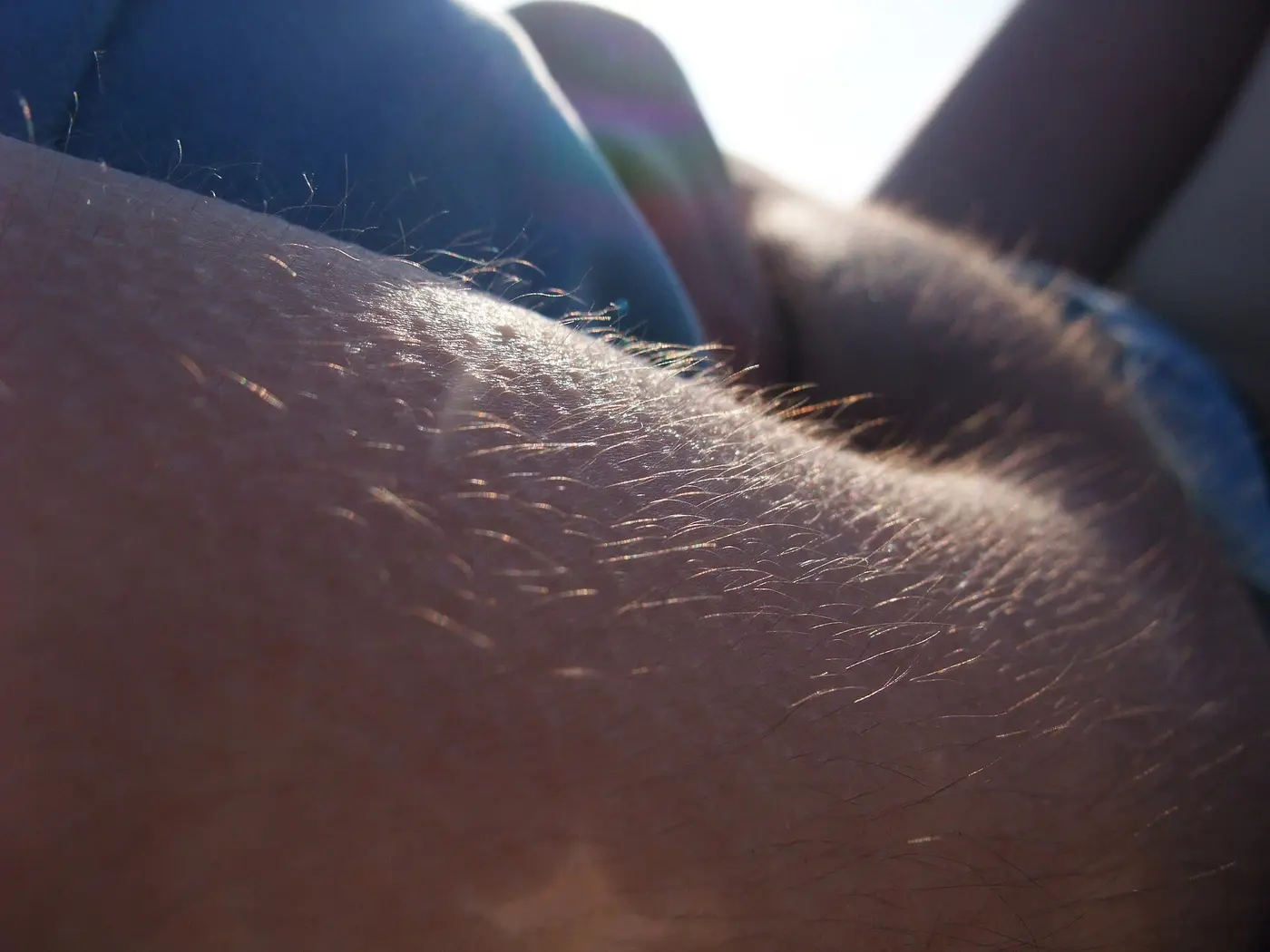
The moment you step out of a warm room into a winter morning. The climax of a scary story. The chorus of your favorite song, when the singer’s voice soars. Suddenly, tiny bumps spread across the skin of your arm, and the fine hairs there lift up and stand on end.
In Japanese this is called torihada (鳥肌), or “bird skin,” after the look of a plucked bird. English speakers call it “goosebumps,” so the same comparison seems to have leapt the language barrier. But what is actually happening inside the body when it occurs?
Tiny muscles that raise each hair
The star of the show is a minute muscle attached to the base of every single hair. It is called the arrector pili muscle, and it runs at a slant inside the skin from the hair follicle, the little pocket that encloses the root of the hair.
When this muscle contracts, it pulls the hair, which normally lies at an angle, up toward the vertical. At the same time, the skin around the base of the hair is pushed up, forming a bump on the surface. That is all a goosebump really is.
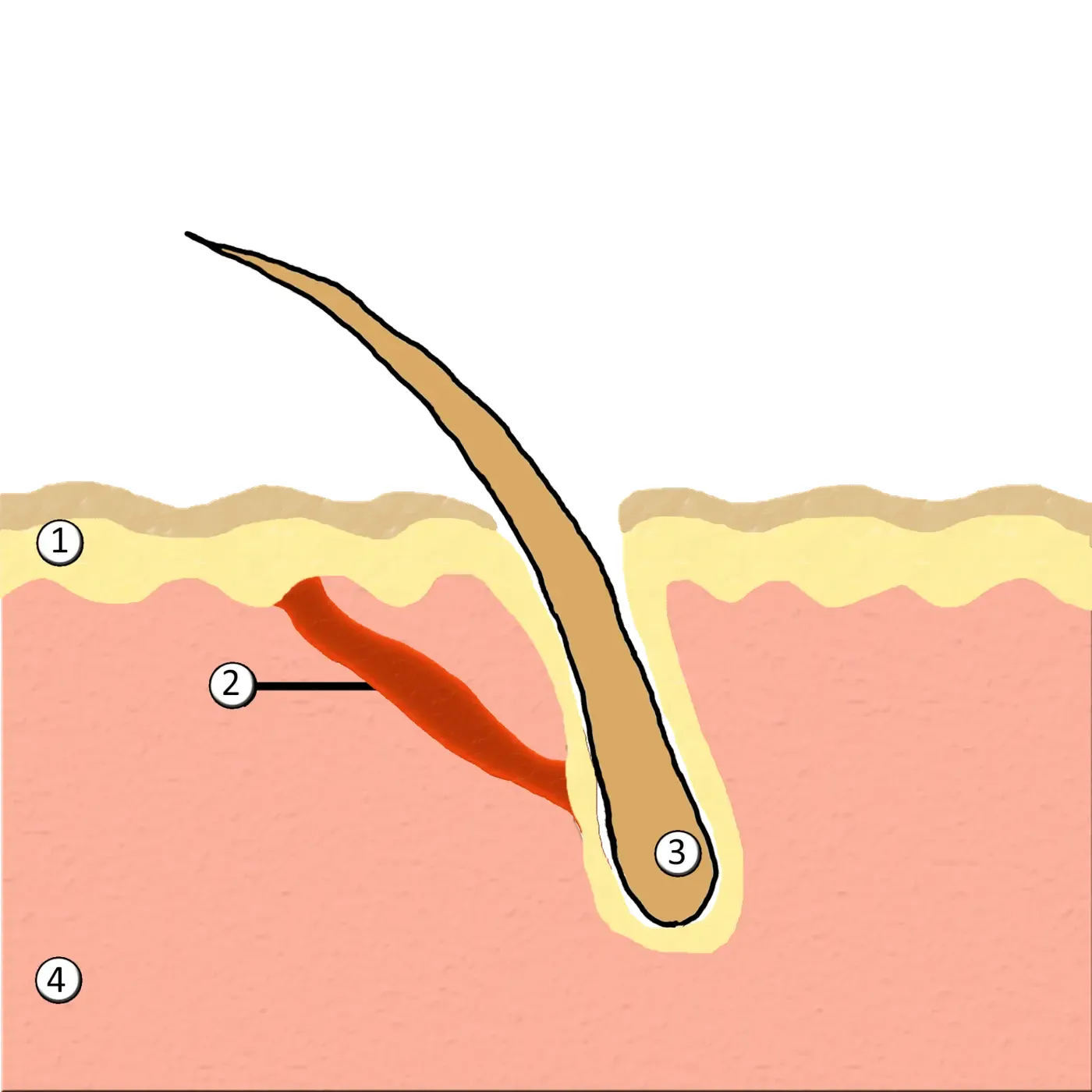

These muscles are controlled by the autonomic nervous system, the part we cannot steer by will. More specifically, they answer to the sympathetic nervous system, the branch that shifts the body into a state of tension and arousal. When we feel cold, or surprise or fear, the sympathetic nerves fire and the arrector pili muscles all over the body contract at once. That is why goosebumps spread not just along the arms but across the back and legs too.
A relic of the fur coat
In other mammals covered in fur, these muscles still serve clear purposes.
One is keeping warm. When an animal fluffs up its fur in the cold, plenty of air gets trapped between the hairs, forming an insulating layer around the body. It is the same principle as a bird puffing up its feathers and hunkering into a ball in winter.
The other is making yourself look bigger to an opponent. Many people have seen a cat confront an enemy with the fur on its back bristling and its tail puffed up thick and bushy. A porcupine’s quills, too, began as modified hairs, and they stand up when the animal senses danger.
Human body hair, however, has grown very thin. Raising our fine hairs traps almost no warm air, and it certainly won’t intimidate anyone. Human goosebumps are thought to be a “relic”: a mechanism inherited from our hairier ancestors that has survived even though its job is largely done.
Goosebumps from the heart
Human goosebumps have one rather curious feature that is rarely seen in other animals: they also appear when we are emotionally moved.
Plenty of people know the feeling of a shiver running down the spine, or goosebumps rising, while listening to music. Estimates of how many people experience this vary widely depending on how the question is studied, but it is by no means rare. Researchers have also reported that during these moments, parts of the brain involved in pleasure and reward become highly active.

Originally, the Japanese phrase torihada ga tatsu (“bird skin rises”) described the hair-raising feeling of cold or dread. Using it for moments of being deeply moved is said to be a relatively recent development. As a bodily reaction, though, both are the work of the same sympathetic nervous system. When something stirs us powerfully, perhaps the body treats it as a kind of emergency.
More than just a relic?
The arrector pili muscle has long been seen as a part that had outlived its purpose. But in 2020, a research team including scientists at Harvard University in the United States published an intriguing study in mice.
They found that the sympathetic nerve connected to the arrector pili also connects to the stem cells that give rise to new hair. When cold persists, the nerve’s activity increases and encourages new hair to grow. The arrector pili muscle turned out to play a role in anchoring that nerve in place. In other words, goosebumps may be not only a reaction that raises hair “right now,” but also linked to a mechanism that grows more hair in preparation for the cold season. Whether the same thing happens in humans remains a question for future research.