Where is the rainiest place in the world?
Mawsynram in northeast India, averaging about 11,900 mm of rain a year—more than seven times Tokyo’s.
11,872mm
During Japan’s rainy season in early summer, the near-daily downpours can wear anyone down. In an average year, Tokyo gets about 1,600 millimeters of rain. Compared with the world average, Japan is a rainy country to begin with. Yet there are places on Earth that get more than seven times as much rain as Tokyo.
The place said to be the rainiest in the world is Mawsynram, a village in the hills of Meghalaya State in northeastern India.
Nearly 12 meters of rain in a year
According to Guinness World Records, Mawsynram’s average annual rainfall is 11,872 millimeters (about 467 inches). If a year’s worth of rain never drained away and simply kept pooling, it would be nearly 12 meters deep.
Sohra (also known as Cherrapunji), a town a dozen or so kilometers from Mawsynram, is also famous for its rain. It was once known as the rainiest place in the world. It holds the record for more than 26,000 millimeters of rain in the 12 months from August 1860 to July of the following year, which is still considered the world record for rainfall in a single year.
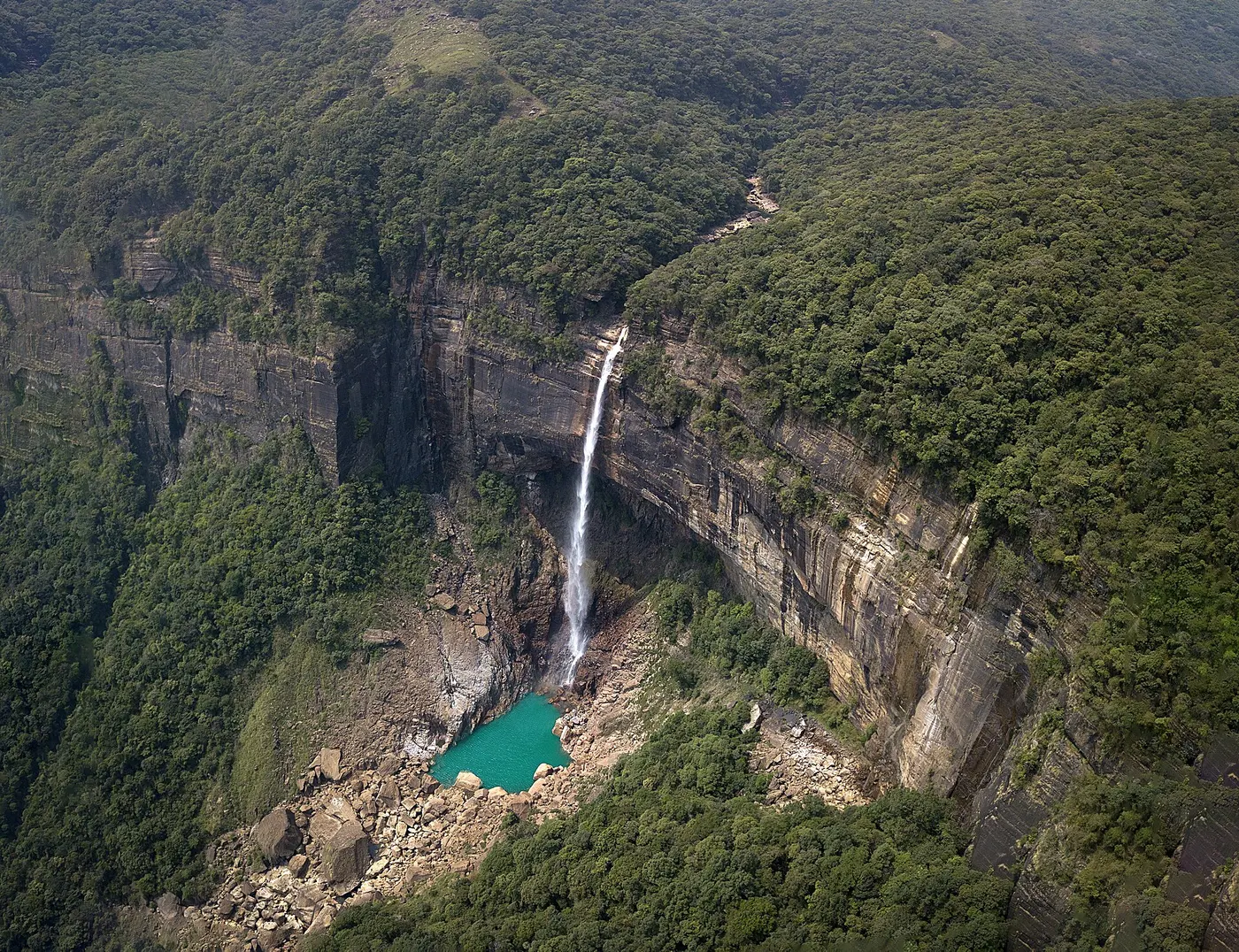

Ocean winds meet a wall of mountains
The reason for all this rain is a combination of terrain and seasonal winds.
In summer, a southwest monsoon wind laden with moisture blows in from the Indian Ocean across the Bay of Bengal. The plains of Bangladesh, stretching north of the bay, are low and flat, with almost nothing to block the humid air. The first thing that air runs into is the Khasi Hills, rising to the north of the plains.
When air hits a mountainside, it is forced upward. As air rises, it expands and cools, and the water vapor it can no longer hold forms clouds that dump huge amounts of rain. Mawsynram and Sohra, sitting atop hills more than 1,000 meters above sea level, are right on the front line of this “wall of mountains.” Most of the rain falls during the monsoon season, from around June to September. In the wettest months, June and July, a single month can bring far more rain than Tokyo gets in an entire year.
Living wisely with the rain
People in rainy lands have built ways of life suited to their surroundings. The Khasi people of the Khasi Hills have long used a hooded umbrella called a knup, woven from bamboo and leaves. Because it covers the wearer from head to back, it leaves both hands free for farm work.
Most famous of all are the “living root bridges.” They are bridges grown by guiding the roots of a tree related to the rubber fig across a river over many years and weaving them together. They are said to have been devised in a land where wooden bridges are easily damaged by the torrents of the rainy season. Because they are part of a living tree, they actually grow stronger as the roots thicken, and some have stayed in use for a very long time. In 2022, the cultural landscape where these root bridges survive was added to UNESCO’s tentative list for World Heritage status.
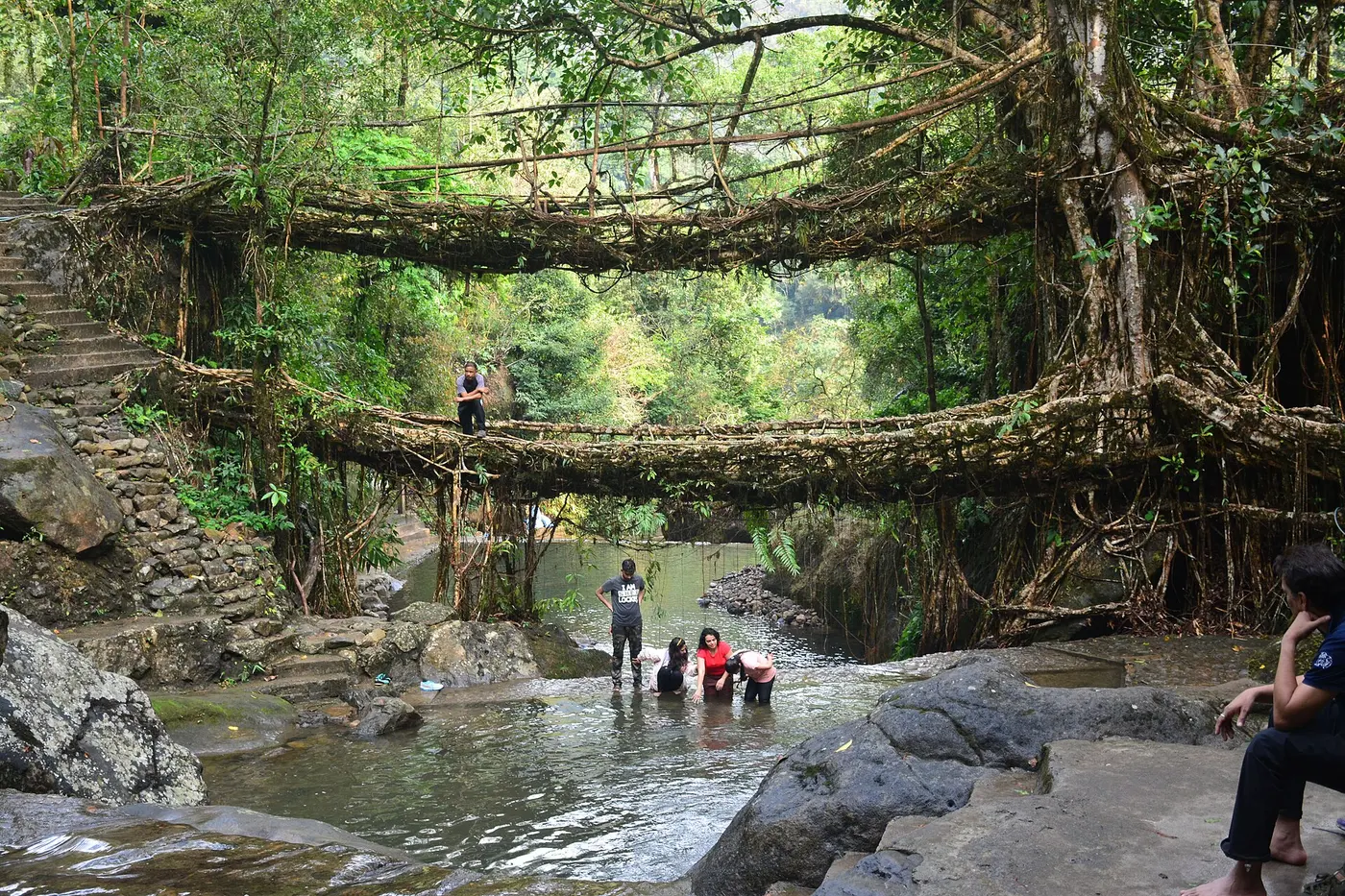

Contenders for the crown
That said, the title of “rainiest place in the world” is not undisputed. Towns such as Lloró and López de Micay in Colombia, South America, have reported average annual rainfall of more than 12,000 millimeters. Questions have been raised about the length and methods of those observations, however, and they have not become widely accepted as official records. Mount Waiʻaleʻale on the Hawaiian island of Kauai is also known as an extremely wet spot, with nearly 10,000 millimeters of rain a year.
In Japan, Yakushima, an island in Kagoshima Prefecture, is famous as an island of rain. It is known in part for a line in Hayashi Fumiko’s novel Ukigumo (Floating Clouds) saying it rains there 35 days a month, and in the mountains the annual rainfall is said to reach 8,000 to 10,000 millimeters at times. Even next to the world’s rainiest regions, that is nothing to scoff at.