How hot is lightning?
The channel a lightning bolt travels through reaches about 30,000°C—roughly five times hotter than the Sun’s surface.
30,000°C
On a summer evening, the far-off sky flashes, and a moment later a low rumble rolls in. Lightning has frightened people since ancient times, and fascinated them just as much.
What is actually happening inside that streak of light? For the brief instant a bolt flashes across the sky, the air along its path becomes far hotter than the surface of the Sun.
Five times hotter than the Sun’s surface
Lightning is an electrical discharge: electricity built up inside a cloud surging through the air all at once. Air normally conducts electricity poorly, but when an enormous voltage builds up between a cloud and the ground, part of the air becomes a pathway for electricity, and a massive current—said to be tens of thousands of amperes—pours through it.
That current heats the air in its path in an instant. The temperature is thought to reach about 30,000°C (roughly 54,000°F). The Sun’s surface is about 6,000°C, so that is around five times hotter. Estimates vary, and some sources put the figure in the 20,000s, but either way it is an extraordinary temperature to arise naturally on Earth.
That heat is also why lightning glows such a dazzling white. The superheated air itself is giving off intense light.
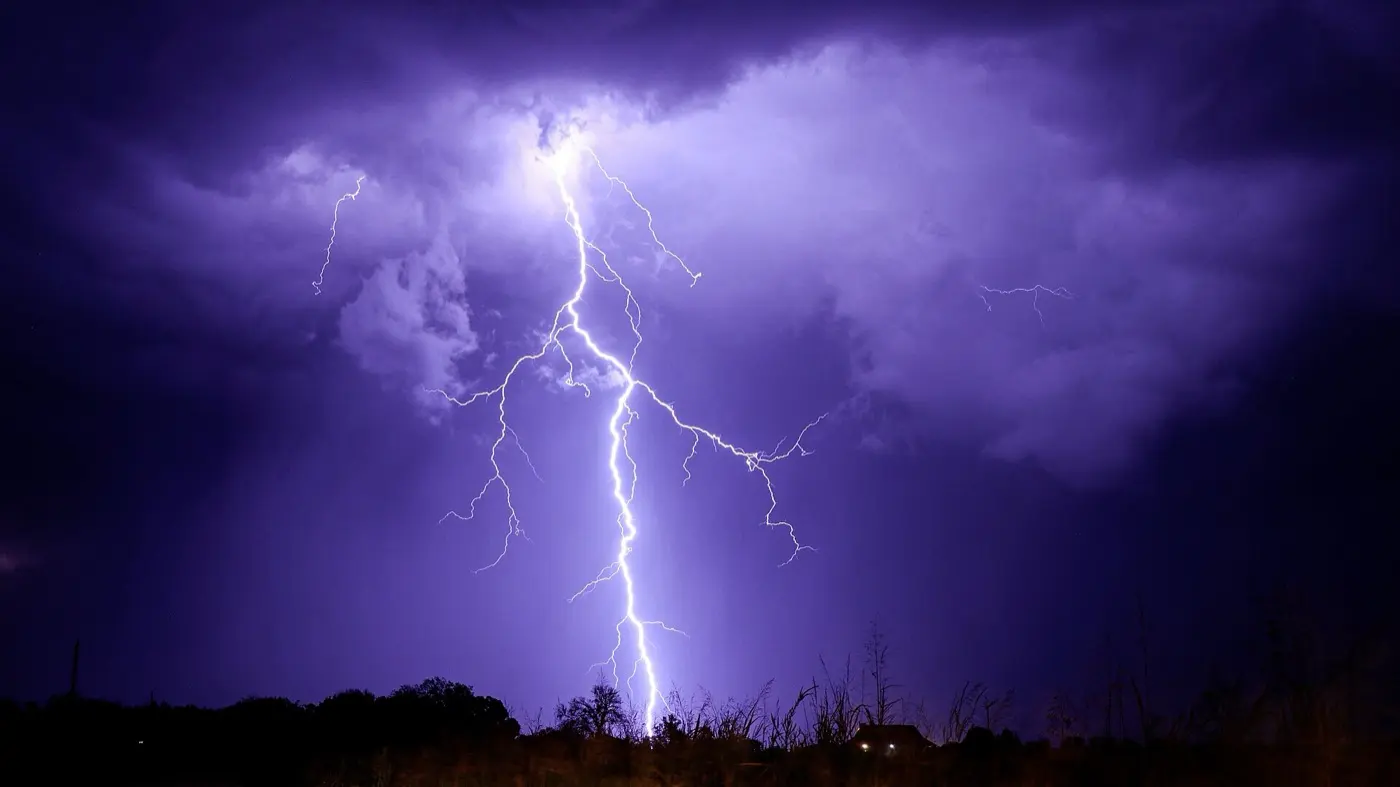

Hot for only an instant
For all that heat, the area around a lightning strike doesn’t keep burning indefinitely. That’s because the extreme temperature lasts only a very short time.
The main discharge, at the moment the bolt shines brightest, is over in a few tens of microseconds—on the order of a hundred-thousandth of a second. A single lightning flash may repeat such discharges several times along the same path, which is why lightning seems to flicker. Even so, the whole event lasts less than a second.
The electrical channel itself is thought to be only a few centimeters wide. The streak across the sky looks thick, but that’s because such intense light spreads out to our eyes. A very narrow path becomes extremely hot for just an instant: that is the secret of lightning’s heat.
Thunder is the sound of air bursting
So where does that rumbling thunder come from?
The answer lies in the heat. When the air in the channel is heated to tens of thousands of degrees in an instant, it expands explosively, looking for somewhere to go. It shoves the surrounding air violently aside, creating a shock wave. As that vibration travels outward through the air, it reaches our ears as thunder. When lightning strikes nearby, you hear a sharp crack or a booming bang because you’re hearing that shock almost exactly as it is.
Distant thunder, on the other hand, rumbles on and on because a lightning channel can stretch for several kilometers. Sound from different points along the channel travels different distances, so it arrives a little out of step, blending into one long, low roll.
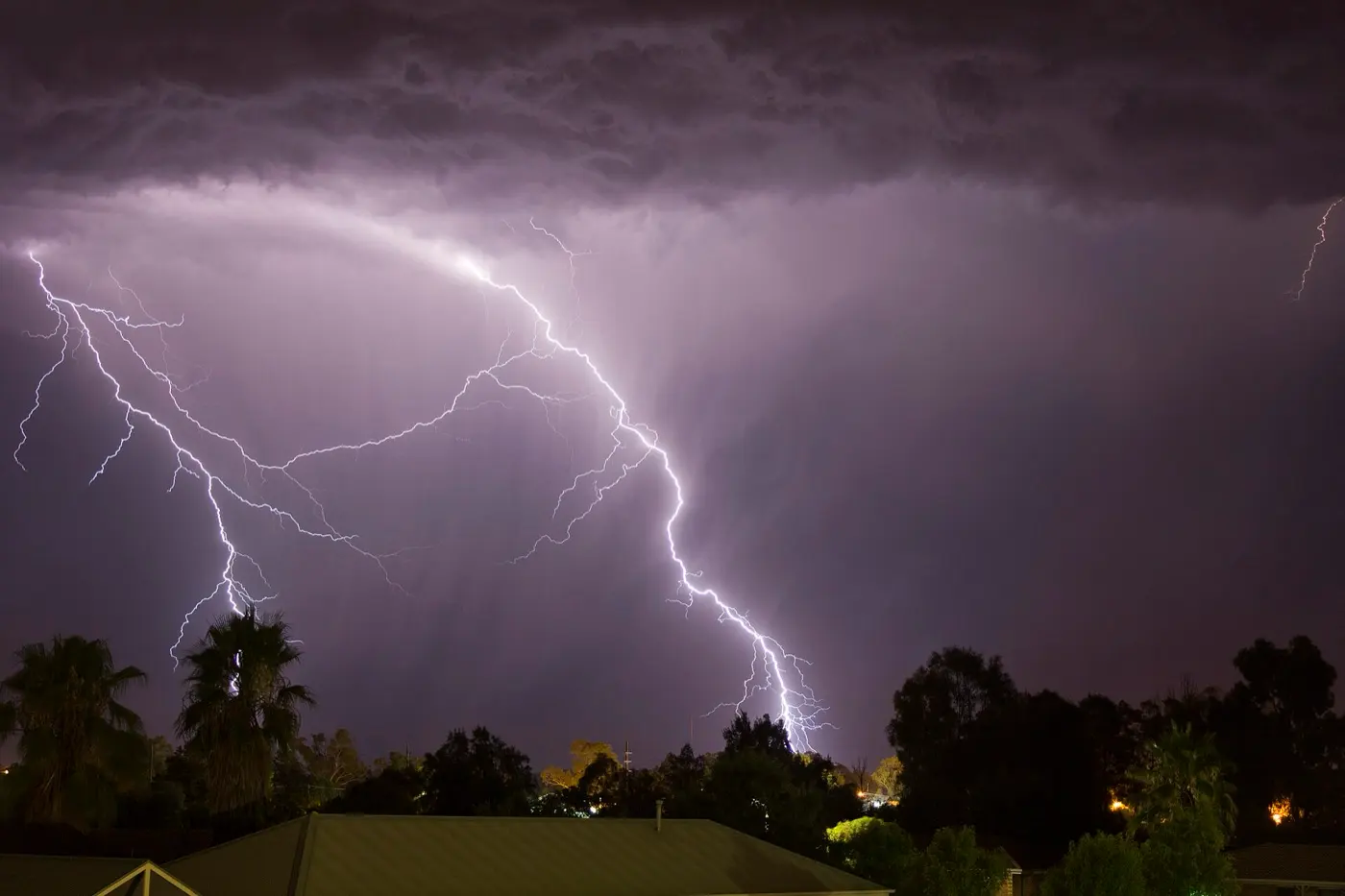

Count the seconds, find the distance
There’s a gap between lightning’s light and its sound. Light reaches us almost instantly, but sound travels through air at only about 340 meters per second. You can use that difference to estimate how far away the lightning is.
Count the seconds between the flash and the thunder, and multiply by 340. That gives you the approximate distance to the lightning in meters.
If the thunder comes three seconds after the flash, for example, the lightning is about a kilometer away. Ten seconds means a little over three kilometers.
This is not, however, a way of telling that you’re safely far away. Lightning is said to sometimes strike as far as about 10 kilometers from its storm cloud. If you can hear thunder, assume you are already within reach of lightning, and move inside a building or a car.