Did the Romans really have a “vomitorium” for throwing up?
No. A vomitorium was a passageway for spectators in an amphitheater, not a room for vomiting.
80entrances
When the nobles of ancient Rome had eaten their fill at a banquet, the story goes, they withdrew to a room called a vomitorium, threw up, and returned to the table to keep eating. You may have heard it in a trivia book or on television. It is still widely told as proof of the luxury and decadence of the Roman Empire.
Historians, however, shake their heads firmly at this one. The vomitorium was real enough. It just wasn’t a place for vomiting.
The crowd was what got “spewed out”
Vomitorium (plural vomitoria) is built from the Latin verb vomere, “to spew forth,” plus an ending that marks a place. It is indeed a relative of the English word “vomit,” but what it named was a passageway beneath or behind the tiers of seats in an amphitheater or theater.
The classic example is Rome’s Colosseum. This enormous arena, which is estimated to have held 50,000 to 80,000 people, had 80 entrances at ground level, 76 of them for ordinary spectators. Entrances and staircases were numbered, and spectators followed numbered tickets to their sections. The openings where the passages emerged into the seating were the vomitoria, and when a show ended, the huge crowd poured out through them all at once. It is said that everyone could leave within a few minutes.
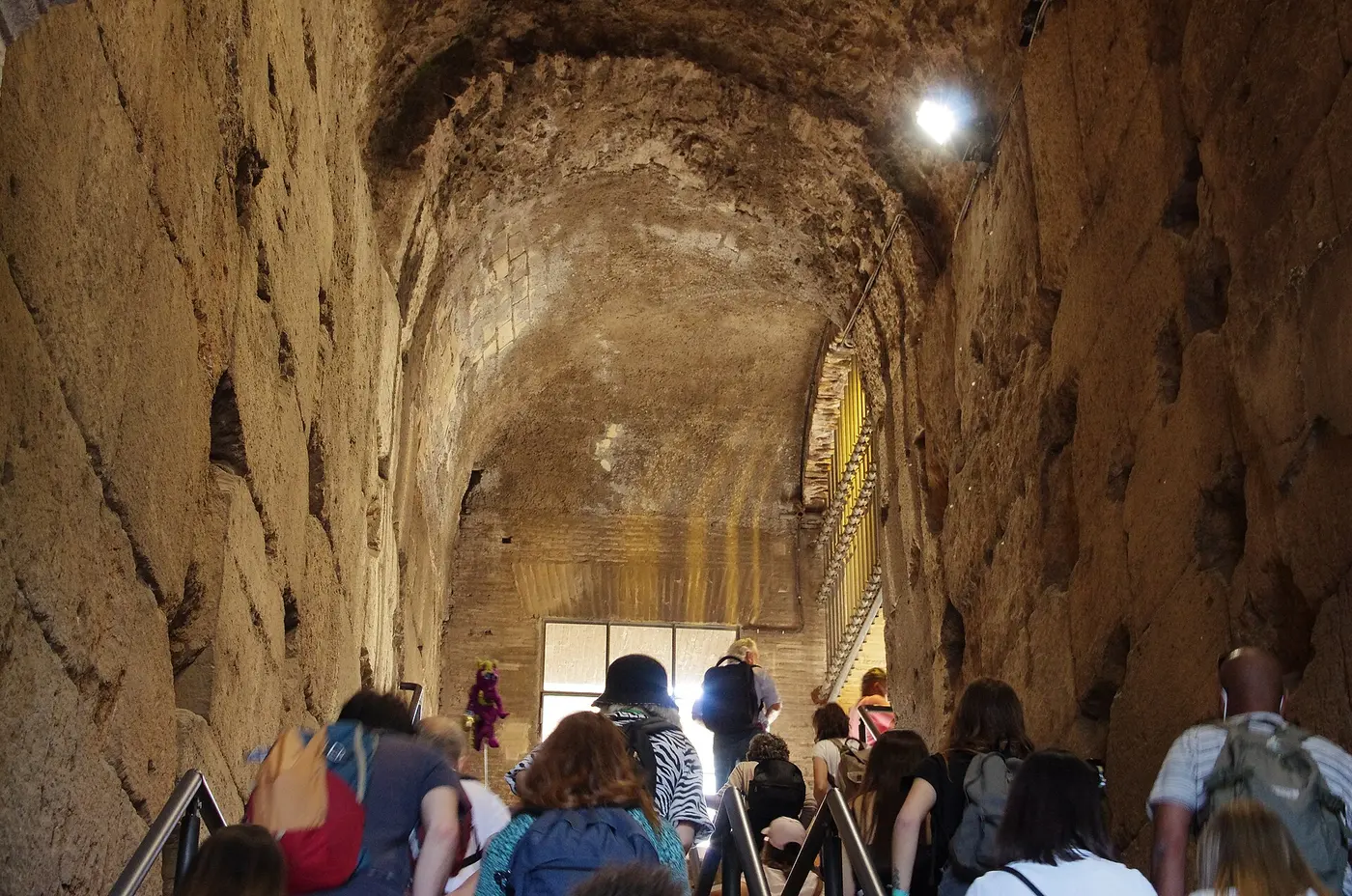

It is a vivid name, comparing a building to a mouth spewing out a tide of people.
No “vomiting room” in ancient texts
Only one surviving ancient text is known to use the word as the name of a place: the Saturnalia of Macrobius, a writer of the late fourth or early fifth century. Explaining a line by the poet Virgil about a house that “spews out” a wave of morning visitors, Macrobius notes that this is also where the vomitoria at public shows get their name. Once again, it is about the flow of people.
No ancient record, on the other hand, describes a room for throwing up after a feast.
Still, some Romans did throw up
Does that mean Romans never vomited at banquets? Not quite. The historian Suetonius reports that the emperor Claudius would eat and drink until he was stuffed, fall asleep on his back, and have a feather put down his throat to relieve his stomach. The statesman Cicero mentioned in a letter that Julius Caesar, when he dined at Cicero’s country house, was in the middle of a course of emetics.
The philosopher Seneca, writing to his mother from exile, savaged rich men who gorged on delicacies fetched from distant lands: “They vomit so that they may eat, and eat so that they may vomit.”
But these passages describe the habits of particular people, vomiting as a medical treatment, or moral criticism that may well exaggerate in order to condemn luxury. None of them points to a dedicated room.
When did the myth begin?
Using vomitorium to mean “a room for vomiting” is a modern development. The Oxford English Dictionary cites, as an early example of this sense, Antic Hay, a 1923 novel by the English writer Aldous Huxley. Some have pointed out that the confusion can already be found in 19th-century writing.
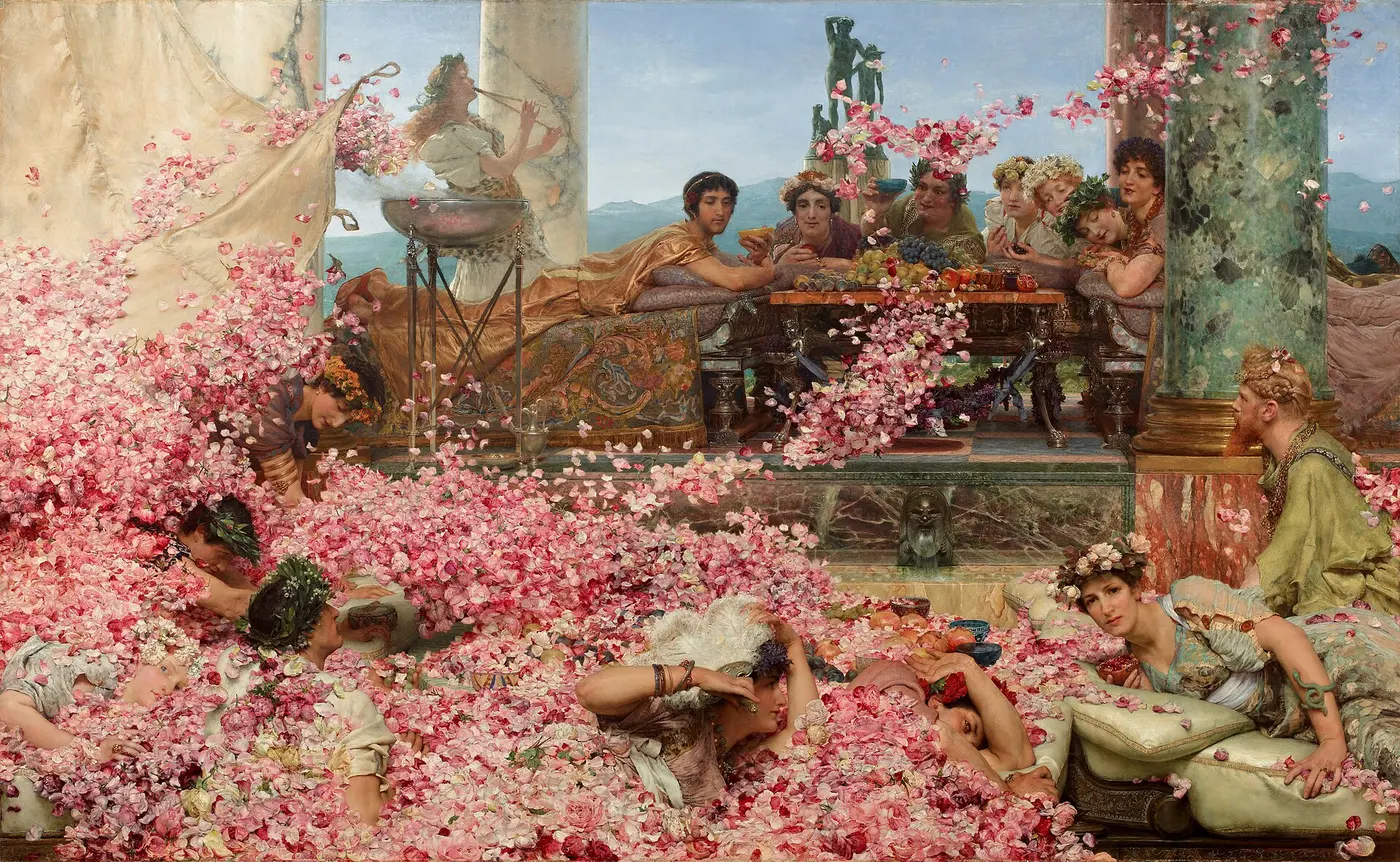

The word looks like it should mean vomiting, and 19th-century paintings and novels had already cast the Romans as people drowning in luxury. Together, these probably made the story seem believable. Seneca’s biting line, quoted again and again out of context, seems to have come to be read as a habit of all Romans.