Did ninja really dress all in black?
The all-black look is thought to come mainly from the stage. Real ninja dressed to blend in.
Wrapped in black cloth from head to toe, with only the eyes showing. A sword on the back, a throwing star in hand. Say “ninja,” and most people will picture exactly this all-black outfit. In theme-park shows and in action movies far beyond Japan, ninja nearly always appear dressed in black.
Yet there is almost no reliable historical evidence that the real shinobi, the spies and covert agents active from Japan’s Warring States period through the Edo period (roughly the mid-15th to the mid-19th century), ever dressed this way. So where did the black costume come from?
Ninja manuals recommended ordinary colors
Several manuals on the ninja arts survive that were written by the shinobi themselves, compiled in the early part of the Edo period. Among them are the Bansenshūkai, a comprehensive collection of the techniques of the Iga and Kōka schools, and the Shōninki, handed down in the Kishū domain.
According to an explanatory article by Japan’s National Diet Library, the Shōninki lists brown, persimmon-orange, black and navy blue as colors for a shinobi to wear. All of them were ordinary, inconspicuous colors that people of the time wore every day. Black was on the list, but not as a “ninja costume.” It was simply one more everyday color for blending into a crowd.
The heart of a shinobi’s work, after all, was scouting out the enemy and bringing information back. For that, nothing mattered more than getting close to people without arousing suspicion.
Seven disguises: the shichihōde
The Shōninki describes seven disguises known as the shichihōde. They were the komusō, a wandering monk who played the bamboo flute; the ordinary Buddhist priest; the yamabushi, a mountain ascetic; the merchant; the hōkashi, a street performer; the sarugakushi, a stage entertainer; and tsune no kata, or “ordinary dress”—simply looking like everyone else.
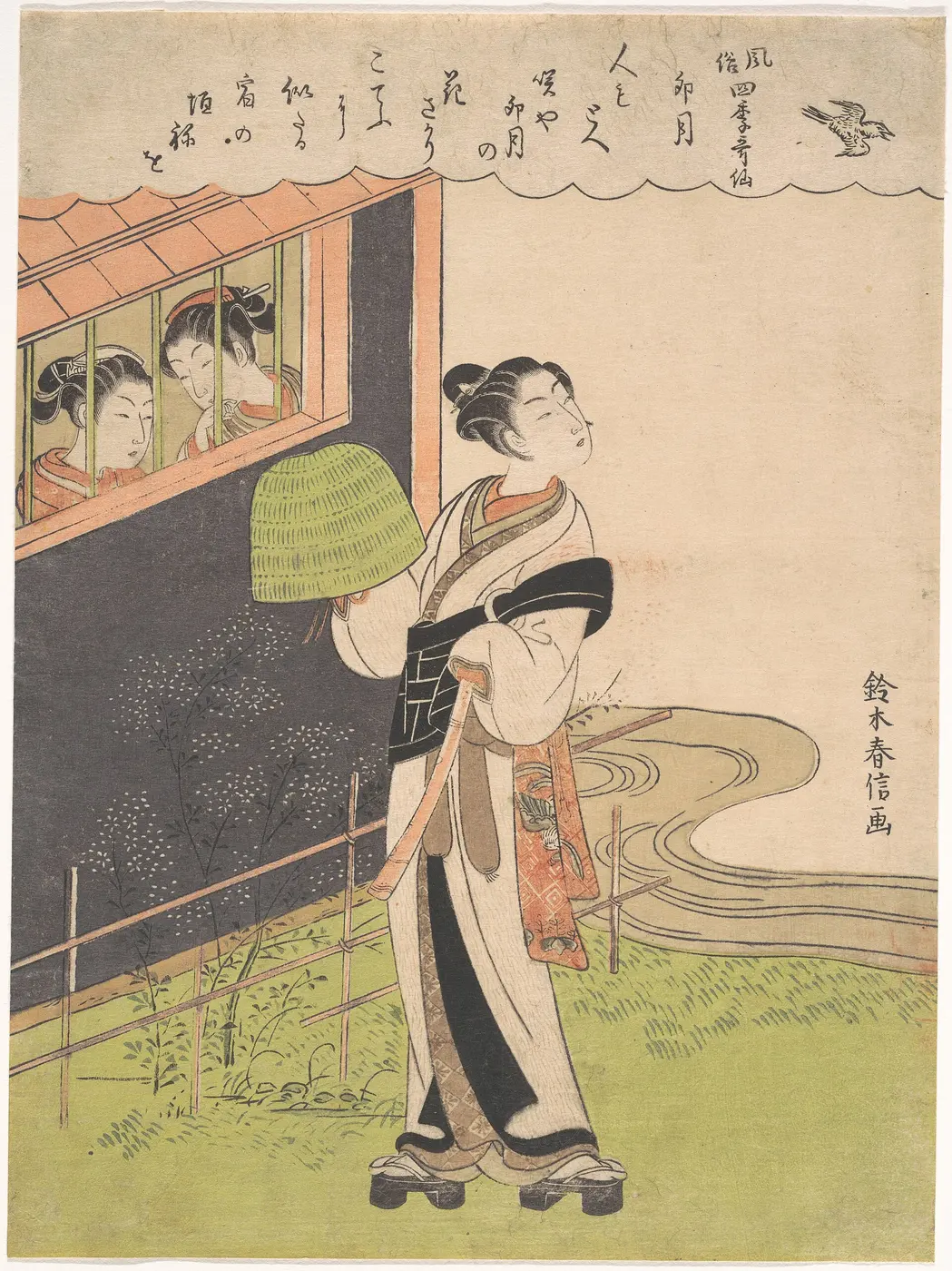

Every one of these was a kind of person who could travel through unfamiliar country without seeming out of place, and approach strangers without attracting suspicion. For a real shinobi, the best costume of all was arguably clothing that made them look like anything but a ninja. Walking through town in broad daylight dressed head to toe in black would have been like announcing, “I am a ninja.”
Born from the stage’s “invisible people”
When, then, did the black costume take hold? The most widely accepted theory points to the theater of the Edo period: kabuki and ningyō jōruri puppet plays.
On the kabuki stage there are kurogo, stagehands dressed entirely in black who hand props to the actors and help them with quick costume changes. Audiences shared an understanding that the kurogo were to be treated as invisible, present but unseen. It is thought that, overlapping with this convention, a stage technique developed in which a figure clad in black would emerge from the darkness and work some secret art.
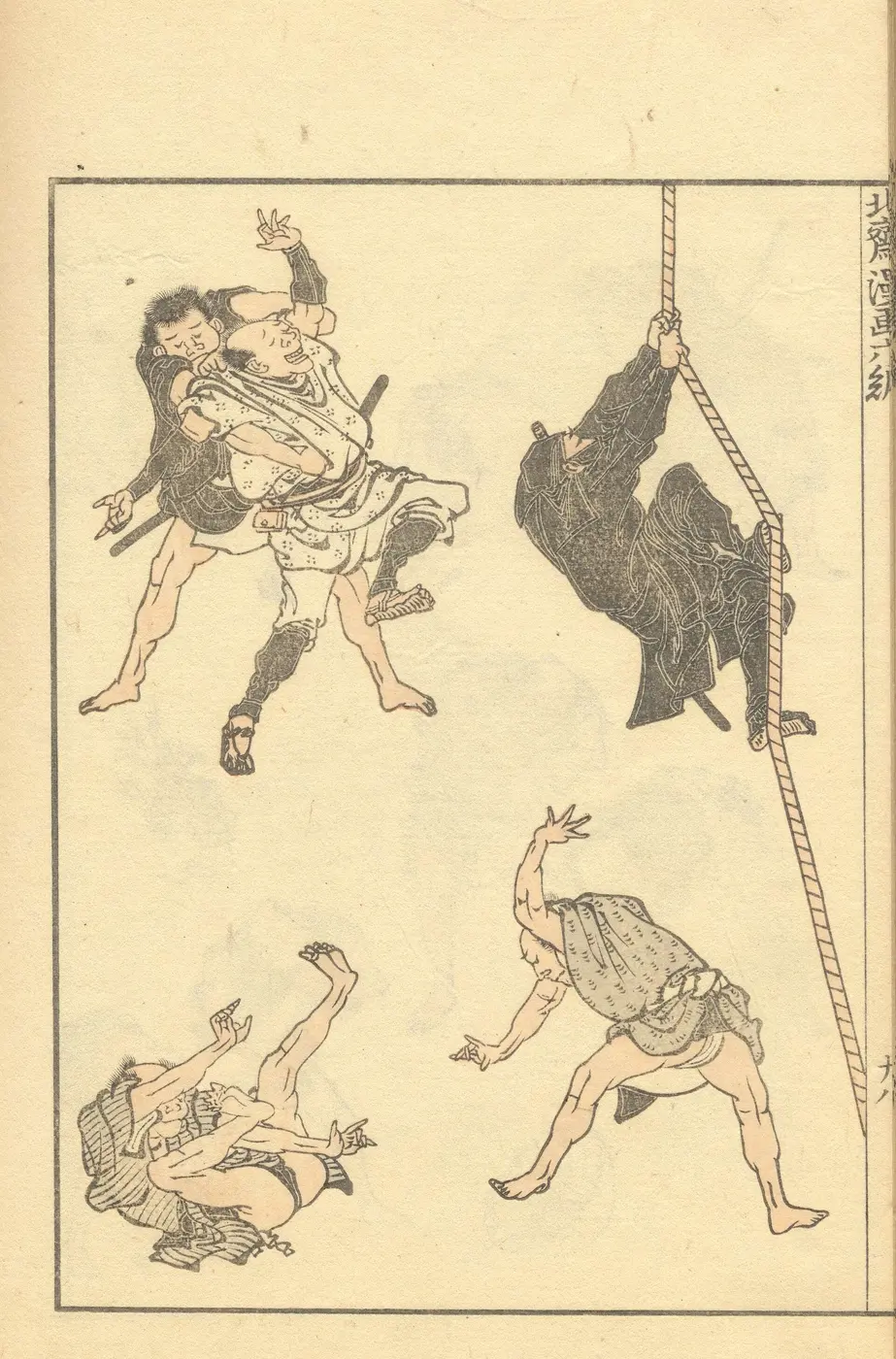

The National Diet Library’s article suggests that the black costume was likely a theatrical device to let audiences recognize a character as a ninja at a glance. On a stage where nothing could be spelled out in writing, appearance was the best explanation of all. Before long, the look was turning up in illustrations for popular novels and in ukiyo-e prints, and the idea that ninja wear black seems to have become fixed.
Movies took it worldwide
In the 20th century, ninja became stars of film and manga. Ninja crazes swept Japan again and again during the Shōwa era (1926–1989), and black-clad ninja raced across the screen. In the 1980s, ninja movies became popular overseas as well, and the black-clad “NINJA” turned into a character recognized all over the world.
Real shinobi lived by the rule of never standing out; stage ninja stood out so the audience would know they were there.
The two images of the ninja, in other words, faced in exactly opposite directions.