Did Vikings really wear horned helmets?
No. Horned helmets are an image spread by 19th-century art; excavated Viking helmets have no horns.
The image that comes to mind when we hear the word “Viking” is pretty much always the same: a bushy beard, a fur cloak, an ax in hand, and on the head a helmet with horns jutting out on either side. From cartoons and sports-team mascots to costume-shop accessories, the horned helmet has become the Viking “uniform.”
Ask an archaeologist, though, and you will hear that this picture has one big problem. No evidence has ever been found that Vikings went into battle wearing horned helmets.
Excavated helmets have no horns
The Vikings set out from Scandinavia across the seas to lands far and wide roughly from the late 8th century to the mid-11th century. The raid on Lindisfarne, a monastery in northeastern England, in 793 is often cited as the start of that era.
Remarkably, only one helmet from this period has been found that could be restored to nearly complete form. It is an iron helmet from around the 10th century, unearthed in 1943 from a burial mound at Gjermundbu, northwest of Oslo, the Norwegian capital. Shaped like a rounded cap, it has a spectacle-like guard to protect the eyes, but there are no horns anywhere.
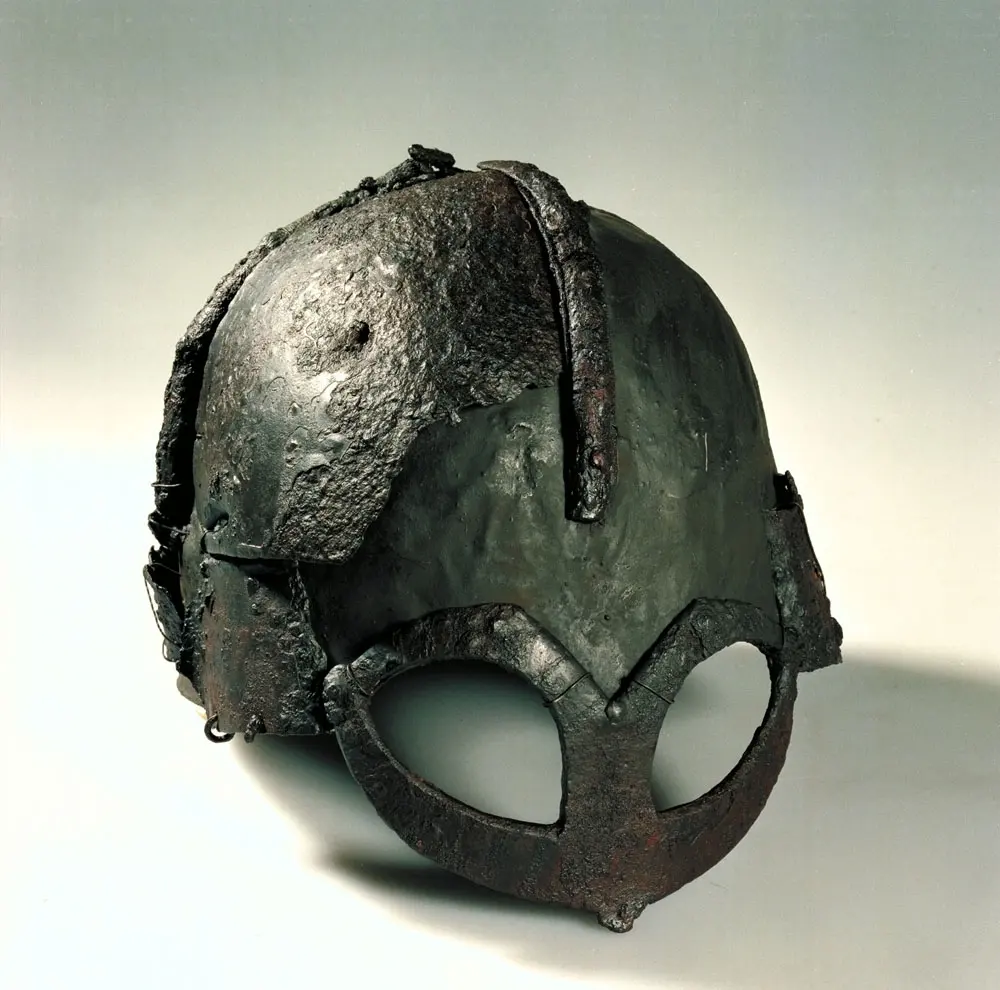

Other helmets have turned up in fragments, but they too show no trace of horns. Iron was precious at the time, and owning a metal helmet is thought to have been limited to a few powerful people. From a practical point of view, horns would also get in the way in a fight. An enemy’s weapon could easily catch on them, and they would end up absorbing a downward blow rather than deflecting it.
Horned helmets are far older
That is not to say Scandinavia never had horned helmets. In 1942, workers digging peat in a bog at Veksø, northwest of Copenhagen in Denmark, found two bronze helmets with large, curving horns.
A study published in 2022 used radiocarbon dating on birch tar left on the helmets and concluded that they were deposited in the bog around 900 BCE. That places them in the Bronze Age, more than 1,500 years before the Viking Age. They are thought to have been used in rituals rather than in battle, and researchers have suggested that the tips of the horns may once have been decorated with feathers.
Horned helmets really did exist in Scandinavia’s distant past. But they belonged to entirely different people, from an entirely different era than the Vikings.
An opera’s costumes fixed the image
When, then, did horned helmets become linked to Vikings? The key lies in the 19th century.
In Europe at the time, Romanticism, with its fascination for the ancient roots of each nation and people, was in full swing, and Norse myths and heroic legends became popular subjects for painting and poetry. Artists began placing helmets with horns or wings on ancient warriors, imagining them as fierce and untamed.
The decisive moment is said to have been Wagner’s The Ring of the Nibelung, a cycle of music dramas first performed in full at Germany’s Bayreuth Festival in 1876. The costumes for this epic, based on Norse and Germanic mythology, were designed by the painter Carl Emil Doepler. The characters were gods and heroes rather than Vikings, but the horned and winged helmets he designed made a powerful impression on stage, and they are thought to have rapidly spread the idea that Norse warriors wore horned helmets.
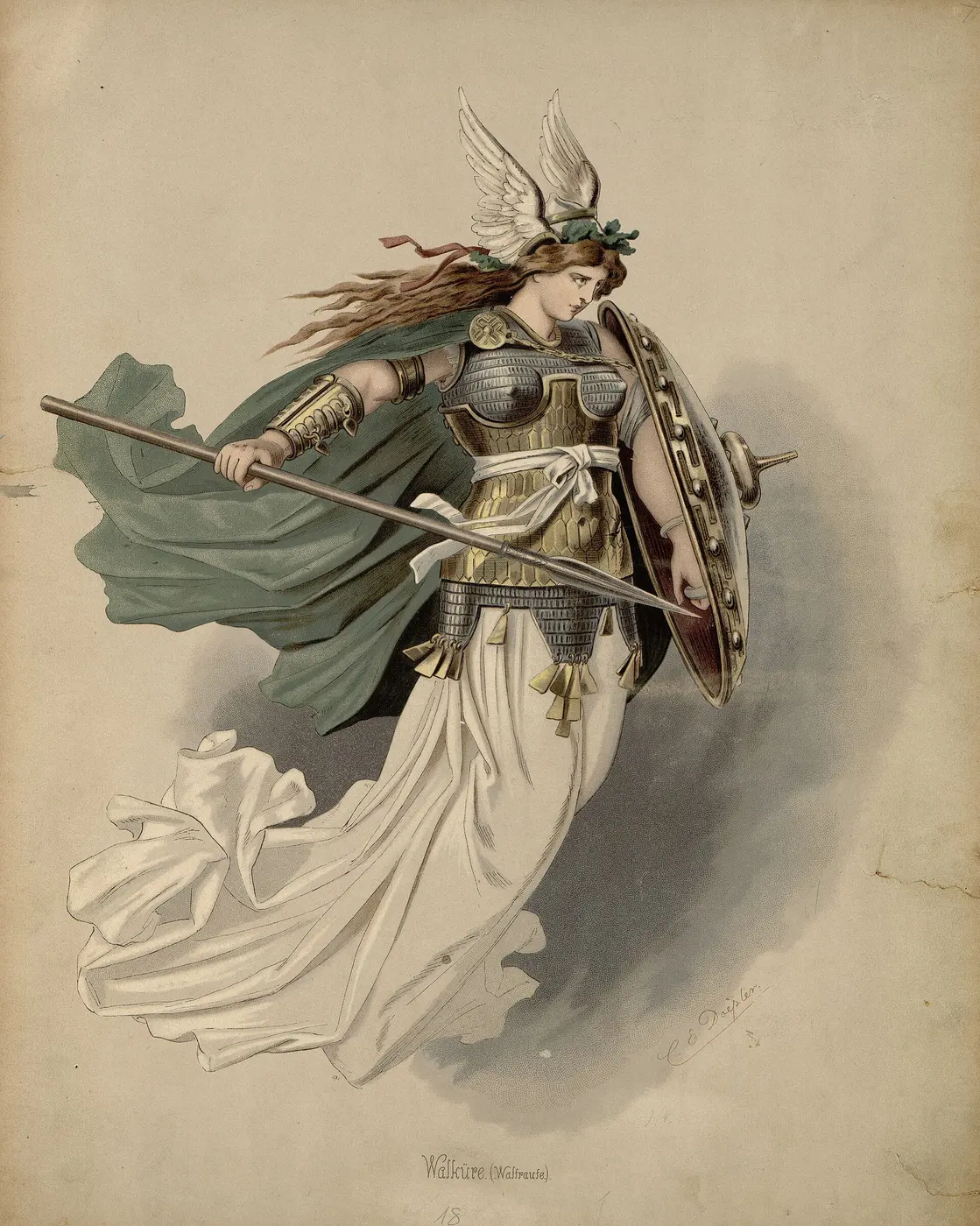

From there, the image spread around the world through illustrations and advertising, and eventually through film. By the turn of the 20th century, the horned helmet had become a standard part of how Vikings were portrayed.
Symbols outlive history
Why did something untrue take such firm hold? One reason is surely how easy horns are to read. Wildness, strength, a whiff of pagan mystery: as a symbol that conveys all of that at a glance, nothing beats a pair of horns.
Sometimes an easy-to-read symbol outlives the historical facts.
The real Vikings were raiders, but they were also merchants who traded as far away as Constantinople and the Islamic world, and pioneers who settled in Iceland and Greenland. Take off the horned helmet, and their true face is far more varied than we tend to think.