Why did samurai wear the chonmage topknot?
The leading theory is that they shaved the crown to keep cool under their helmets. In the Edo period the style spread to commoners too.
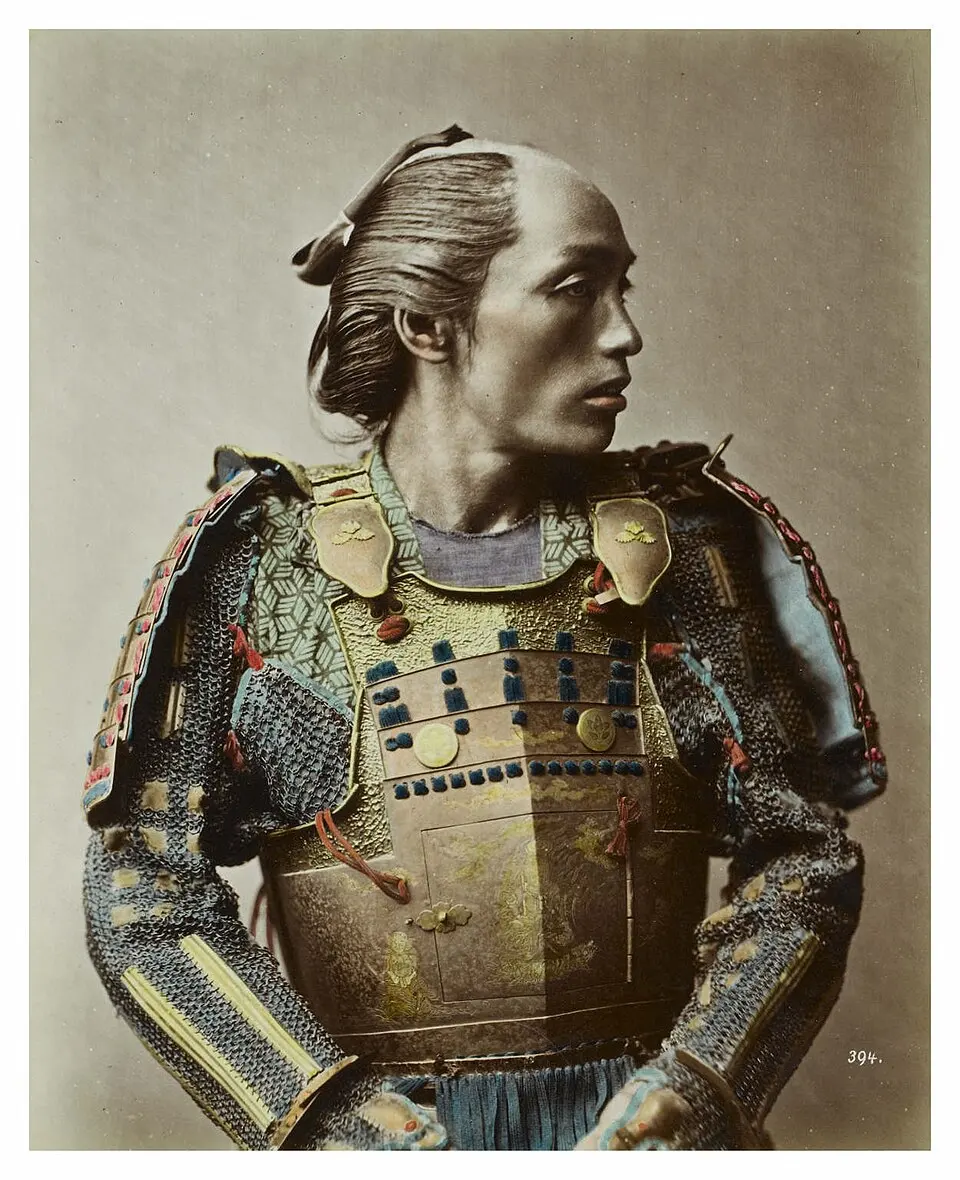
Picture a samurai from a Japanese period drama. His head is shaved smooth from the forehead to the crown, and the remaining hair is gathered at the back and laid on top of his head. In Japan, this whole look is casually called the chonmage.
To modern eyes it seems an oddly high-maintenance hairstyle. What reason could there have been to shave only the middle of the head?
Two parts to the chonmage
The style can be split into two parts. The area shaved from the forehead to the crown is the sakayaki (月代), and the remaining hair, gathered and tied, is the mage (髷), or topknot.
In fact, the word chonmage (丁髷) didn’t originally refer to the whole hairstyle. It meant a small topknot worn by older men and others whose hair had thinned. The name is said to come from the way the narrow, folded-over knot resembled the Japanese mark “ゝ,” known as a chon. The style most men actually wore in the Edo period (1603–1868) was something like the ichō-mage, shaped like a ginkgo leaf.
To beat the heat under the helmet?
So why shave the sakayaki? The best-known explanation involves helmets. Fighting in an iron helmet trapped heat around the head, leaving warriors hot, sweaty, and light-headed. Shaving the crown let that heat escape—or so the theory goes.
Some medieval helmets had an opening at the very top called the tehen no ana, and it is said that warriors shaved the hair directly beneath it. One theory even holds that the word sakayaki is a corruption of sakaiki (逆息), meaning to release the “rising breath” that went to one’s head.

That isn’t the only theory, though. Another traces the custom to Heian-period aristocrats, who trimmed the hair at their foreheads into a half-moon shape so it wouldn’t show beneath their court caps. No one knows for sure. What is certain is that the style goes back a long way: in 1176, near the end of the Heian period, the nobleman Kujō Kanezane mentioned the sakayaki in his diary, the Gyokuyō.
The grooming method is the real surprise. Until around the Tenshō era in the late 16th century, the sakayaki was not shaved with a razor at all. The hair was reportedly plucked out, one strand at a time, with tweezers. It hurts just to imagine.
From battlefield habit to badge of adulthood
At first, the sakayaki is thought to have been for battle only; once the fighting was over, men let their hair grow back. But as warfare dragged on in the Muromachi period, through conflicts such as the Ōnin War, keeping the crown shaved became the norm. In the Warring States period, the sakayaki is even said to have become a mark of courage.
The custom survived into the peaceful Edo period. In fact, it spread beyond the samurai to townspeople and farmers, and it became customary for young men to shave the sakayaki at genpuku, the coming-of-age ceremony. The size of the shaved area followed fashion too: until around the Genroku era (1688–1704) a wide area of the crown was shaved, and it is said to have grown narrower as time went on.

Shaving a sakayaki that grew back almost daily and retying the topknot was hard to manage on your own. So a profession arose, the kamiyui, or hairdresser, and the town hairdressing shops became social hubs where people gathered.
“Cut your hair if you like”
The end came in the Meiji era. In 1871, the government issued the sanpatsu dattōrei, the “edict on cutting hair and removing swords.” It is often called the haircut edict, but what it actually said was that men were free to wear their hair as they pleased. It did not ban the topknot.
Even so, amid the rush toward Western-style “civilization and enlightenment,” the cropped zangiri haircut became a symbol of the new age. Some women even began cutting their hair short in imitation of men, prompting Tokyo Prefecture to issue an order in 1872 banning short hair for women. Then, in 1873, Emperor Meiji had his topknot cut off, and the number of men cutting theirs, government officials above all, rose rapidly.