Was Napoleon really short?
No. He stood about 169 cm (5 ft 7 in)—average or a little above for a Frenchman of his day.
169cm
A small man who dashed across battlefields and brought most of Europe under his control: Napoleon Bonaparte is the very image of the short hero. English even has the phrase “Napoleon complex” for a short man who acts overbearing to make up for feeling inferior.
Look into his actual height, though, and the story turns out quite differently. By the standards of his own time, at least, Napoleon seems not to have been a little man at all.
The “5 foot 2” trap
When Napoleon died in 1821 in exile on Saint Helena, a remote island in the South Atlantic, his height was recorded as “5 pieds 2 pouces.”
Read that as the English “5 feet 2 inches,” and you get about 157 centimeters. That is certainly small. But the pied and the pouce were old units that had been in use since before the French Revolution, and they were not the same length as the English foot and inch. One pied was about 32.5 centimeters and one pouce about 2.7 centimeters, both roughly 6 to 7 percent longer than their English counterparts.
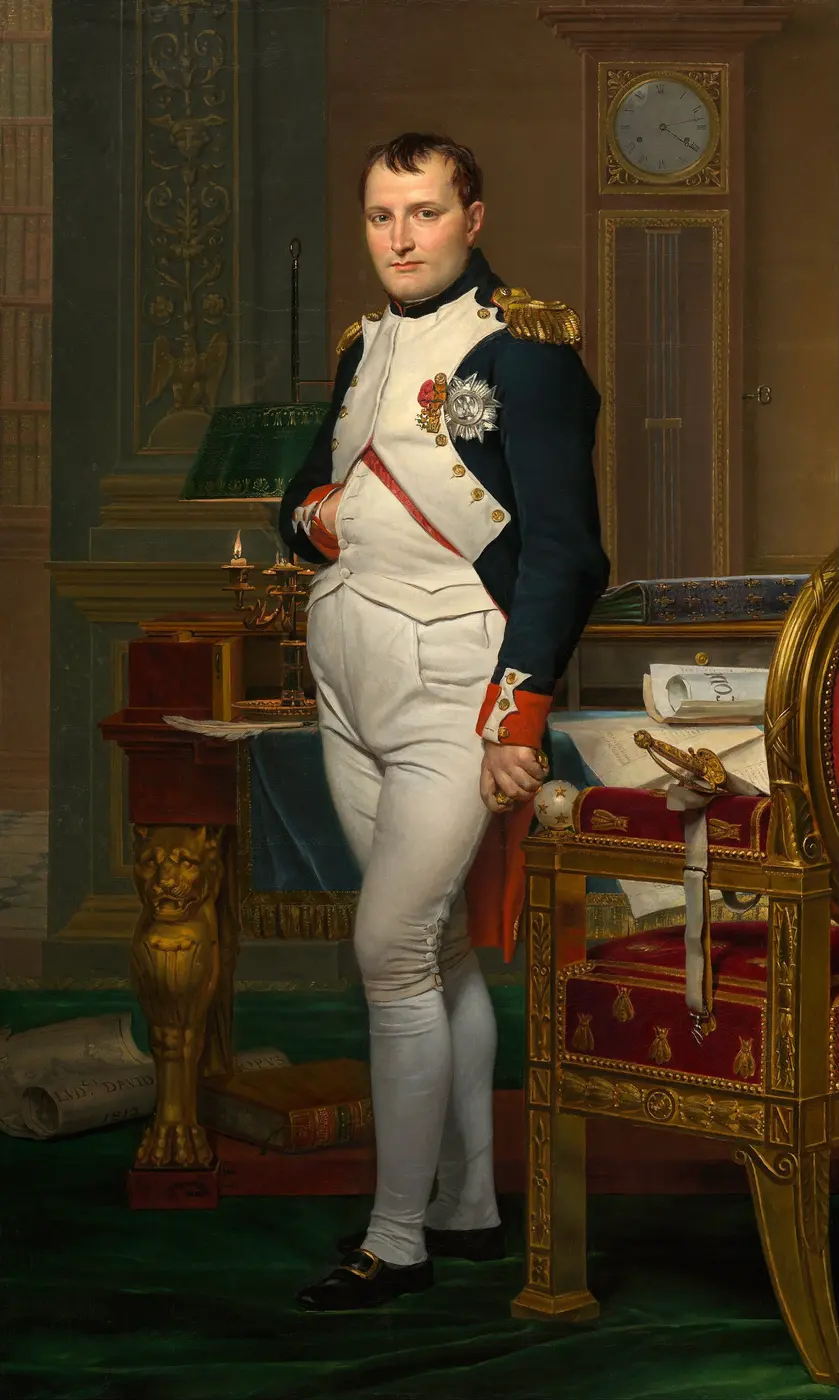

According to the Fondation Napoléon, his recorded height was 5 pieds 2 pouces 3 lignes (the ligne being an even smaller unit), which converts to about 1.69 meters, or roughly 5 feet 7 inches. Some researchers put it at about 167 or about 170 centimeters, so there is a range of a few centimeters, but there is no doubt that the 157-centimeter figure came from mixing up the units.
Average for his day
So how tall was 169 centimeters back then? Estimates of the average height of French men in the late 18th and early 19th centuries vary by source, but it is thought to have been somewhere in the low 160s. The Fondation Napoléon says most conscripted infantrymen stood between 165 and 169 centimeters.
In other words, far from being short, Napoleon was of quite average build, or perhaps a little taller. Walking the streets of France in his own day, he would not have stood out as particularly small.
Why he looked small
Even so, there are several reasons the image of “little Napoleon” took root.
One is his nickname. His soldiers called him le petit caporal, “the little corporal.” The word petit had an affectionate ring and is said not to have referred to his size, but later generations tended to take it literally.
Another is the height of the people around him. The grenadiers of the Imperial Guard, who protected the emperor, had to meet a height requirement, and according to the Fondation Napoléon none of them was under 176 centimeters (5 feet 9 inches). Surrounded by such big bodyguards, the emperor must have looked smaller than he really was.
“Little Boney,” made by cartoonists
Most influential of all were the satirical cartoons of his enemy, Britain. At the center was James Gillray, the leading caricaturist of the day. From around 1803 he began drawing Napoleon as “Little Boney”—a pint-sized Bonaparte. His picture of a tiny man throwing tantrums like a child quickly became a hit. In a work from 1805, a small, bug-eyed Napoleon carves up a pudding shaped like the globe with the British prime minister, William Pitt.
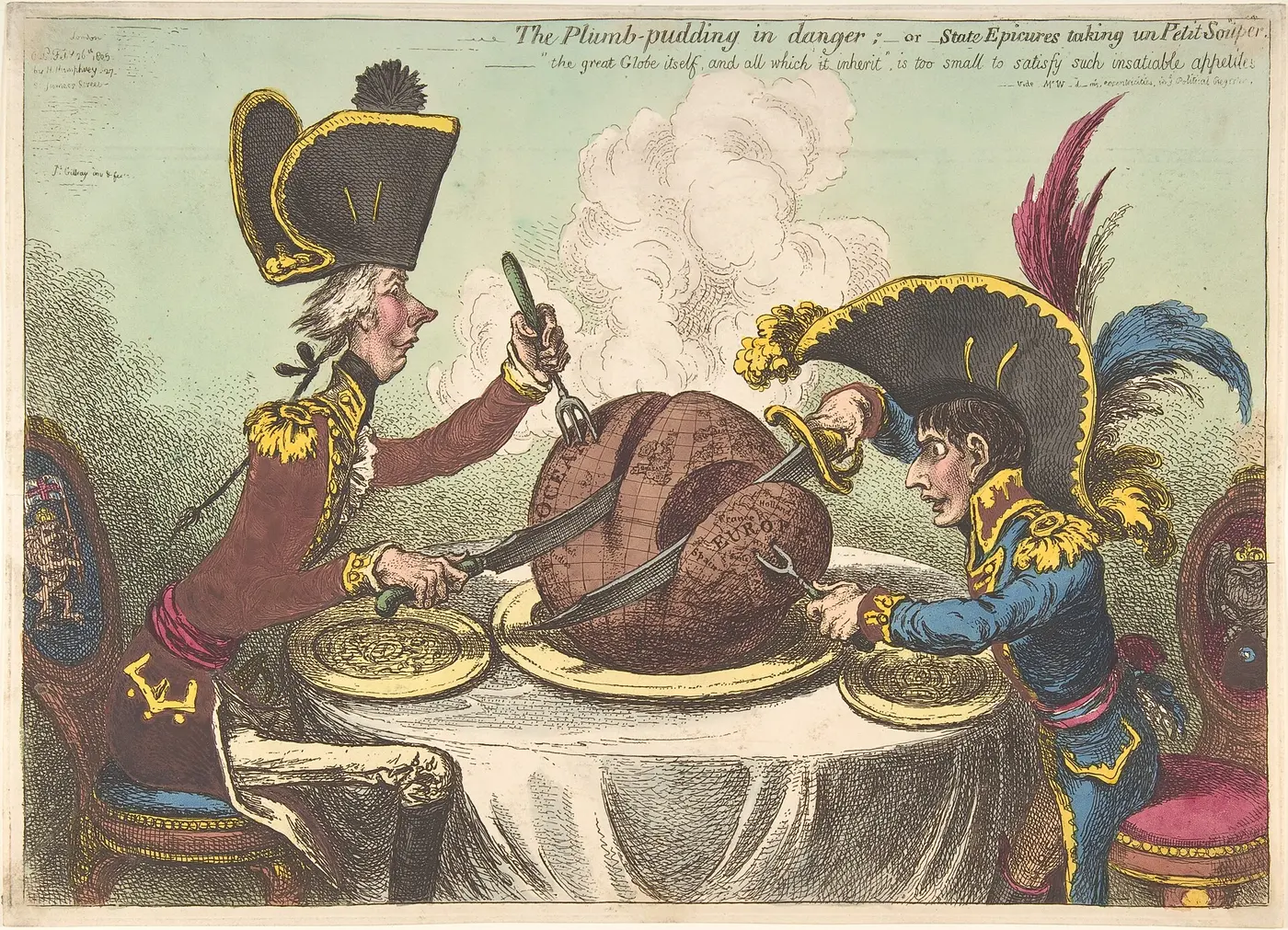

Prints like these were displayed in the windows of London print shops, where crowds of people saw them. Shrinking a mighty enemy through the power of laughter was a highly effective weapon for a Britain that feared Napoleon.
What made the emperor small was not a measuring stick but the pen of an enemy cartoonist.
The image created this way kept taking on a life of its own after his death, and 200 years later he is still remembered as the diminutive dictator.