Why do volcanic eruptions make lightning?
Ash, rock fragments and ice crash together in the eruption plume and build up static electricity. This is volcanic lightning.
200,000flashes
In photos and videos of major eruptions, you can sometimes see lightning zigzagging through the billowing plume. Glowing red lava and blue-white bolts look like something out of a fantasy story, but this is a real natural phenomenon, known as volcanic lightning.
Ordinary lightning is born in thunderclouds, like the towering cumulonimbus clouds of summer. So why can lightning strike above an eruption with no thundercloud in sight?
A plume that makes static electricity
Rub a plastic sheet on your hair and static electricity makes the hair stand up. When things rub or bump against each other, positive and negative charges can end up unevenly shared between them.
Something similar happens on a huge scale inside an eruption plume. Rock fragments and grains of ash blasted into the air collide and grind against one another as they rise. Each time, the particles pick up electric charge, and rock shattering apart is thought to generate charge as well.
Charged particles of different sizes are carried differently. Light, fine particles are lifted high, while heavier ones stay lower down. This is thought to separate the positive and negative charges between the upper and lower parts of the plume. When the difference becomes too great, the electricity surges through the air all at once as a bolt of lightning.
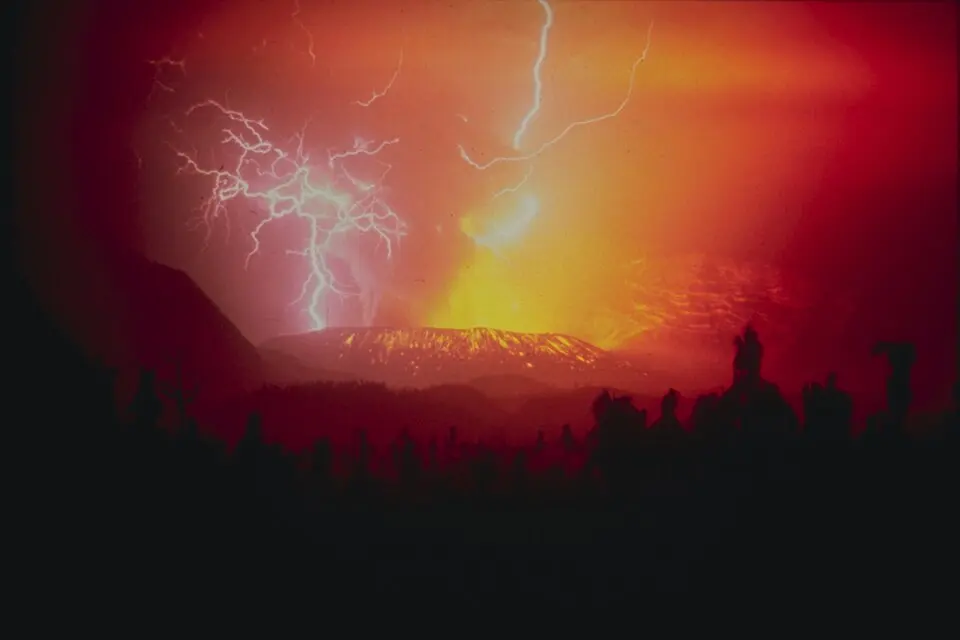

In tall plumes, ice joins in
When a plume rises high enough that the air temperature drops below freezing, the water vapor in it freezes into ice particles. Then, just as inside a thundercloud, collisions between ice particles start generating charge too. Lightning is known to increase sharply once a plume climbs above this freezing level.
In smaller plumes only a few kilometers high, the main source of charge is thought to be rock shattering near the vent. The way lightning forms differs somewhat with the size of the eruption and the height of the plume.
Not every eruption produces lightning, though. In eruptions where hot lava mainly flows out, like those of Hawaii’s volcanoes, volcanic lightning is rare, unlike in eruptions that hurl ash high into the sky.
200,000 flashes in an hour
One of the most intense displays ever recorded came with the huge eruption of Hunga Tonga–Hunga Haʻapai, in the South Pacific nation of Tonga, on January 15, 2022. Its plume rose about 58 kilometers (36 miles) high.
A global lightning detection network recorded about 200,000 flashes in just one hour that day, between 05:00 and 06:00 UTC. That works out to more than 50 flashes a second. In the two weeks or so before the main eruption, the same network had already picked up several hundred to a thousand flashes.
Recorded since long ago
The first person to study volcanic lightning in earnest is said to be the Italian scientist Luigi Palmieri. In the second half of the 19th century he observed several eruptions of Mount Vesuvius and recorded frequent lightning.
In volcano-rich Japan, volcanic lightning has been recorded for much longer. The Shoku Nihongi, a Japanese chronicle from the Nara period, describes an eruption in 764 on the border of the provinces of Ōsumi and Satsuma, in what is now Kagoshima Bay in southern Japan: smoke and cloud darkened the sky, and lightning flashed back and forth.
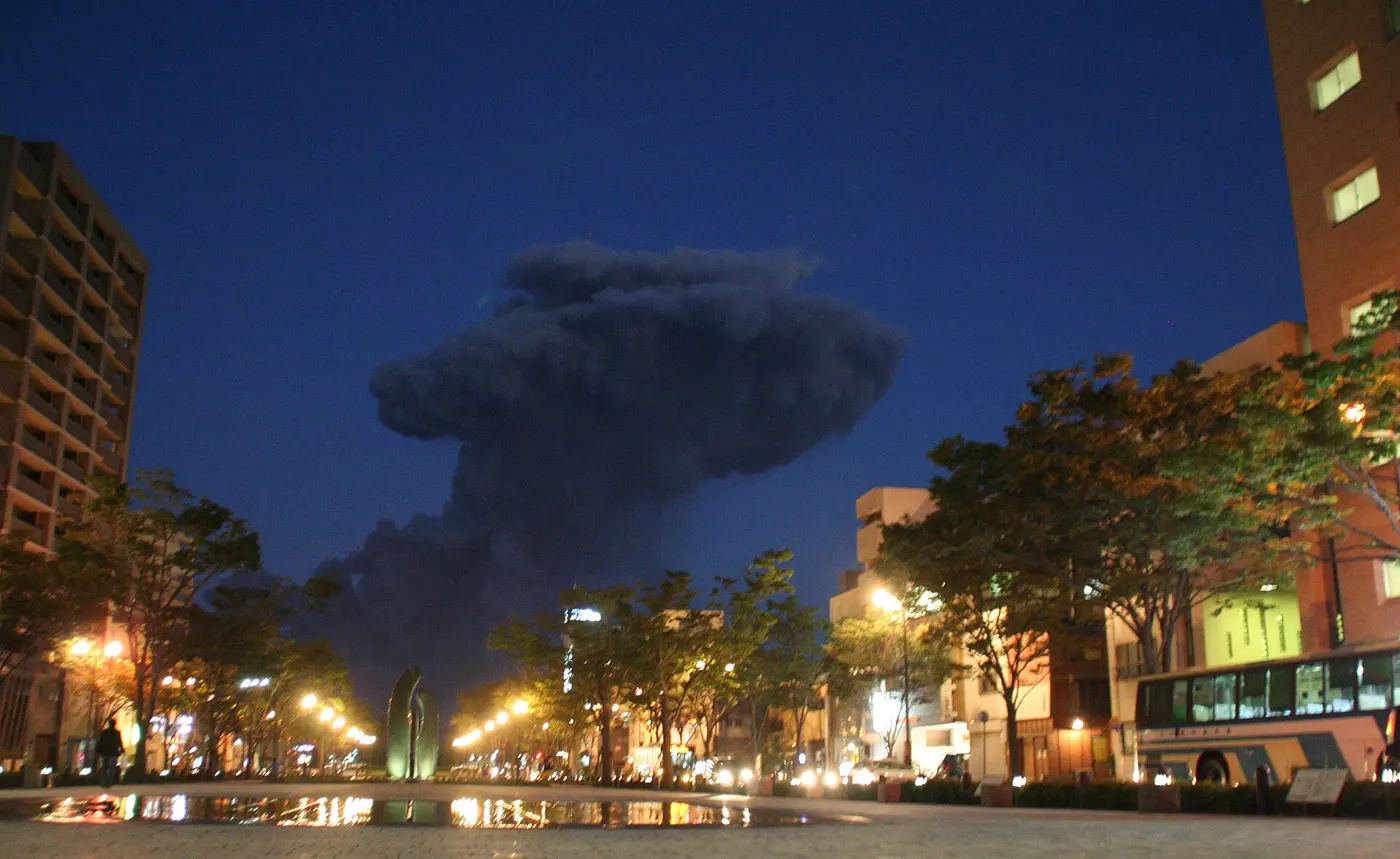

Sakurajima, the volcano in Kagoshima Bay, still erupts again and again and is well known as a place to see volcanic lightning. Bolts running up and down, bolts running sideways and flashes that light up like a single point have all been observed there. Since the 2000s, networks that pick up the radio waves given off by lightning have been detecting volcanic lightning as well.