Was the Palace of Versailles really built without toilets?
It had toilets. But there weren’t nearly enough for everyone living there, and sanitation had plenty of problems.
Chandeliers sparkling in the Hall of Mirrors, geometric gardens stretching as far as the eye can see. The Palace of Versailles, built by Louis XIV of France, marks the high point of European court culture.
Yet the palace has long been dogged by an unflattering rumor: “Versailles had no toilets, so the nobles relieved themselves behind curtains or in the garden shrubbery.” Some even say perfume flourished there to cover up the smell. How much of this is true?
The palace itself says it’s a myth
In fact, the public body that runs the Palace of Versailles takes up these stories in one of its educational resources and calls them misconceptions. Tales that Louis XIV bathed only once in his life, or that courtiers relieved themselves behind the curtains, are still going around, it says, but in reality hygiene was always a major concern. As for bathing, between 1672 and 1680 Louis XIV had a lavish suite of bathing rooms built on the palace’s ground floor. And from 1685, a giant pumping system called the Machine de Marly began lifting water from the Seine and sending it to Versailles.
The palace had shared latrines as early as the reign of Louis XIII. For Louis XIV’s time, two locations have been identified: behind the Ambassadors’ Staircase and in the galleries of the south wing. There were similar facilities in the north wing, and probably several more elsewhere.
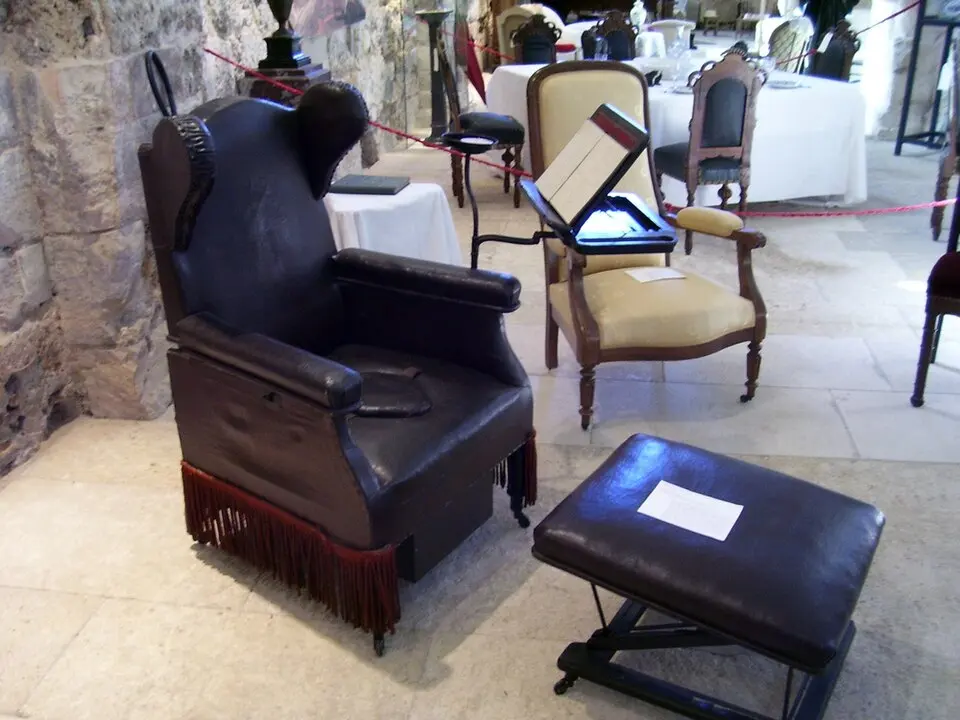
Most numerous of all were the chaises percées, or close stools: portable toilets consisting of a chair with a hole in the seat and a container underneath. The palace is said to have had several hundred of them. Sources put the number at anywhere from 200 to nearly 350, so the exact count is unclear—but either way, Versailles was hardly a palace “without toilets.”

The king’s toilet as spectacle
The most famous close-stool story concerns Louis XIV’s morning routine. Early in his reign, during the ceremony of his rising, the king is said to have sat on a close stool in the alcove of his bedchamber for about half an hour. Being allowed to witness this was a privilege granted only to a select few courtiers.
Over time, though, the custom became a mere formality, and the king had a secluded little room made for his needs. By 1672 at the latest, a private “chair closet” had been installed near the royal apartments.
In the 18th century, under Louis XV, flushing “English-style” toilets appeared as well. Even so, someone still had to carry the waste away: right up to the end, two attendants served the king whose job was to carry his close stool’s container.
Still not enough
So was the rumor complete nonsense? Not entirely. In Louis XIV’s day, thousands of people lived in the palace, and crowds of visitors poured in almost every day. Even the palace’s own resource acknowledges that visitors unfamiliar with court customs probably relieved themselves here and there.
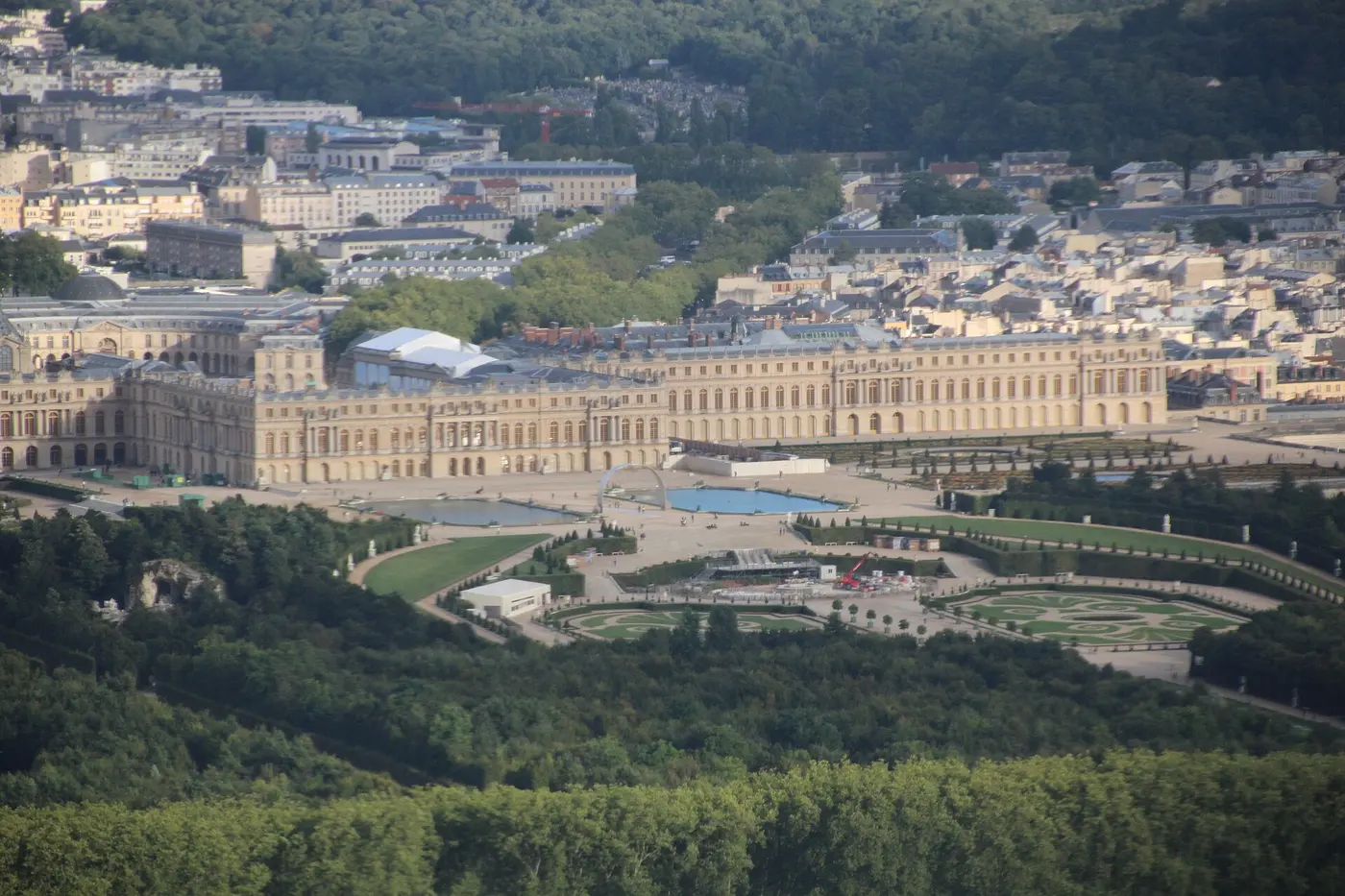

Where the waste ended up was another problem. In Paris at the time, it was still common to empty close stools out of the window into the street. At Versailles, a system of underground cesspits and drains was built, and by 1710 there were nearly 35 cesspits across the palace. Thanks to this, the habit of tossing waste out of windows is thought to have disappeared there.
But the pond that the drains emptied into came to be known as the “stinking pond,” and another pond was filled in in 1736 for the same reason. Versailles had toilets. It simply wasn’t yet equipped to deal with the waste of thousands of people.