How many meals a day did people eat in Edo-period Japan?
At first two, morning and evening. Three meals a day is generally thought to have spread from the mid-Edo period.
5gō
Breakfast when you get up, lunch at noon, dinner after dark. Three meals a day is such an ordinary habit that we barely notice it. School lunches and office lunch breaks are all built around that three-meal rhythm.
Trace Japanese history back, though, and the habit turns out to be surprisingly recent. For a very long time, the basic pattern in Japan was two meals a day.
Originally, morning and evening
From ancient times through the Middle Ages, Japanese people are thought to have usually eaten twice a day, in the morning and in the late afternoon or evening. Even the aristocrats of the Heian period (794–1185) are said to have kept to a basic pattern of breakfast and supper.
The habit carried on into the early part of the Edo period (1603–1868), when the shoguns ruled from Edo, today’s Tokyo. Samurai and townspeople alike ate in the morning and in the evening, and if they got hungry in between, they reportedly made do with a light snack.
Several theories about the switch to three
When and why did that change to three meals? A common view is that three meals a day spread around the Genroku era (1688–1704), in other words the middle of the Edo period. What set it off, however, is a matter of several theories.
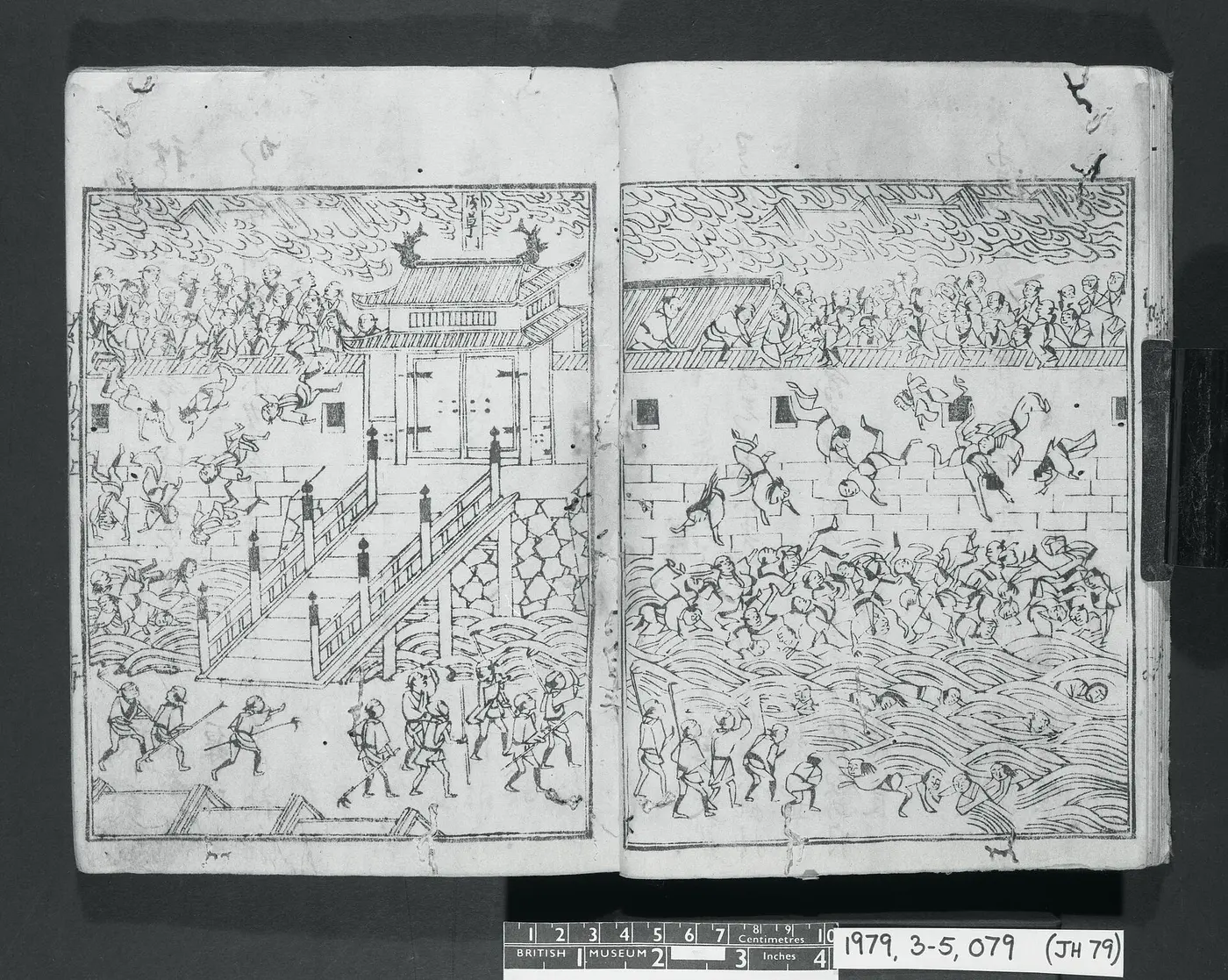
One links it to the Great Fire of Meireki in 1657. After the blaze, which burned most of the city of Edo, carpenters, plasterers and other craftsmen poured in from around the country to rebuild. Because their work was so physically punishing, they were given a midday meal on top of the morning and evening ones, and the custom then spread to the townspeople.

Another theory points to the spread of artificial light. Once rapeseed oil became widely available and people could keep paper-shaded oil lamps called andon burning after dark, they stayed up and active for longer. And with a longer day, two meals were no longer enough to keep hunger at bay.
Yet another theory holds that samurai in the war-torn era before Edo ate three meals to keep up their strength, and that the habit trickled down to ordinary people. In truth, the number of meals varied by region, social class and occupation. Some farming villages reportedly ate several times a day during the busiest seasons in the fields. Rather than everyone switching to three meals in a particular year, it is more natural to think the habit spread gradually over a long time.
Five gō of rice a day
Another surprise about Edo-period meals is the sheer quantity of rice. One unit of samurai pay was called ichinin-buchi, “one person’s ration.” It was based on 5 gō of brown rice as the amount one person eats in a day, which works out to 1 koku 8 to, or 1.8 koku, a year in the traditional units used to measure rice.
One gō of rice is about 150 grams, so 5 gō comes to roughly 750 grams (about 1.7 pounds). Once cooked, that is around ten bowls. In a diet with few side dishes, where most of the day’s energy came from rice, it seems a man in the prime of his working life could plausibly eat that much.
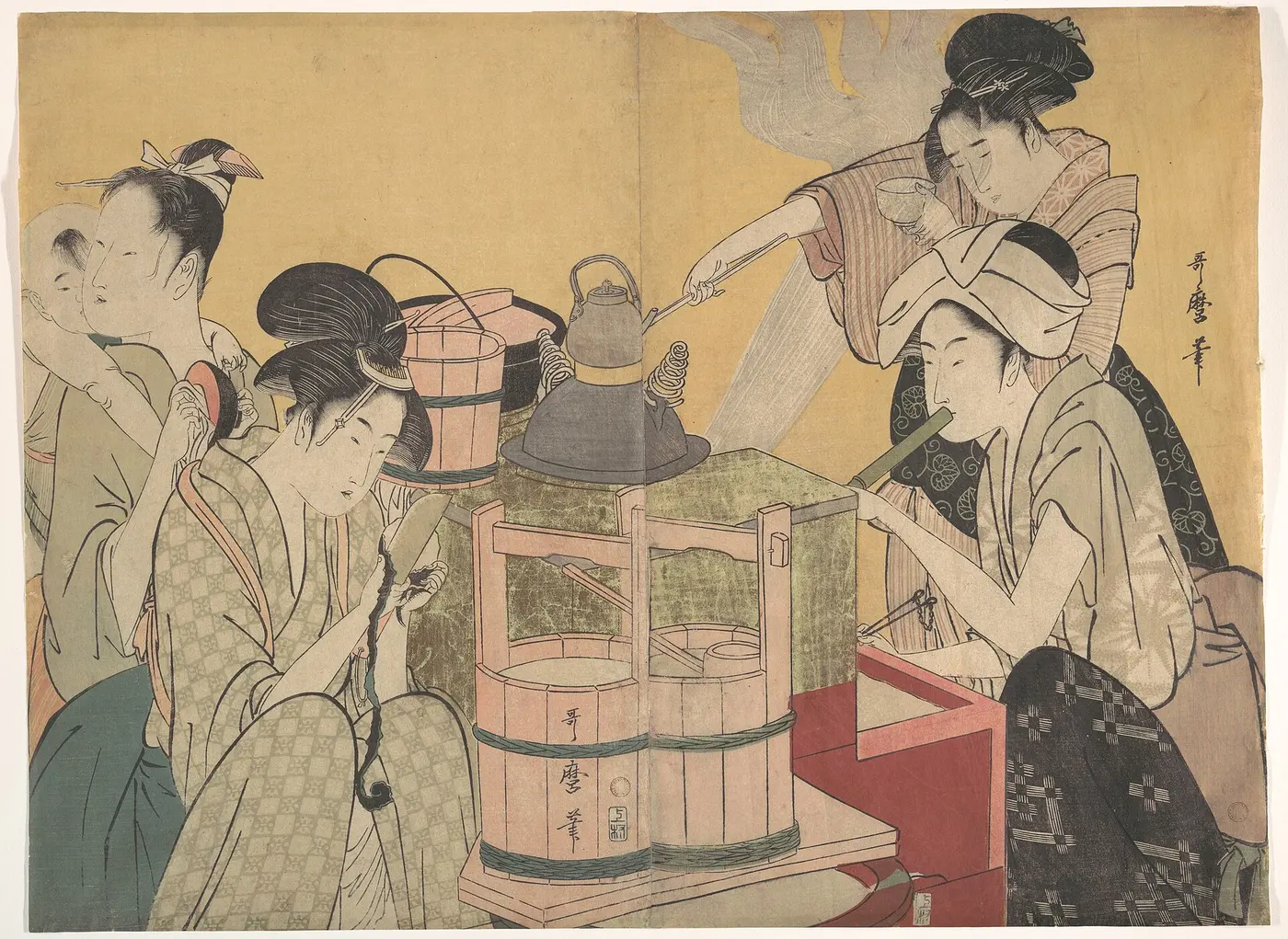
Among Edo’s townspeople, a typical routine is said to have been to cook the whole day’s rice in the morning: freshly cooked rice with miso soup for breakfast, cold rice with vegetable or fish side dishes at midday, and in the evening the leftovers as ochazuke, rice with hot tea poured over it, eaten with pickles. In the Kamigata region around Kyoto and Osaka, by contrast, cooking rice at midday was reportedly the norm.

The trouble with white rice
In Edo, people preferred polished white rice. But a diet of large amounts of white rice with few side dishes leads to a shortage of vitamin B1. Beriberi, which starts with numbness and swelling in the legs and can be fatal in severe cases, was so common in Edo that it was nicknamed “the Edo affliction” (Edo wazurai). It struck not only ordinary people: Tokugawa Iemochi, the 14th shogun, who ruled in the final years of the shogunate, is said to have died of complications from beriberi. When sufferers left Edo and began eating rice mixed with barley or other grains, their symptoms often cleared up.
Three meals a day, then, is less an unchanging natural human rhythm than a habit shaped by changes in city life, lighting and the way people worked. History is written even into what we eat every day.