Is there really a planet where a day is longer than a year?
Yes. Venus takes about 243 days to spin once on its axis—longer than its year of about 225 days.
243days
A day and a year. In our lives, it goes without saying that a year is about 365 times longer than a day. But there is a planet in the solar system where that relationship is flipped: Venus, which orbits just inside Earth.
Long loved as the morning star and the evening star, Venus is so similar to Earth in size and mass that it is sometimes called Earth’s twin. The way time flows there, though, is so eccentric that it hardly seems like a twin at all.
Spinning very, very slowly
Venus takes about 225 days to travel once around the Sun. That is its orbital period: a “year” a little shorter than Earth’s.
The time it takes to spin once on its axis, like a top, is about 243 days. In other words, Venus finishes a full lap around the Sun before it has turned around once on its own axis. That is why people say a day on Venus is longer than its year.
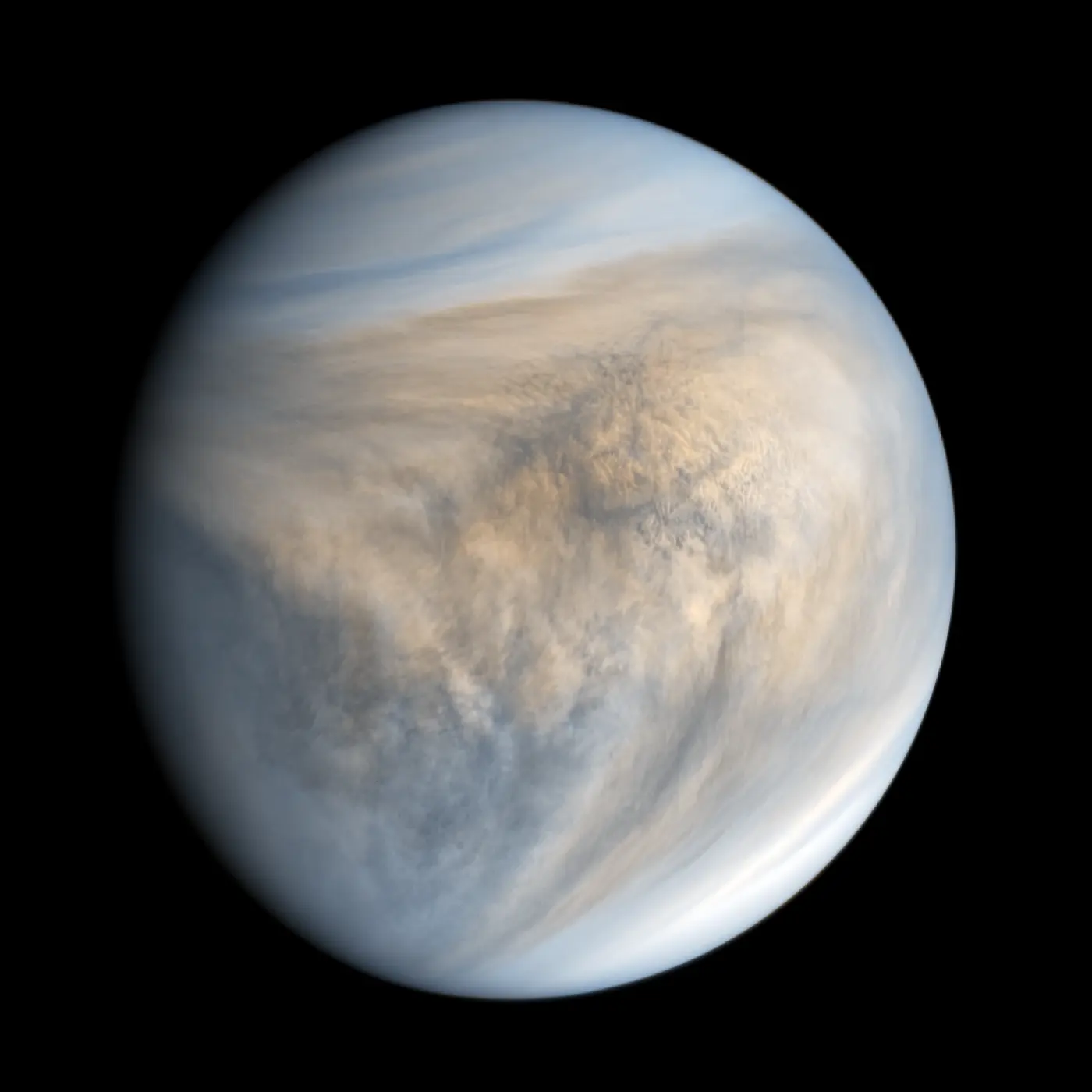

Comparing it with Earth makes the slowness easy to grasp. The ground at Earth’s equator moves at more than 1,600 kilometers per hour (1,000 mph). At Venus’s equator, it moves at a little over 6 kilometers per hour—not much different from a person taking a leisurely stroll.
The Sun rises in the west
Venus has another big peculiarity: it spins in the opposite direction to most of the other planets.
Almost all the planets in the solar system rotate in the same direction as they orbit the Sun. Venus, however, turns slowly the other way. As a result, if you could stand on its surface, the Sun would rise in the western sky and set in the east.
Here is where counting a “day” gets a little tricky. The 243 days is the time it takes to rotate once relative to the stars. A day as we experience it—from one sunrise to the next—depends on how rotation and orbit combine. On Venus, because they run in opposite directions, their effects add up and the Sun moves across the sky a bit faster, so it is about 117 days from one sunrise to the next. Even so, the Sun rises only about twice in a Venusian year.
Why does it spin backward?
Why does Venus turn so slowly, and backward at that? The truth is, there is no clear answer yet.
One frequently cited theory is that soon after the solar system formed, a large body collided with Venus and drastically altered its spin. Another idea involves Venus’s thick atmosphere. At the surface, its pressure is about 90 times that of Earth’s, and the theory is that, pushed by the Sun’s heat and tidal forces, the atmosphere has slowly braked the planet’s rotation over long ages, or even changed its direction. Several factors may have combined, and research continues.
Speaking of the atmosphere, something else strange is happening in Venus’s skies. Although the surface turns so slowly, the upper atmosphere races around the planet so fiercely that it circles Venus in about four days. This phenomenon, called “super-rotation,” was one of the things Japan’s Venus probe Akatsuki set out to study.
A clock turning beneath the clouds
Surprisingly, the length of Venus’s rotation was only worked out fairly recently, in the 1960s. Venus is covered in thick clouds, so telescopes can’t follow features on its surface. Instead, scientists sent radio waves from Earth that passed through the clouds and bounced off the surface, and by studying the returning signals they were finally able to determine how fast and in which direction the planet spins.
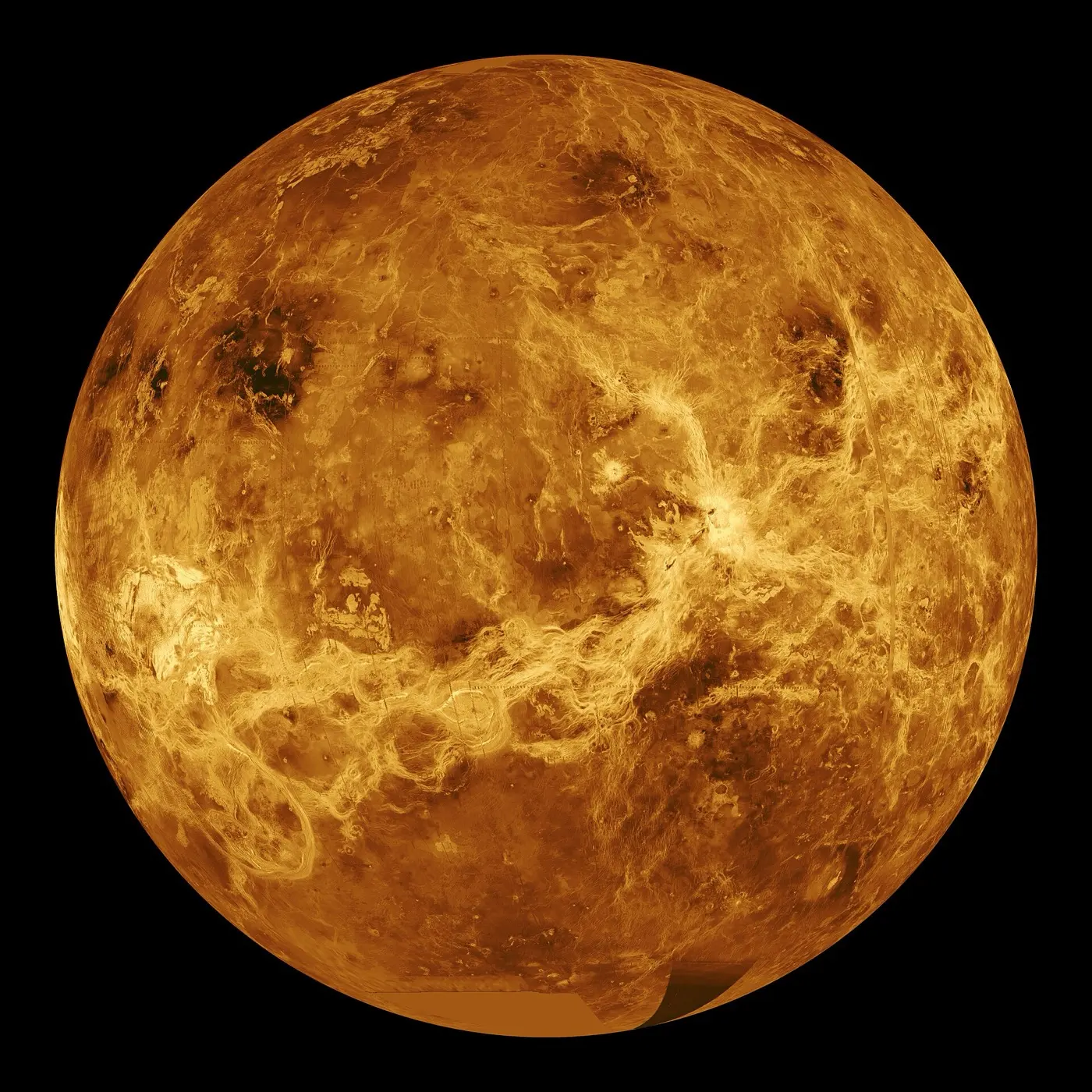

Later spacecraft observations have also revealed that the measured rotation period can differ by several minutes from one measurement to the next. The rotation speed itself may be wobbling slightly through its interactions with the thick atmosphere. The figure of 243 days, then, is a reading on a slightly fickle clock turning beneath the clouds.