What does space smell like?
Astronauts say it smells like seared metal or steak. Moon dust, they say, smelled like gunpowder.
What does space smell like? Think about it, and it is a slightly strange question. Space is almost a perfect vacuum, with no air. We smell things when molecules drifting through the air enter our noses. You could never open your helmet and take a sniff of “space air” in the first place.
Even so, people who have been to space have long said that it has a distinctive smell. The clues lie in the “souvenirs” they bring back inside with them.
A metallic smell after a spacewalk
When astronauts on the International Space Station finish a spacewalk, or extravehicular activity, they return to a small chamber called the airlock, fill it with air, and only then take off their helmets. At that moment, they say, an indescribable smell wafts from their spacesuits and tools.
The American astronaut Don Pettit, who lived aboard the station for a long-duration mission from 2002 to 2003, wrote that the smell was pleasantly sweet and metallic. It reminded him of the fumes from arc welding, which he had done as a student while working at a job repairing heavy machinery.
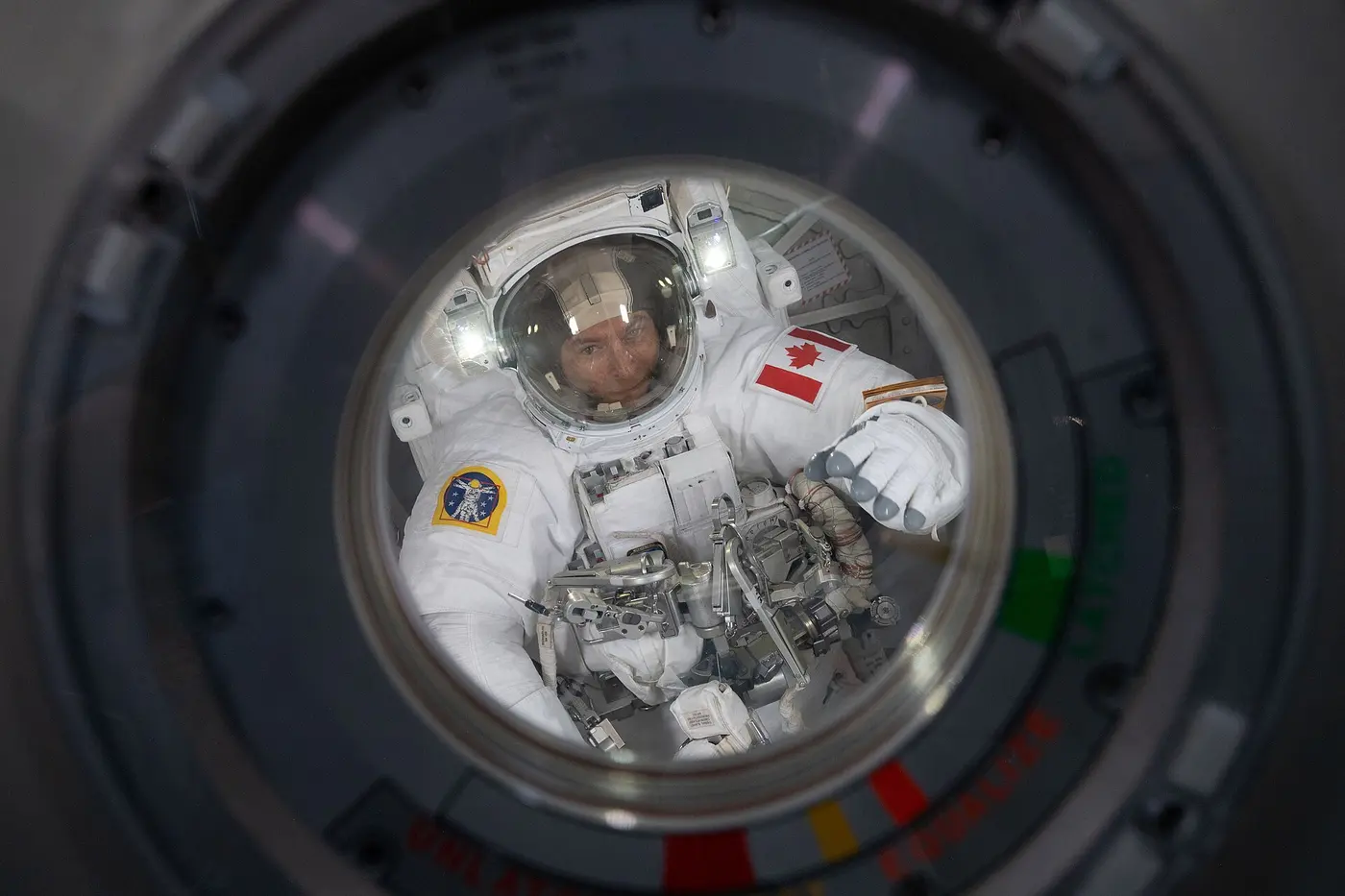

Other astronauts have described it as “seared steak,” “hot metal” or “gunpowder.” The words vary, but many accounts agree on a somehow scorched, metallic smell.
The source is still a mystery
There are several hypotheses about what causes the smell of space, but no firm conclusion yet.
One leading idea involves oxygen. Even at about 400 kilometers (250 miles) up, where the International Space Station flies, a very thin atmosphere remains. There, intense ultraviolet light from the Sun breaks oxygen molecules apart, leaving single oxygen atoms drifting about. According to this idea, those oxygen atoms cling to the surface of the spacesuit and are carried into the airlock, where they combine with oxygen in the air to form ozone. Ozone has a distinctive, sharp smell, and that may be what astronauts perceive as “the smell of space.”
Another hypothesis focuses on carbon compounds floating in space. Polycyclic aromatic hydrocarbons, released by aging stars among other sources, are substances that on Earth turn up in burned food and soot, and they are known to be widespread in space as well. Some have pointed out that the scorched smell astronauts describe calls these substances to mind.
Moon dust smelled like gunpowder
Reports of smells have come from the Moon, too. During the Apollo program, from the late 1960s to the early 1970s, astronauts who walked on the Moon ended up tracking lunar dust, clinging to their spacesuits, back into the lunar module.
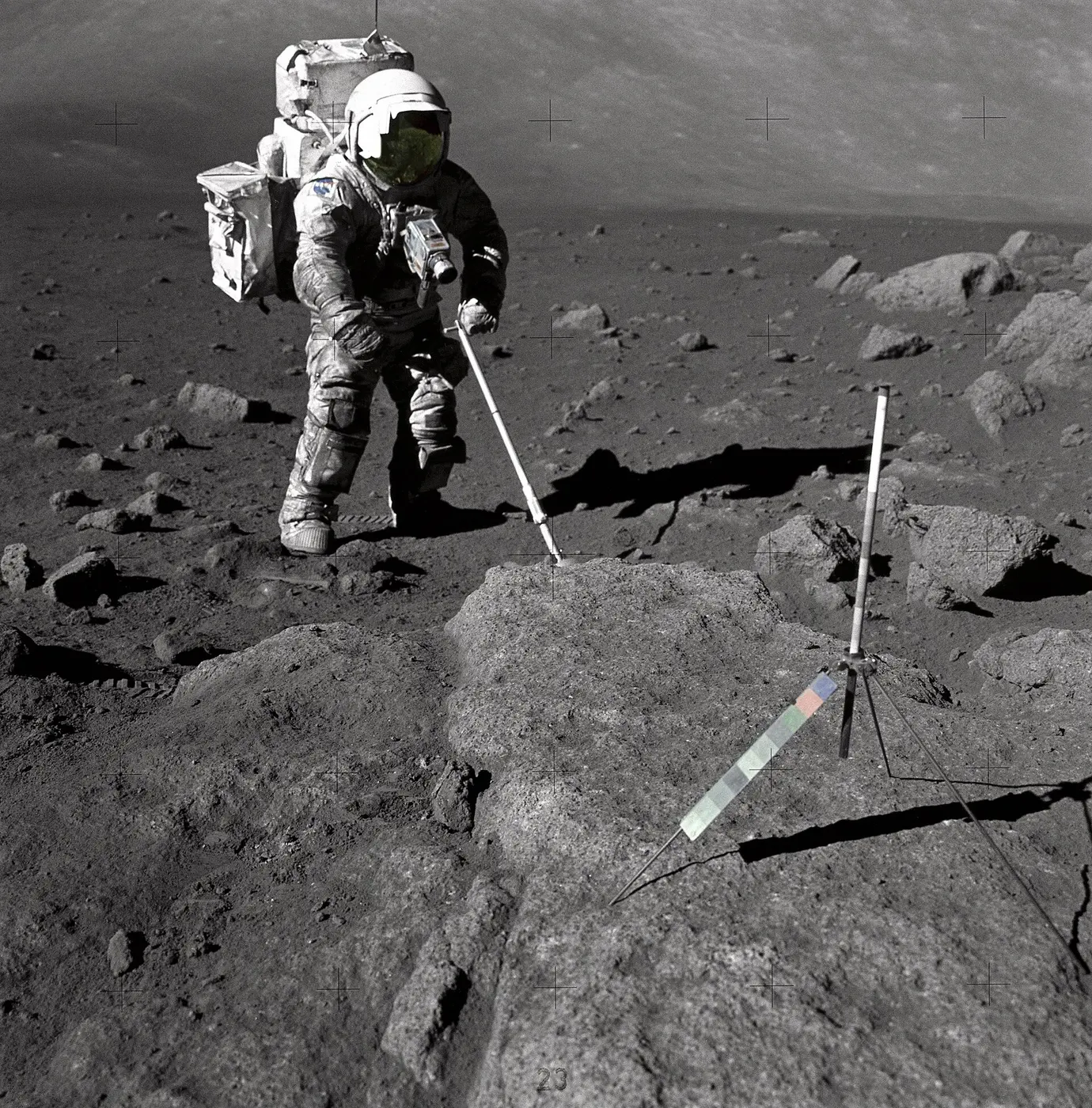

When they took off their helmets, what they noticed was a smell like spent gunpowder. Harrison Schmitt, the Apollo 17 lunar module pilot and a geologist, recalled that it was the first impression shared by everyone who walked on the Moon. The mission commander, Eugene Cernan, said it was as if someone had just fired a gun.
Strangely, lunar dust brought back to Earth does not give off this smell. Because grains of Moon dust have never been weathered by wind or water, they are thought to be sharp-edged and chemically reactive. One theory holds that the dust reacted with the air and moisture inside the lunar module, producing the smell, but that by the time it reached Earth, the reaction was over.
Does the center of the galaxy smell like rum?
There are clues about smells from much farther out in space as well. In 2009, a research team including scientists from Germany’s Max Planck Institute for Radio Astronomy announced that they had found a molecule called ethyl formate in Sagittarius B2, a giant cloud of gas near the center of the Milky Way.
On Earth, ethyl formate has a rum-like aroma, and it is also known as one of the compounds behind the flavor of raspberries. Of course, nobody can actually stick their nose into that cloud, and it contains all sorts of other molecules besides. Even so, the phrase “the center of the galaxy smells of rum” made headlines.
There have also been attempts to recreate the smell of space on the ground. Around 2008, the British chemist Steve Pearce, at NASA’s request, set about blending a “smell of space” based on astronauts’ descriptions. The aim, reportedly, was to make training feel more like the real thing.