How much space junk is there?
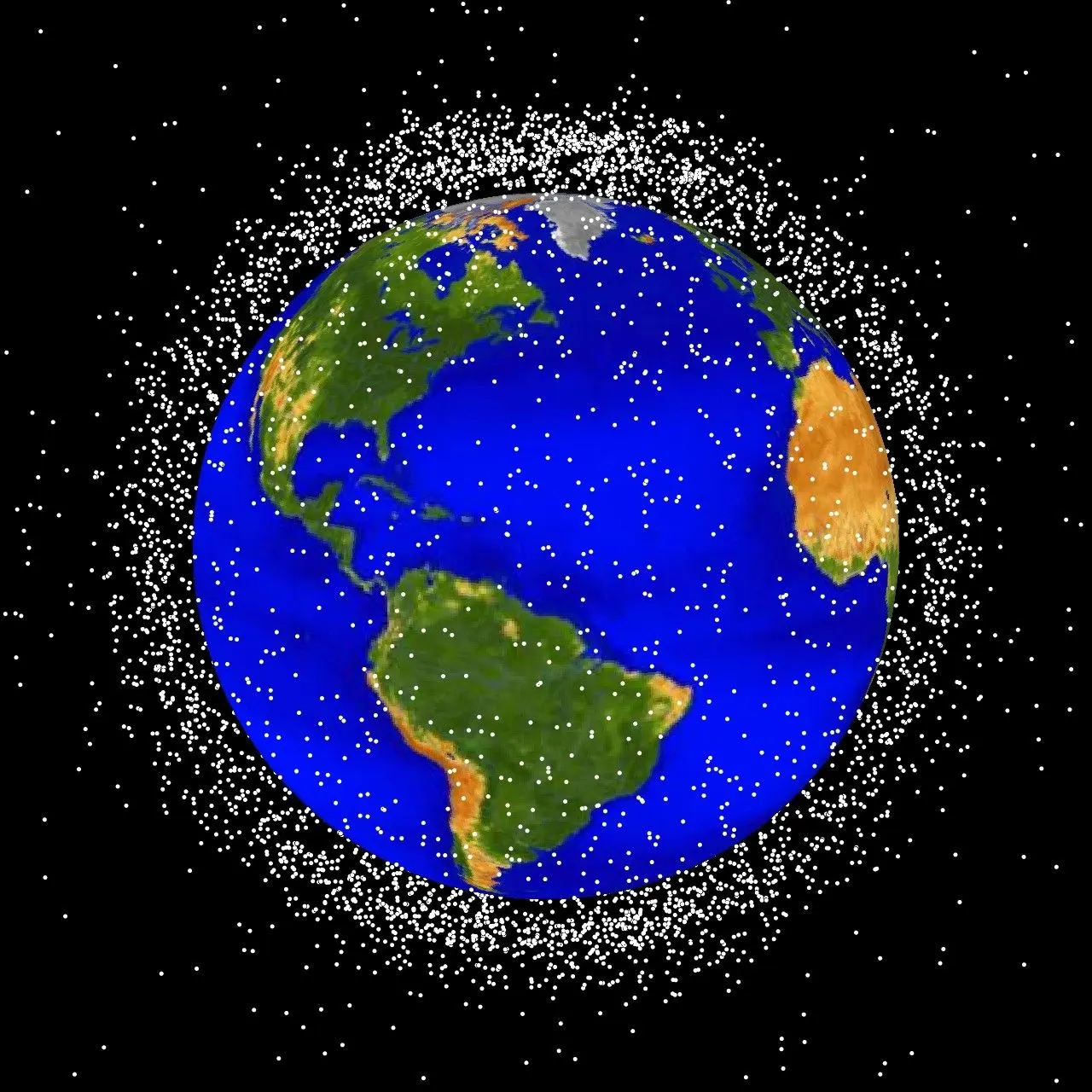
An estimated 54,000 pieces of 10 cm or more alone. Count down to 1 mm, and the total tops 100 million.
130 millionpieces
It has been about 70 years since the Soviet Union launched Sputnik 1, the world’s first artificial satellite, in 1957. Today our daily lives, from communications and weather forecasts to the location data in car navigation systems, depend on a multitude of satellites circling the planet.
At the same time, Earth is surrounded by a growing collection of satellites that have finished their missions, spent rocket parts, and the fragments created when these break apart. This is what we call space junk, or space debris. Just how much of it is whizzing around the planet?
More than 50,000 pieces of 10 cm or larger
According to estimates published by the European Space Agency (ESA) in 2025, there are about 54,000 pieces of space debris 10 centimeters (about 4 inches) or larger in orbit around Earth. Pieces from 1 to 10 centimeters number about 1.2 million. And for pieces from 1 millimeter to 1 centimeter, the count climbs to about 130 million.
Of all these, the objects tracked by ground-based radar and telescopes, with known orbits, are mostly limited to those larger than about 10 centimeters. Smaller fragments are too numerous and too tiny to monitor one by one. Most of these numbers are estimates, combining observations with computer models.

Junk that breeds more junk
What makes space debris so troublesome is that, left alone, it may keep multiplying.
In 2007, China tested a missile by destroying one of its own old weather satellites, creating more than 3,000 fragments large enough to track. In 2009, Iridium 33, an active American communications satellite, collided with Kosmos 2251, a defunct Russian satellite, scattering another huge cloud of debris. It was the first time two satellites had been destroyed in an accidental collision.
More fragments mean a higher chance of collisions, and every collision produces still more fragments. In 1978, NASA scientist Donald Kessler warned that this chain reaction could eventually run out of control, making certain orbits unusable. The idea has come to be known, after him, as Kessler syndrome.
When tiny fragments become weapons
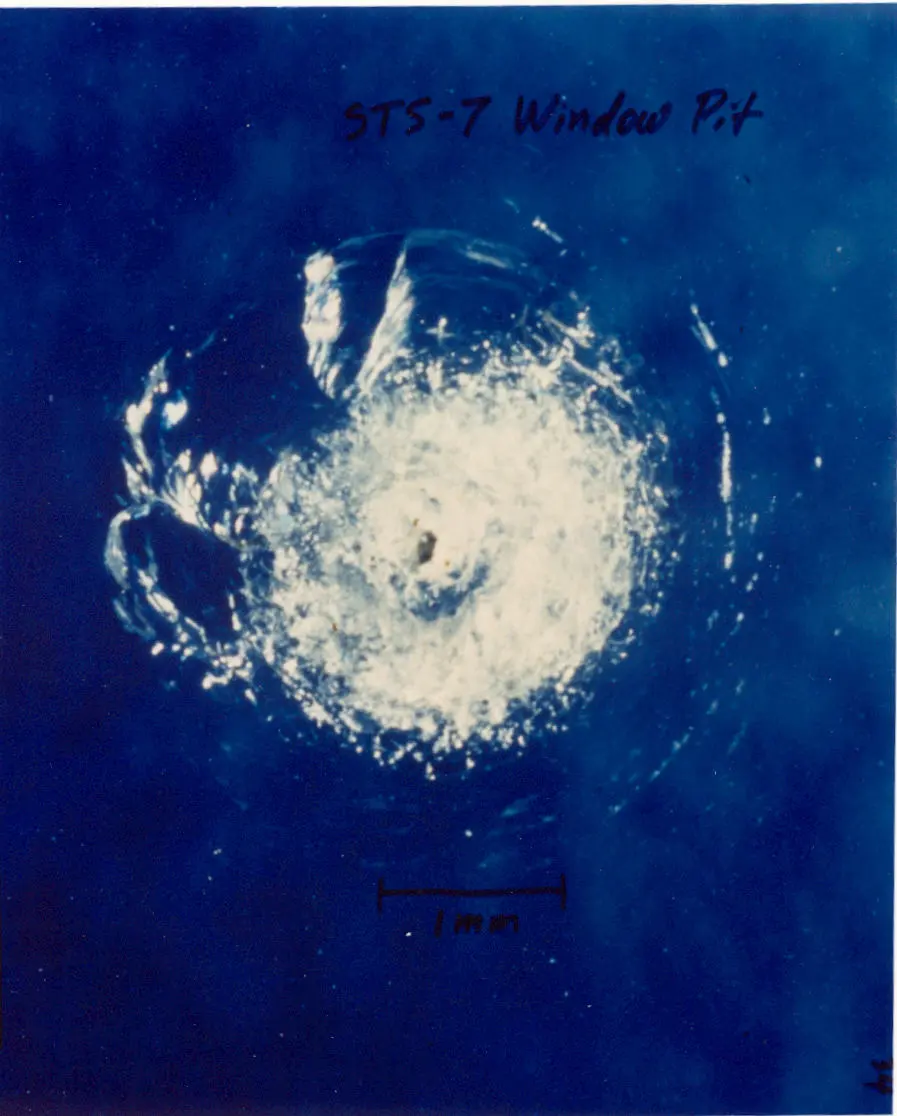
You might think small fragments are no big deal. In space, however, even a particle just a few millimeters across can be a serious threat.
The reason is speed. Objects orbiting a few hundred kilometers up travel at 7 to 8 kilometers per second, nearly ten times as fast as a rifle bullet. When objects on differently angled orbits cross paths, the collision speed can exceed 10 kilometers per second. At such speeds, even a fragment about a centimeter across could wreck a satellite, and an object larger than 10 centimeters is thought to be capable of smashing a satellite to pieces.

The International Space Station, where people live, is no exception. When a dangerous object is found to be approaching, the station fires its engines to shift its orbit out of the way. It has made such avoidance maneuvers around 40 times since 1999.
The cleanup has begun
In response, efforts are underway both to stop space debris from increasing and to reduce it. One is drawing up rules such as bringing satellites down into the atmosphere to burn up once their missions end, or moving them to orbits where they won’t get in the way of other satellites.
The Japanese company Astroscale, as part of a project of JAXA, Japan’s space agency, launched a satellite called ADRAS-J in 2024 to approach and inspect the upper stage of an H-IIA rocket left in orbit. That December, it succeeded in getting within about 15 meters of the rocket body. The day when we can capture and remove space debris may not be far off.