Will the Sun burn out someday?
Its fuel will run out. In about 5 billion years it will swell enormously, ending as an Earth-sized white dwarf.
5 billionyears
The Sun rises in the east every morning and sets in the west every evening. Through all of human history, nothing has seemed more constant. Yet the Sun, too, is a star: it was born, it ages, and one day it will lose its shine.
The Sun was born about 4.6 billion years ago. At its core, nuclear fusion turns hydrogen into helium, releasing an enormous amount of energy. But its hydrogen fuel is limited. How much longer does the Sun have?
Halfway through life
Stars like the Sun shine steadily for a very long time while they use up the hydrogen in their cores. A star in this phase is called a main-sequence star, and for the Sun, this phase is thought to last about 10 billion years. At 4.6 billion years old, today’s Sun has just about reached the halfway point of its life.
Steady doesn’t mean unchanging, however. As helium builds up in its core, the Sun is slowly getting brighter, by about 10 percent every billion years. That may sound like a small difference, but this change will go on to play a big part in Earth’s fate.
A swelling Sun, swallowed planets
About 5 billion years from now, once it has used up the hydrogen in its core, the Sun will change dramatically. The core, now full of helium “ash,” will contract and heat up, while the outer layers swell enormously. The surface will cool, and the Sun will become a “red giant,” glowing red.
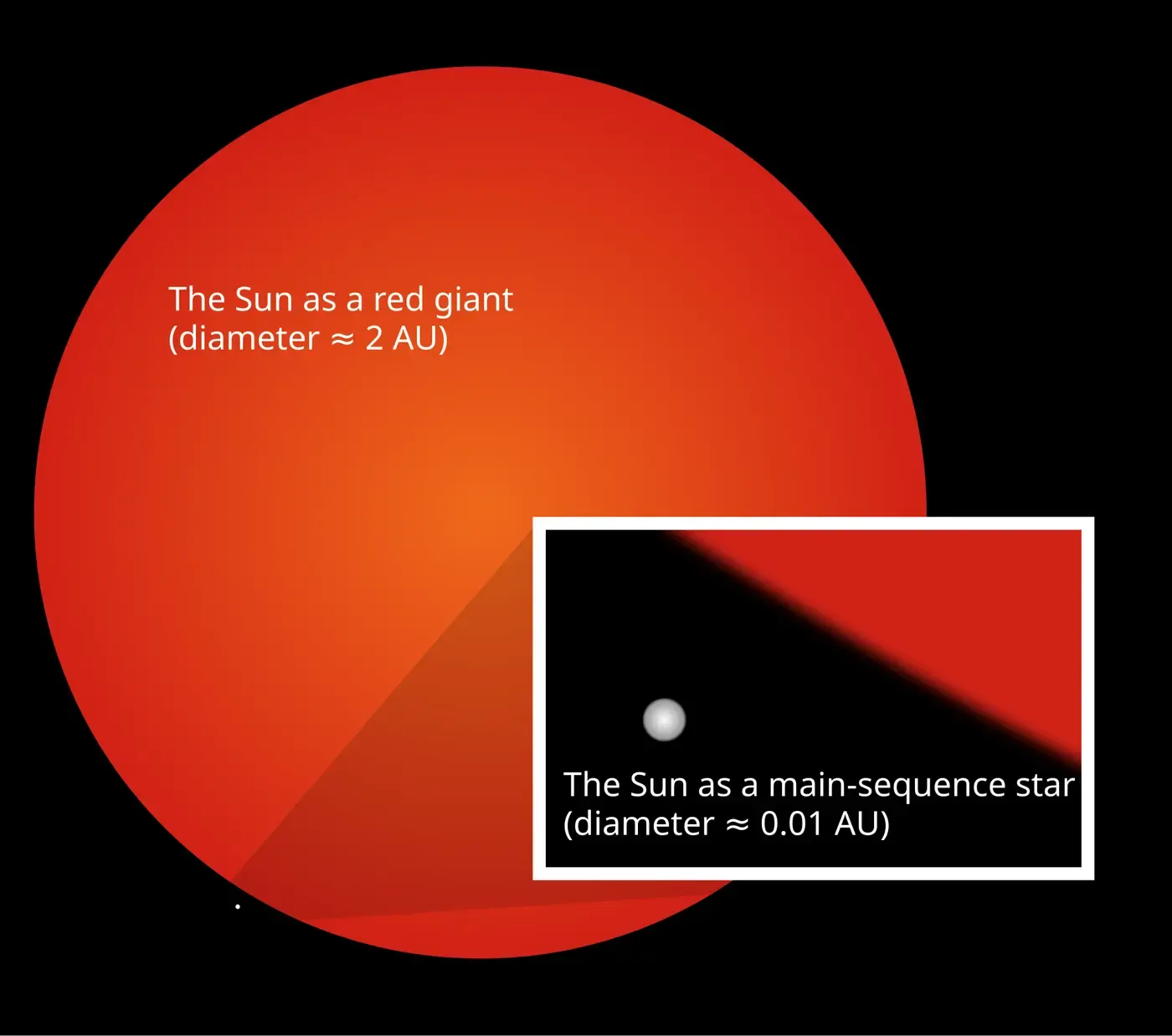

As a red giant, the Sun is estimated to reach more than 200 times its current radius, extending out to near Earth’s orbit. Mercury and Venus will likely be swallowed by the swollen Sun.
What will happen to Earth is uncertain. The aging Sun will shed huge amounts of gas into space and become lighter. With its gravity weakened, Earth’s orbit will widen outward. Will that be enough for Earth to escape, or will it be dragged into the Sun’s outer layers? Researchers disagree.
In the end, an Earth-sized ember
After shining for a while as a red giant, burning helium in its core among other things, the Sun will gradually let its outer gas go into space. Lit by the hot core left at the center, the expelled gas glows, forming a beautiful sight called a “planetary nebula.”
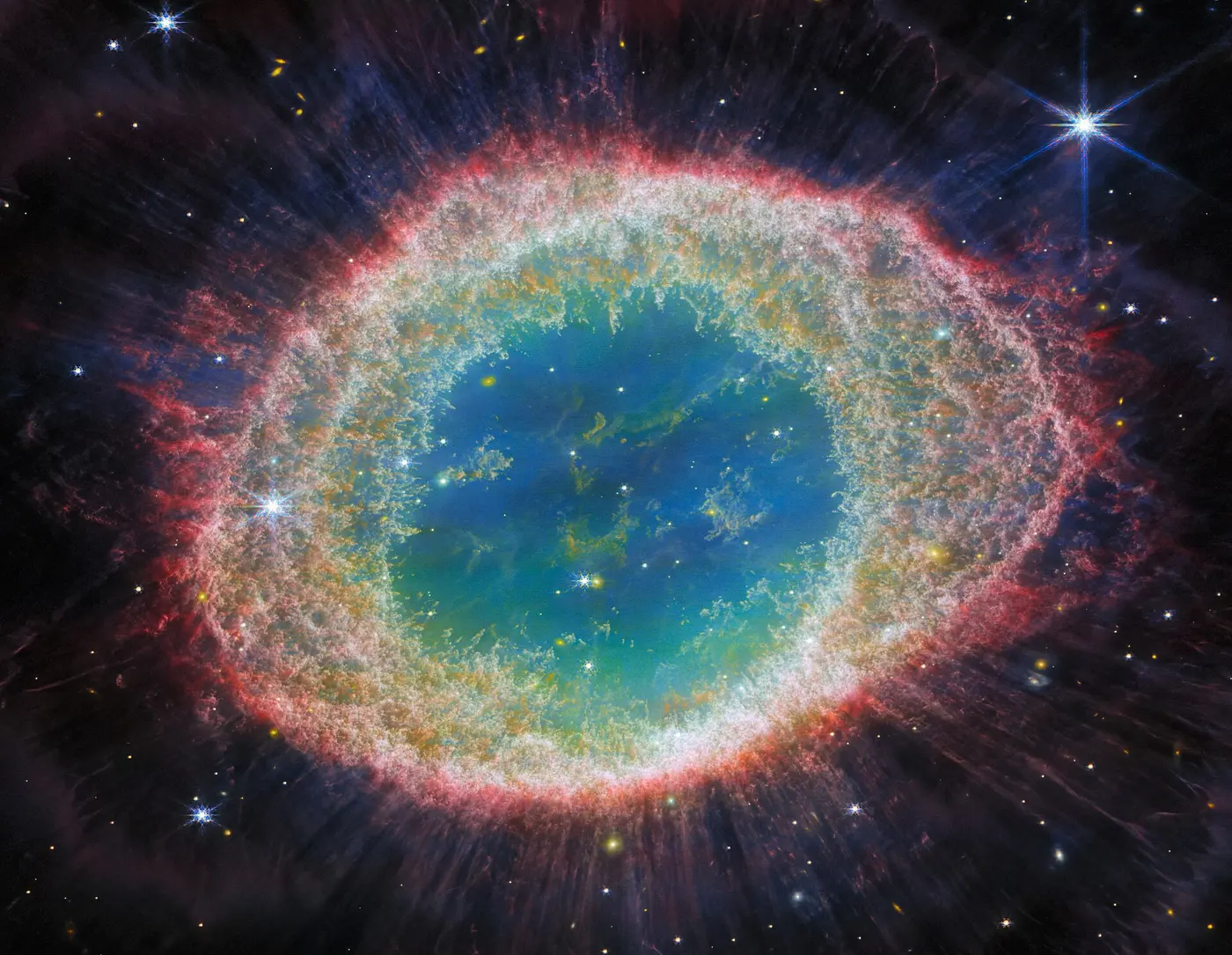

What remains once the gas has dispersed is a “white dwarf.” About half of the original Sun’s mass is squeezed into a body roughly the size of Earth, giving it a staggering density of about a tonne per cubic centimeter. No more fusion takes place inside a white dwarf. It glows white with its leftover heat and cools slowly over a mind-bogglingly long time.
The Sun will not go out in a spectacular supernova explosion. Supernovae are for heavy stars, roughly eight or more times the Sun’s mass. The Sun’s end is thought to be a gentle one: not an explosion, but a quiet shedding of gas as it shrinks away.
Earth’s deadline comes much sooner
The real problem for Earth, though, arrives long before those 5 billion years are up. The key is the change in the Sun’s brightness mentioned earlier.
As the Sun brightens, Earth slowly heats up. Higher temperatures mean more water evaporating from the oceans, and that water vapor itself acts as a greenhouse gas, trapping heat. Estimates vary from study to study, but about a billion years from now, Earth is thought likely to have trouble keeping oceans like today’s, becoming a harsh environment for life.
Long before the Sun reaches the end of its life, then, Earth will most likely have become hard to live on. Still, a billion years is an unimaginably long time. Our species, Homo sapiens, appeared only a few hundred thousand years ago, so this is a story of the very distant future.