When was the umbrella invented?
Over 4,000 years ago in ancient Egypt and Mesopotamia, as a parasol shielding kings and nobles from the sun.
4500years ago
When it rains, we open an umbrella. It is the most ordinary habit in the world. Yet when humans first took an umbrella in hand, it was not for keeping off the rain. It was a parasol for blocking the fierce sun, and not just anyone could use one.
It took several thousand years for the umbrella to become a rainy-day tool, and then something you can pick up on a whim at a station kiosk.
It began as a king’s parasol
The history of the umbrella reaches back to the great river civilizations. The oldest parasols in ancient Egyptian art are said to date to the Fifth Dynasty, around 2450 BC. In Mesopotamia, parasols appear on a victory monument from around 2300 BC, and they show up again and again in later Assyrian reliefs.
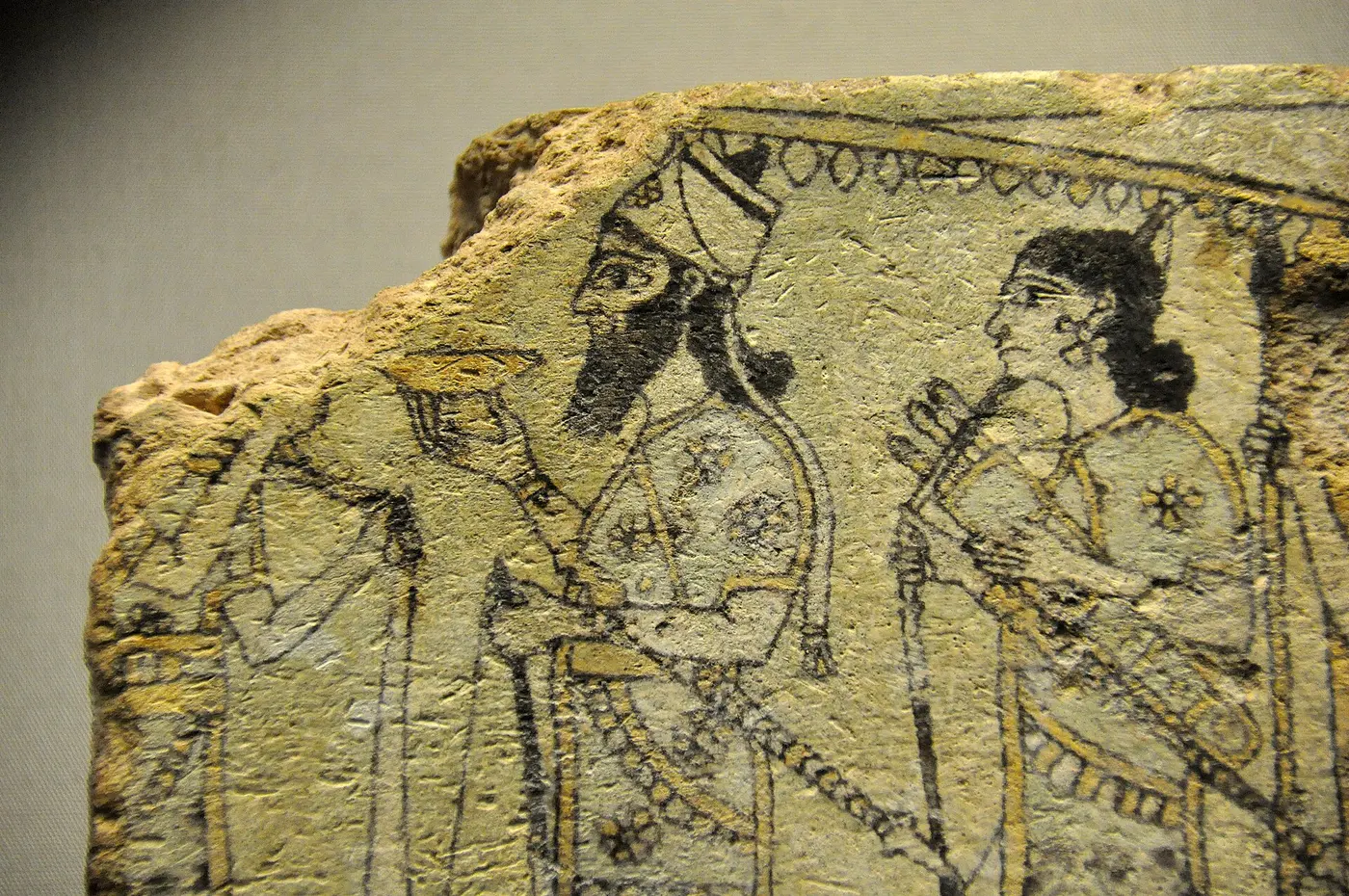

In many of these images, the king is not the one holding the parasol. An attendant stands behind him, holding it over his head. The parasol was also a mark of high status. In ancient Greece, too, the parasol is said to have become an indispensable accessory for fashionable women by the late 5th century BC.
China and the folding umbrella
The umbrella that could also be used in the rain is thought to have developed in China. Legend says it was devised by the wife of Lu Ban, a master craftsman of the Spring and Autumn and Warring States periods. That is only a legend, but there is a record that in AD 21 an umbrella with bendable joints, so that it could be opened and closed, was made for Wang Mang, ruler of the short-lived Xin dynasty.
The oiled-paper umbrella, made water-repellent by coating the paper with oil, is also thought to have originated in China. Light and rainproof, it eventually spread across East Asia.
The man who was jeered for carrying one
In Europe, meanwhile, the umbrella long remained a woman’s accessory. In 18th-century London, it took real nerve for a man to carry one around as a matter of course.
The man who broke that barrier was Jonas Hanway, a traveler and philanthropist. Starting around 1750, he walked the streets of London under an umbrella on rainy days. Hackney coachmen, for whom rainy days were the busiest and most profitable, are said to have jeered at him and tried to drive him off. Even so, Hanway kept carrying his umbrella for about 30 years, until his death in 1786. In time it became normal for men to use umbrellas too, and in 1852 Samuel Fox of England came up with a sturdy umbrella with steel ribs.
Japanese umbrellas, and then the clear plastic umbrella
It is not clear when the umbrella first reached Japan. In early times it is thought to have been used as a sunshade, or as a kind of canopy held over people of high rank. Umbrellas that could open and close spread around the Azuchi–Momoyama period (late 16th century). Wagasa, Japanese umbrellas of oiled washi paper stretched over bamboo ribs, became common among ordinary people in the Edo period (1603–1868).
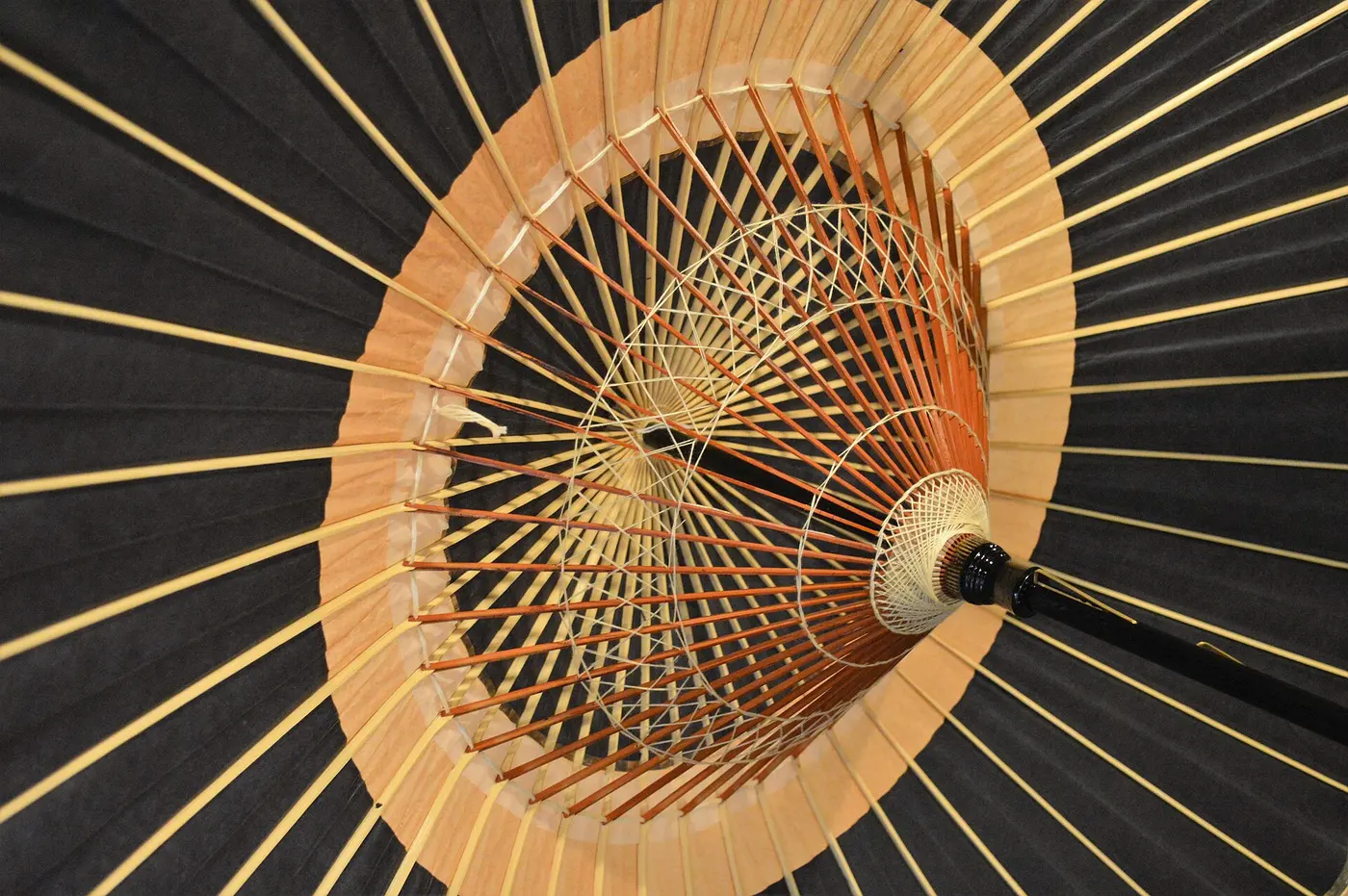

After the Meiji era began in 1868, Western-style umbrellas with metal ribs caught on, and wagasa faded from everyday life. Then, after World War II, a new kind of umbrella was born in Japan: the plastic umbrella. Mitsuo Sudō, of a Tokyo umbrella maker now known as White Rose, noticed the vinyl tablecloths used by the American occupation forces. He first made vinyl covers to slip over cloth umbrellas. Then, in the 1950s, he developed an umbrella with vinyl stretched directly over the frame. It is said to have been the world’s first plastic umbrella.
At first, wholesalers were reluctant to stock it. But around the time of the 1964 Tokyo Olympics, it caught the eye of an American buyer, and clear vinyl umbrellas became a hit in New York. That success is said to be what made them widely popular in Japan as well.