Why are keyboards laid out QWERTY?
Because we inherited the layout of a 19th-century typewriter. The idea that it was designed to slow typists down is a myth.
Look at a computer keyboard and the top row of letters begins Q, W, E, R, T, Y. From those first six letters, the arrangement takes its name: the QWERTY layout.
It is not alphabetical, and the most common letters are not grouped in the middle. A well-known explanation says the letters were deliberately scattered to make typing awkward and keep early typewriters from jamming. Trace the history, though, and it turns out not to be that simple.
It started out alphabetical
The layout’s originator was Christopher Latham Sholes, a newspaperman and politician in Milwaukee, Wisconsin. Working with his partners Carlos Glidden and Samuel Soule on a typewriter, he obtained a patent in 1868.
That machine had a keyboard shaped like a piano’s, with the keys in alphabetical order. Sholes kept improving it, and by his 1872 prototype the layout had come quite close to today’s QWERTY.
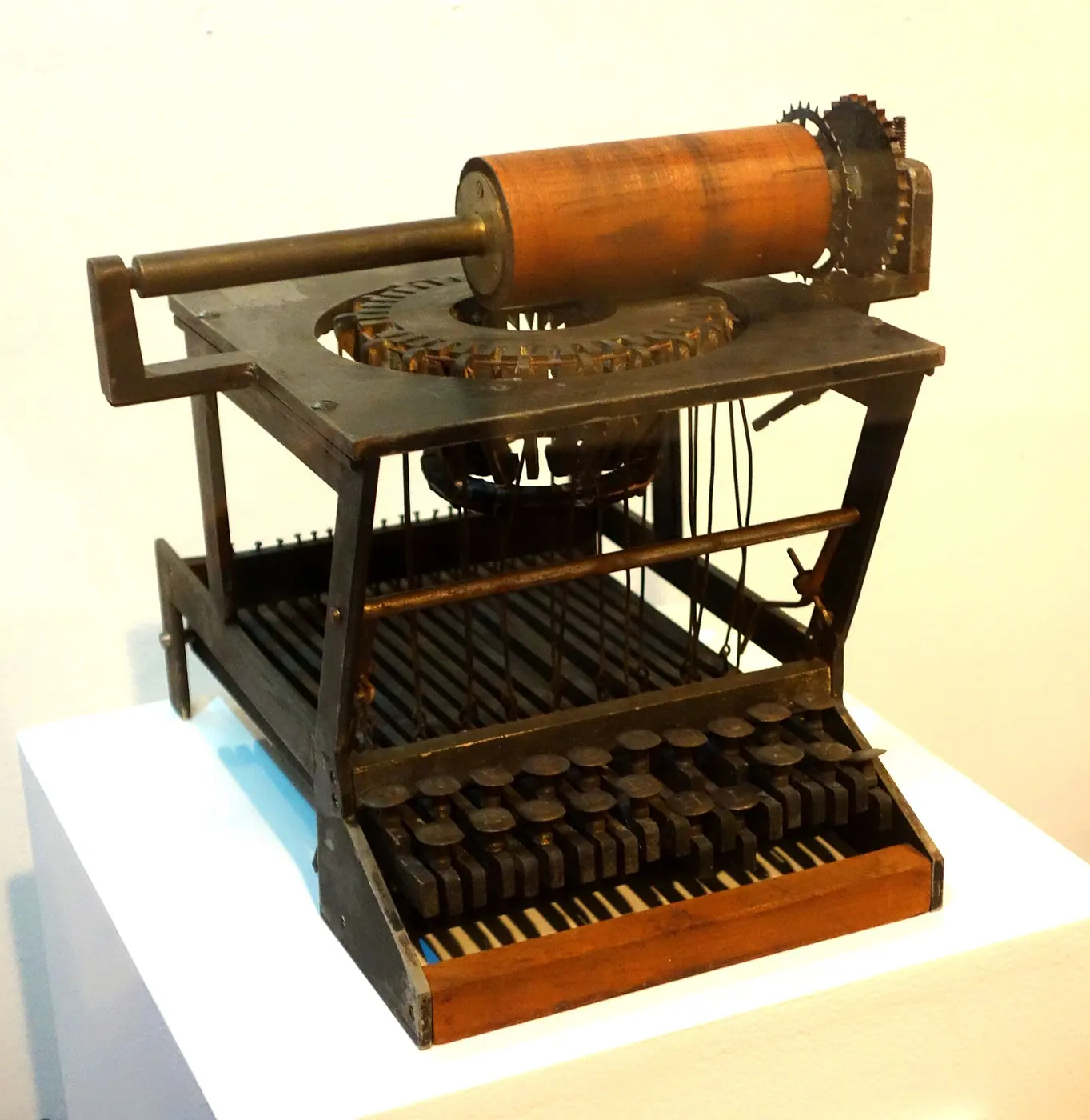

In 1873, E. Remington and Sons, a maker of guns and sewing machines, took on production, and the typewriter went on sale in 1874. Its layout was almost QWERTY, but C, X and M were still in different places. According to Koichi Yasuoka of Kyoto University, the exact modern arrangement first appeared on a Remington model sold in 1882.
Was it really meant to slow typists down?
The familiar story is that typing too fast made the machine’s internal parts, the typebars, tangle together, so the keys were arranged to be hard to type on. But Yasuoka points out that on Sholes’s typewriters, the order of the keys and the order of the typebars inside could be arranged independently. If the only goal had been to stop the typebars tangling, there would have been no need to change the keyboard.
Yasuoka and his co-author have also proposed that telegraph operators, who used early typewriters to take down messages, influenced the layout. In American Morse code, for example, “Z” and “SE” are easy to confuse, so placing Z, S and E close together would let an operator wait for the next letters and then quickly type the right one.
Another famous claim is that the layout let salesmen show off by typing the word TYPEWRITER using only the top row. But the trademark at the time was written “Type-Writer,” with a hyphen in the middle. The story is thought to be a joke invented later.
A merger, not a contest, settled it
In the 1880s, Remington’s biggest rival was the Caligraph, which used a different layout. Typing speed contests between the two never produced a clear winner.
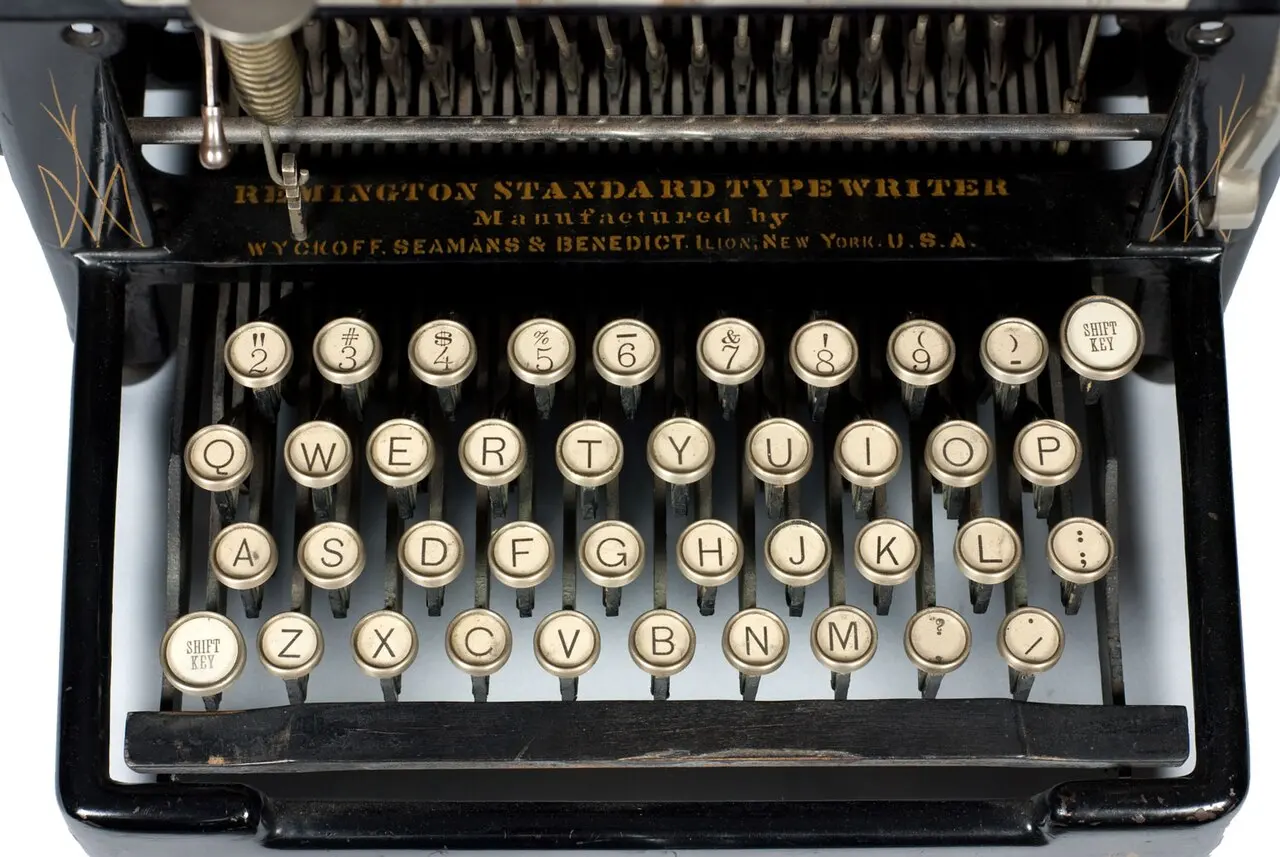

What tipped the balance was not the merits of the layouts but a business deal. In 1893, five leading makers, Remington and Caligraph among them, came under the control of a single holding company. The five standardized their keyboards, and in 1898 Caligraph brought out a QWERTY model. On top of that, Underwood, whose typewriter launched in 1900 and became a huge seller, adopted the same layout as Remington. So QWERTY became the standard less by outperforming its rivals than by cornering the market.
On to computers
The typewriter layout then spread into telegraphy. In 1901, Donald Murray, who built the forerunner of the teleprinter, used QWERTY for its keys. His system required the ten keys Q through P to double as the numbers 1 through 0, which made the layout even harder to change.
EDSAC, an early computer that began running in Britain in 1949, used a teleprinter for input and output. Teleprinters went on serving as computer terminals for years, and QWERTY was handed down to personal computers. In the 1930s, the American August Dvorak designed a layout meant to be easier to type on, but it never caught on widely.