Who invented the ballpoint pen?
The American John J. Loud took out the first patent in 1888, but the Hungarian journalist László Bíró made it practical in the 1930s.
Pull off the cap or click the button, and it is ready to write. There is no ink to top up, and the writing dries almost at once. The ballpoint may well be the most familiar writing tool in the world.
In its tip sits a tiny metal ball about a millimeter across. As the ball rolls over the paper, ink on its surface is transferred to the page. It is a simple mechanism, yet turning it into a usable product took about 50 years.
The first patent was for writing on leather
The first patent for a ballpoint pen went to an American, John J. Loud, in 1888.
Loud’s pen held a small ball at the end of a tube and was meant for marking rough surfaces such as leather, wood and coarse wrapping paper. But its lines were thick and patchy, and it was no good for finer work such as writing letters. It was never put on sale.
Other patents for similar ideas followed. The trouble was the ink: too thin and it leaked, too thick and it clogged at the ball. Finding an ink that was just right was the great obstacle.
A journalist inspired by newspaper ink
The man who overcame it was László Bíró, a Hungarian newspaperman. Born in Budapest in 1899, he used a fountain pen every day for his work, and was frustrated by the bother of refilling it and the way his writing smudged.
At some point he noticed that the ink used to print newspapers dried quickly without smudging. But that ink was too thick to flow through a fountain pen. So, working with his brother György, he devised a way to deliver a thick ink to the paper through a rotating ball.
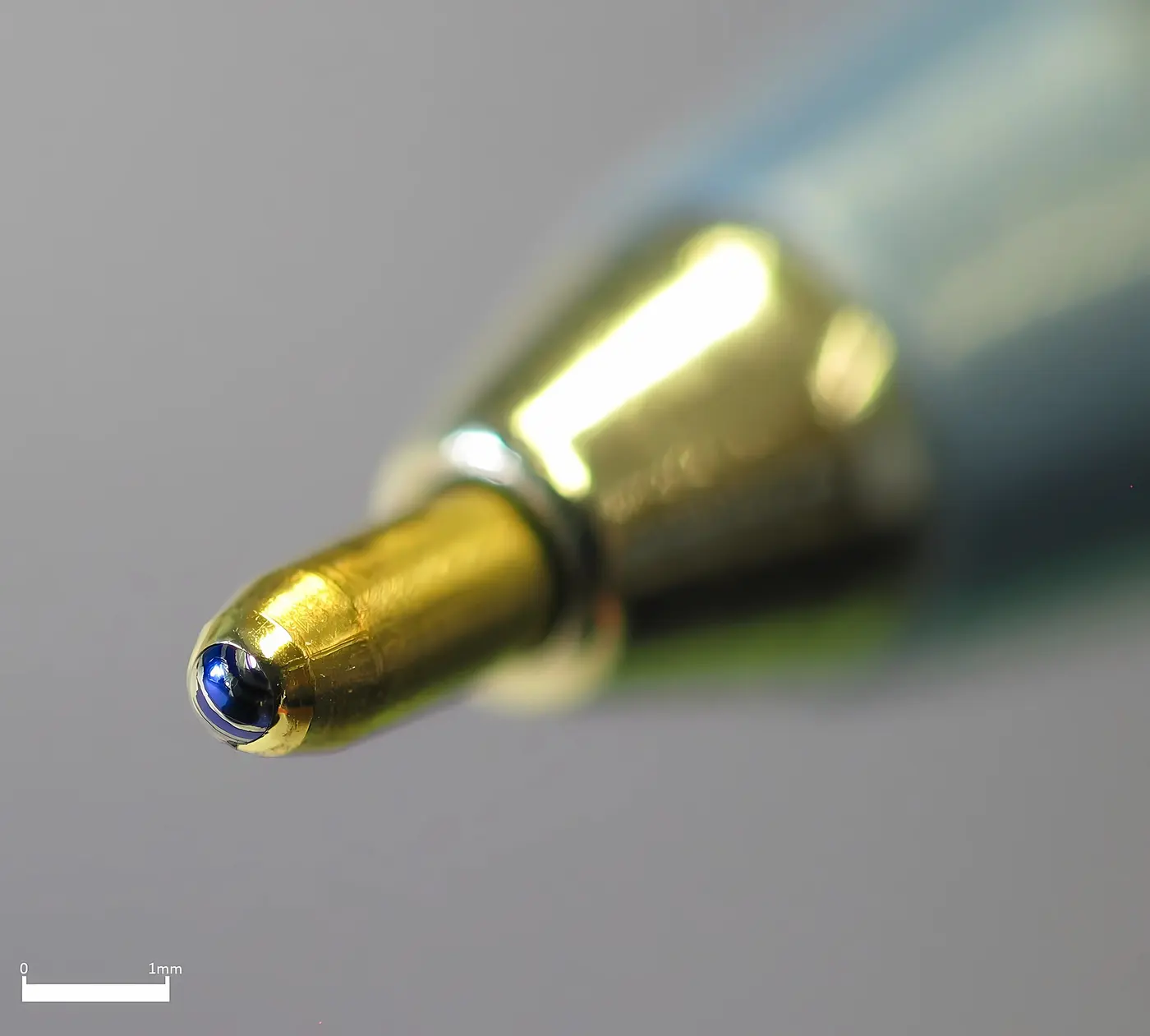

The ball touches the ink inside the barrel, and each time it rolls across the paper it carries a little ink out with it. Because the ink is thick, the ball acts as a lid when you are not writing, so the pen is less likely to leak. The Bíró brothers patented the mechanism in 1938.
Escaping the war to Argentina
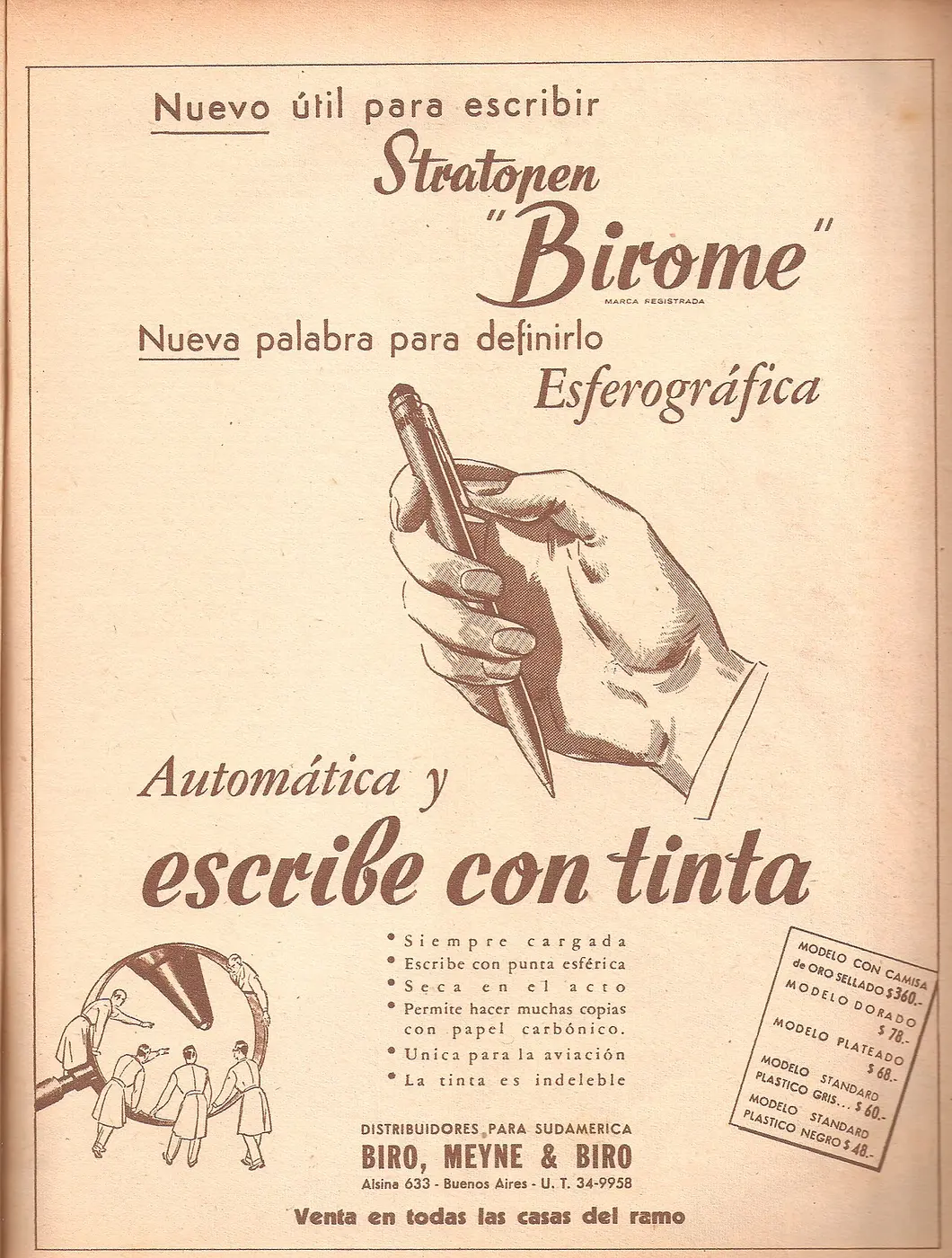
But Europe was heading into the Second World War. The Bíró brothers, who came from a Jewish family, left Hungary for Argentina. In 1943 they filed a new patent there, set up a company with a partner, and began selling ballpoint pens.
In Argentina, the pen is still called a birome after that brand name, and in Britain a ballpoint is often called a “biro” after its inventor. Britain’s Royal Air Force adopted Bíró-type pens for its aircrews, reportedly because fountain pens tended to leak at high altitude.

From luxury item to throwaway
In the United States, Reynolds ballpoint pens went on sale on October 29, 1945, at the Gimbels department store in New York. They cost 12 dollars and 50 cents, a luxury price at the time, but they caused a sensation.
Then, in 1950, Marcel Bich in France launched the Bic Cristal, a cheap ballpoint with a clear barrel. It sold all over the world, and the ballpoint became a disposable everyday item.
Ballpoints reached Japan with the American forces after the Second World War. In 1948 the Japanese pen maker Sailor released the first domestically made ballpoint, and Japanese companies went on to create new kinds of their own. In 1984, Sakura Color Products launched Ballsign, the world’s first ballpoint pen using water-based gel ink.
Loud had the first idea; the Bíró brothers made a ballpoint that worked. If one name has to be given as the inventor, it is usually Bíró’s.