Is a tomato a vegetable or a fruit?
Botanically it is a fruit, but Japan’s agriculture ministry and everyday cooking treat it as a vegetable.
1893
At the greengrocer or the supermarket, tomatoes sit in the vegetable section alongside cucumbers and eggplants. Yet in Japan, high-sugar varieties are sold as “fruit tomatoes,” with their fruit-like sweetness as the selling point. So which is it: is the tomato a vegetable or a fruit?
The truth is, the question has no single right answer. It depends on which yardstick you use to sort things.
To a botanist, it’s a fruit
From a botanical standpoint, the matter is fairly clear. After a flower blooms, the ovary at the base of the pistil swells into a structure holding seeds, and that is a fruit. The tomato fits the description perfectly: slice one across, and you can see seeds packed into the jelly-like pulp.
By this yardstick, cucumbers, eggplants, bell peppers and squash all count as fruits too. To a plant, a fruit is a container for carrying its seeds; whether it is sweet, or whether we eat it for dessert, has nothing to do with it. In other words, the botanist’s “fruit” and the fruit we talk about at the dinner table are not the same thing.
A court rules: “vegetable”
This difference was fought over in earnest in 19th-century America. Under a tariff law enacted in 1883, imported vegetables were subject to a 10 percent duty, while fruit was exempt. So the Nix family, who imported tomatoes from the Caribbean, sued Hedden, the collector of the Port of New York, arguing that tomatoes were fruit and no duty should be owed.
The case went all the way to the Supreme Court, where dictionary definitions were read aloud. The ruling handed down in 1893 was unanimous: the tomato is a vegetable. Justice Gray, who wrote the opinion, acknowledged that botanically the tomato is the fruit of a vine. The reasoning he gave was roughly as follows:
In the common language of the people, tomatoes are served at dinner with soups or meat dishes, not as dessert. Therefore, they are vegetables.


The words of a law are to be interpreted by how they are used in everyday life, not by scholarly definitions. This case, Nix v. Hedden, is still a famous precedent, cited whenever people discuss how to interpret the law.
Japanese officials say “vegetable,” too
What about Japan? The Ministry of Agriculture, Forestry and Fisheries classifies the tomato as a “fruit vegetable,” in the same group as cucumbers, eggplants and green peppers, and treats it as a vegetable through and through.
Under the ministry’s approach, plants or trees grown for roughly two years or more and eaten for their fruit count as “fruit trees.” Tomatoes are harvested within a year of sowing and then replanted, so they fall on the vegetable side. For the same reason, strawberries, melons and watermelons are also classified as vegetables, under the rather curious label of “fruit-like vegetables.” Chestnuts and ume plums, on the other hand, grow on trees, so they count as fruit trees.
Edo-period tomatoes were for looking at
The tomato’s homeland is the Andes region of South America. It is thought to have reached Japan by way of Europe around the mid-17th century. Kanō Tan’yū, an official painter to the Tokugawa shogunate, sketched a tomato from life in 1668 and labeled it kara-nasubi, “foreign eggplant.” A little later, in 1709, Kaibara Ekiken’s natural-history encyclopedia Yamato honzō introduced it under the name kara-gaki, “foreign persimmon.”
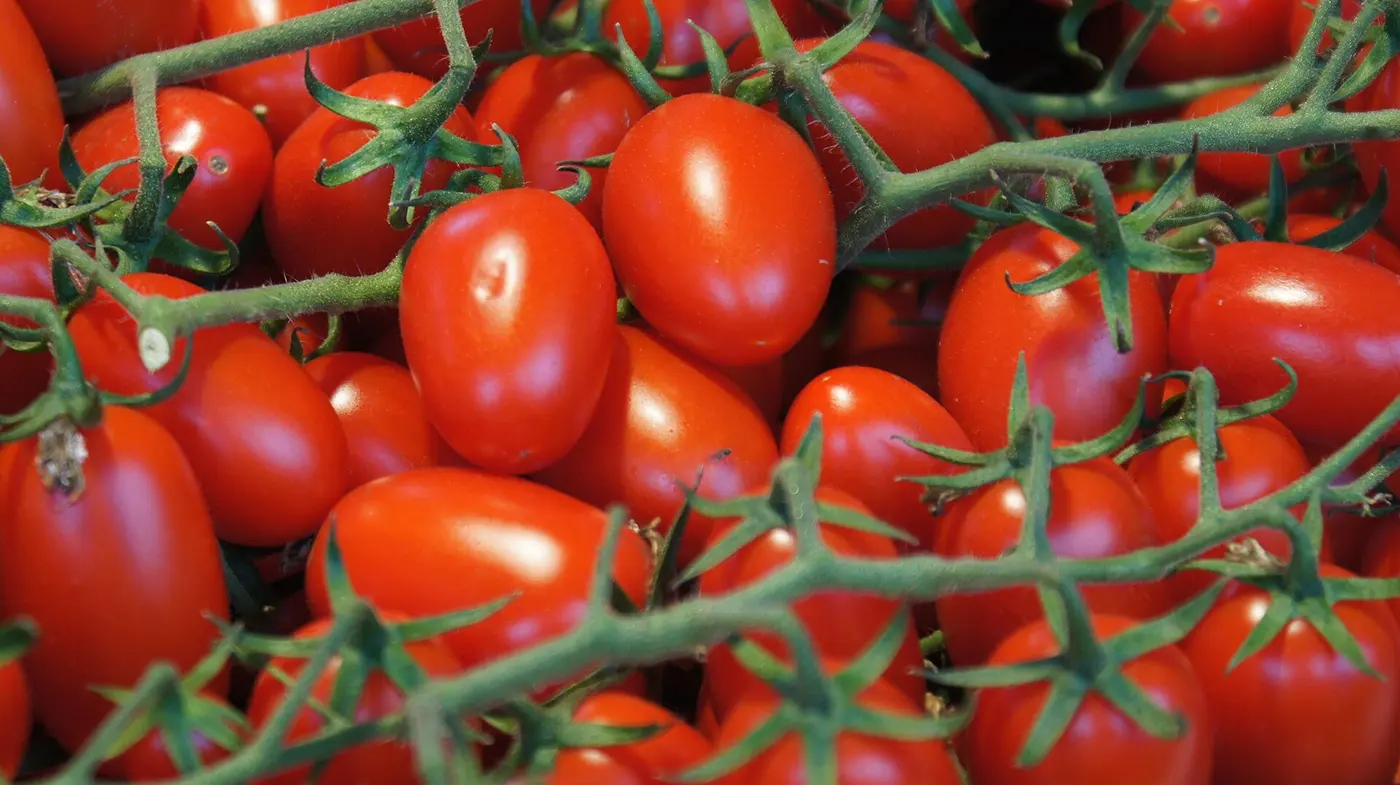

In those days, though, the tomato was less a food than an ornamental plant, grown so people could admire its red fruit. Its grassy smell also seems to have put people off. Tomatoes were first cultivated as food in Japan only after the Meiji era began in 1868, and they became a common sight on the dinner table only in the Shōwa era (1926–1989), as breeding improved the varieties.