Is it true that honey never spoils?
Under the right conditions, it almost never does. But it must never be given to babies under one year old.
20%
Every so often, a jar of honey turns up at the back of the cupboard, and you can’t remember when you bought it. It may have turned white and solid, or darkened in color, but when you open the lid, the sweet aroma is still there. Bread or yogurt would go bad within days, so how does honey manage to stay so unbothered?
The saying “honey never spoils” is half true—and half a slight exaggeration. Follow the reasons, and you discover just how skillful the honeybee is as a tiny chemist.
A food that dries microbes out
Honey is roughly 80 percent sugar, with only about 17 to 20 percent water. On top of that, what little water there is is held tightly by sugar molecules, so microbes cannot freely use it. Food scientists measure this share of “freely available water” with an index called water activity, and honey generally comes in at around 0.6—far below the level at which most bacteria can multiply.
Worse still for the microbes, when bacteria or molds get into honey, the concentrated sugar solution draws the water out of them, and the difference in osmotic pressure leaves them shriveled and dried out. It is the same principle that lets candied fruit and jam keep for a long time, except that honey pulls it off naturally.
Sour, with a hint of disinfectant
Sweet as it is, honey is actually quite acidic. Its pH is about 3.2 to 4.5, a long way from the near-neutral conditions most bacteria prefer. We don’t usually notice any sourness because the overwhelming sweetness fools the tongue.
There is more. As bees turn the flower nectar they collect into honey, they add an enzyme called glucose oxidase. When this enzyme acts on glucose, it produces a tiny amount of hydrogen peroxide—the main ingredient of the antiseptic solution used to clean cuts. Dryness, acidity, and a built-in disinfectant: honey keeps microbes at bay with layer upon layer of defenses.
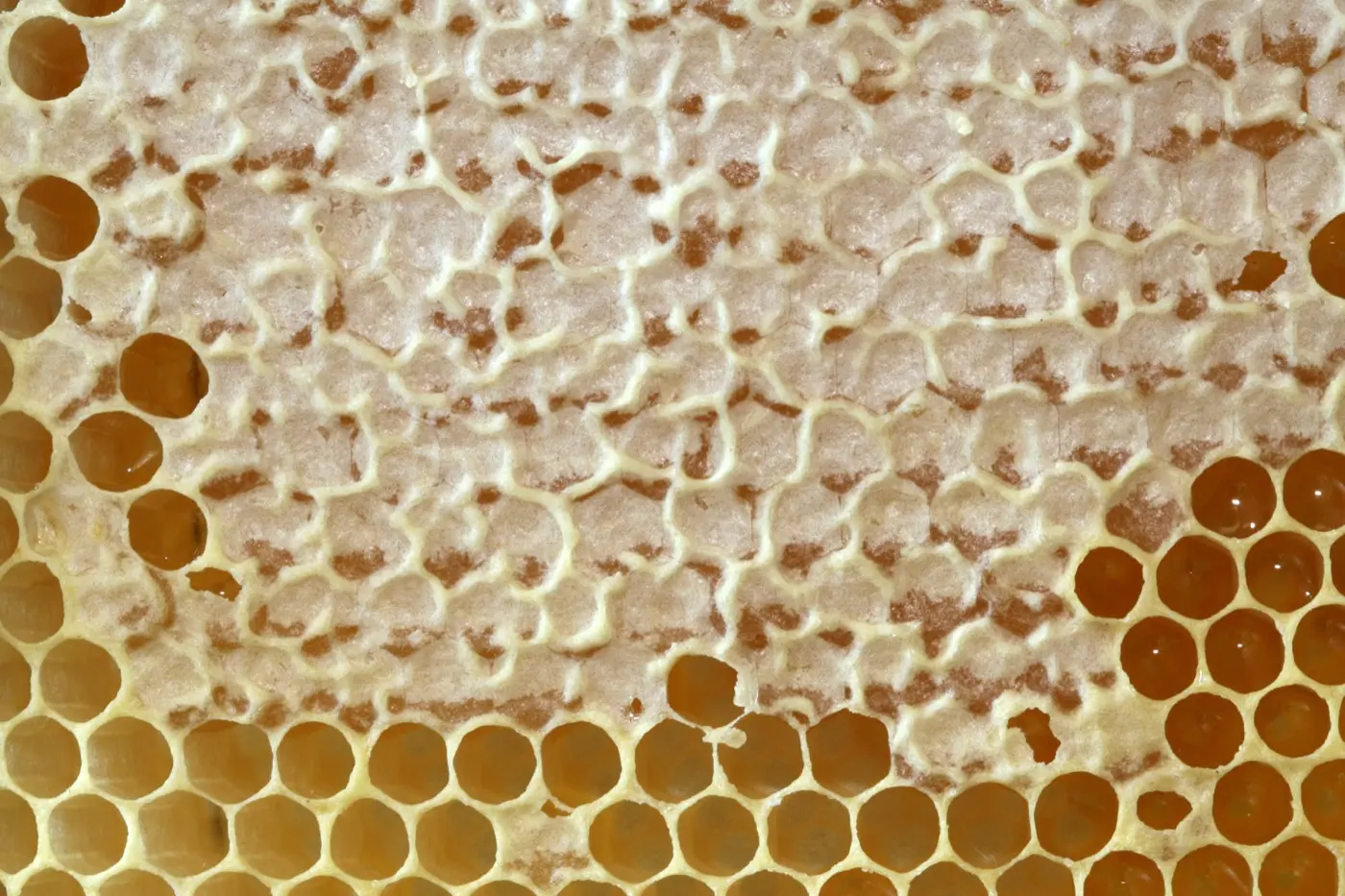

All of these defenses depend on honey staying low in water, however. Honey readily absorbs moisture from the air. If you leave the lid off or dip a wet spoon into the jar and the water content rises, sugar-tolerant yeasts can get to work and the honey may ferment. And the reason store-bought honey carries a best-before date is that its color and flavor gradually change over time.
Was the honey in ancient tombs edible?
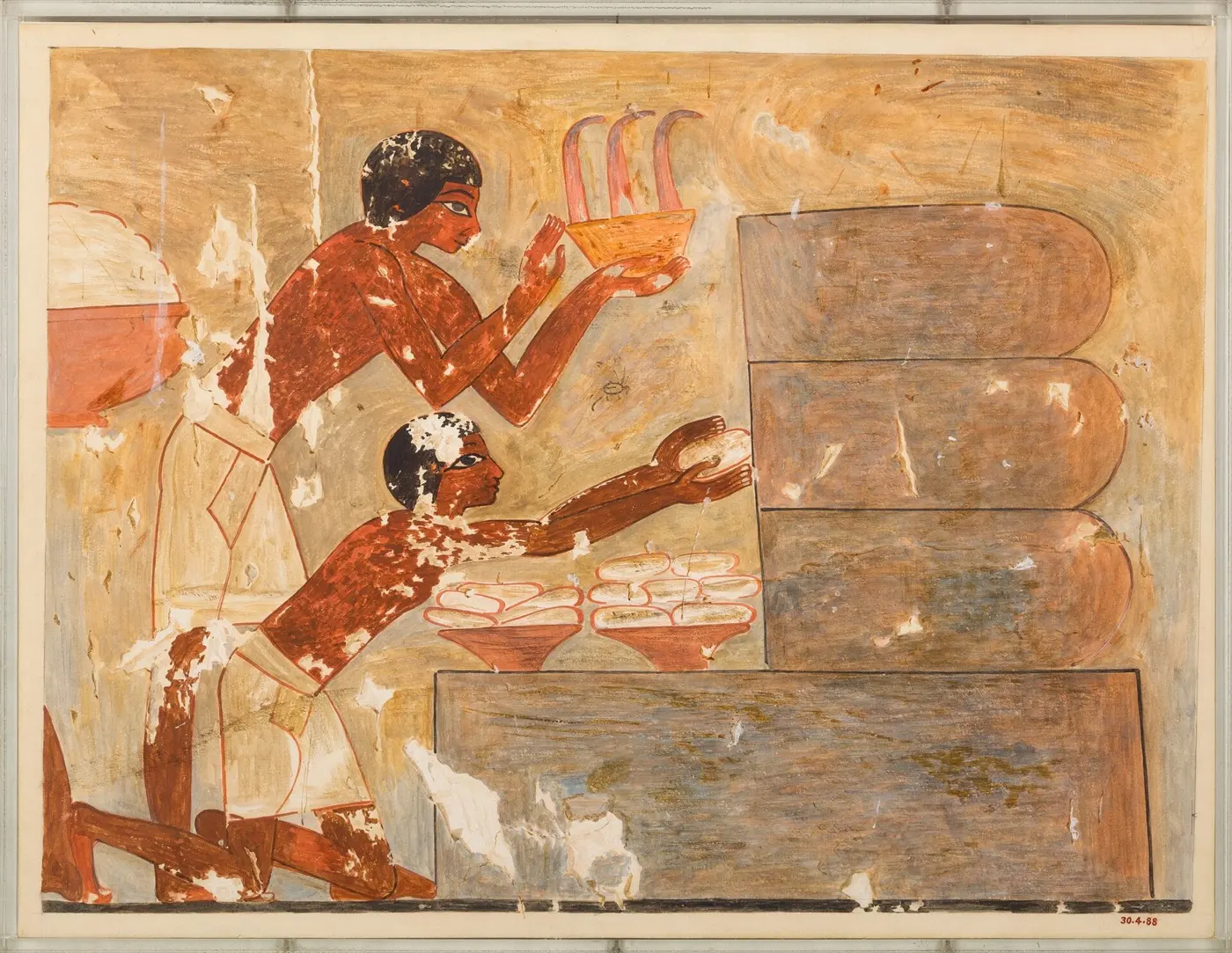
A story told all over the world goes like this: honey thousands of years old, found in an Egyptian tomb, was still perfectly edible. It is well known from wall paintings and written records that the ancient Egyptians treasured honey and offered it at temples and tombs. Yet clear records of who actually tasted honey from which tomb, and when, are surprisingly hard to find. It is probably best enjoyed as a charming anecdote, held at a little distance.

There is solid research on ancient honey, though. In 2025, a team including scientists at the University of Oxford published their analysis of bronze jars found in 1954 among the ruins of an ancient Greek temple in Paestum, in southern Italy. In residue left inside the jars, which date to the sixth century BCE, they confirmed traces of honey and beeswax. But this was residue that had been transformed over the long centuries, and it was certainly not in any state to be eaten. Resisting spoilage and staying unchanged forever are two different things.
Not for babies—not yet
There is one thing about honey that must never be forgotten: do not give it to babies under one year old. Honey can, on rare occasions, contain spores of the bacterium that causes botulism. A spore is something like a dormant state in which the bacterium wraps itself in a thick shell, and it can survive both in honey and through ordinary cooking.
In adults and children over one, a well-established community of gut bacteria means that swallowing these spores almost never causes problems. In infants, whose gut environment is still immature, the spores can germinate in the intestine and produce toxin, causing infant botulism. In Japan in 2017, a six-month-old baby who had been fed store-bought juice mixed with honey died of infant botulism. As a rule, honey should be avoided until a child’s first birthday, including drinks and baked goods that contain it.