Is it true that the specks on a strawberry aren’t seeds?
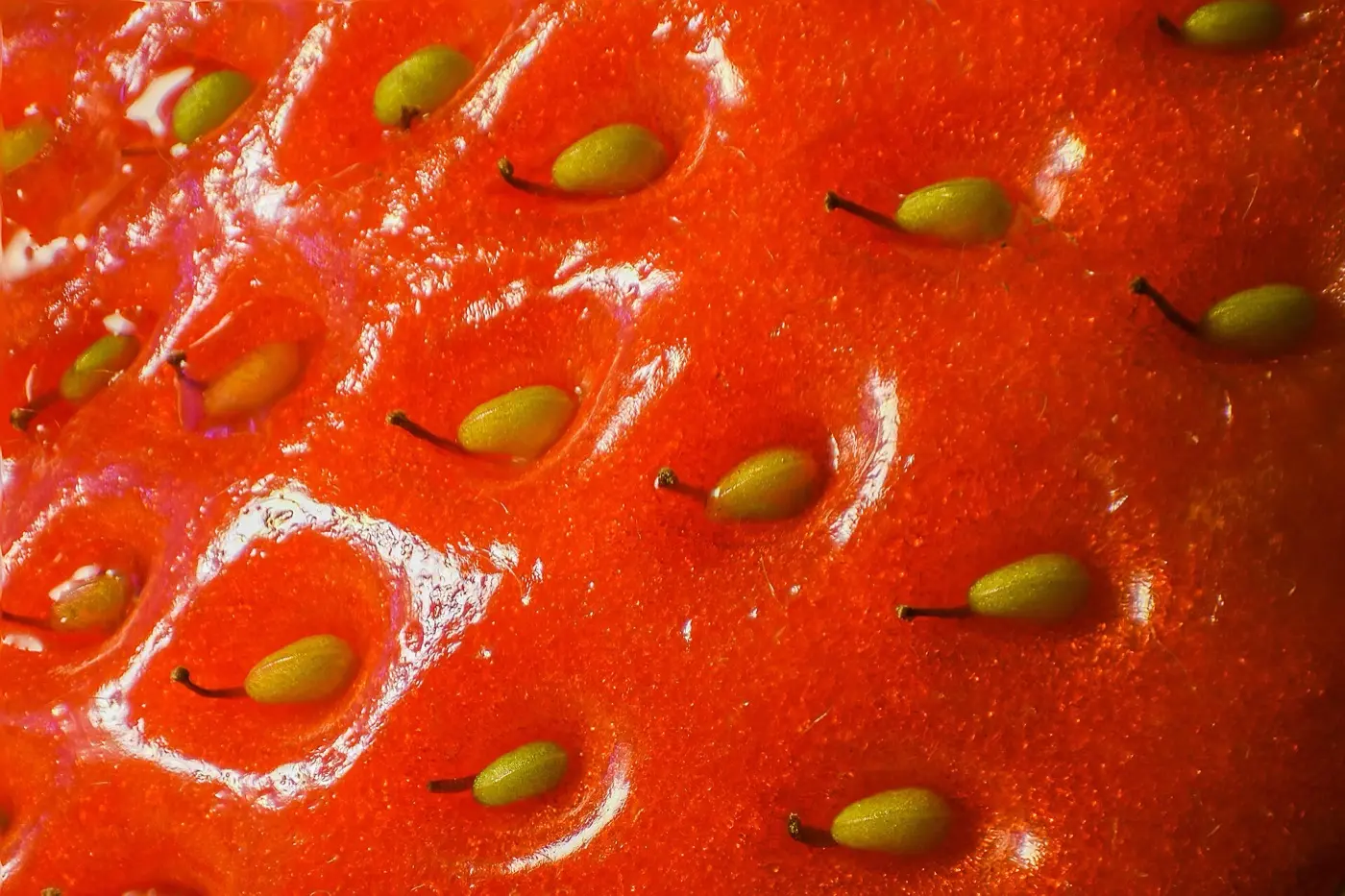
Yes. Each speck is a tiny fruit called an achene, and the seed is inside it.
200–300specks
Pick up a strawberry, and your fingertips brush against the tiny specks packed across its surface. Plenty of us were told as children, “Those are the strawberry’s seeds.” They look like seeds, and the way they get stuck between your teeth is certainly seed-like behavior.
In botany, however, that explanation needs a correction. Those specks are not seeds. Each one is a fruit in its own right. So what, then, is the sweet red part we eat?
The real seeds are inside the specks
The specks on a strawberry’s surface are fruits called achenes. An achene is a dry type of fruit with a thin, hard outer wall that holds just one seed inside. The sunflower “seeds” sold in stores are actually achenes too, shell and all.
In other words, each speck on a strawberry is a small fruit wrapped in a hard skin, with the true seed tucked inside. A single strawberry is said to carry around 200 to 300 achenes, though the number varies with the variety and size. Every time we bite into a strawberry, we are eating hundreds of fruits at once.

The red part is the flower’s base
So what is that juicy red part? It is called the receptacle: the base of the flower, at the very bottom, that supports the petals and pistils.
At the center of a strawberry flower sits a cluster of many tiny pistils. Once they are pollinated, each pistil becomes an achene, and the receptacle carrying them swells and swells until it takes on that familiar red form. When some part other than the ovary grows large and comes to look like a fruit, botanists call it an accessory fruit, sometimes known as a “false fruit.” The parts of apples and pears that we eat also develop from the receptacle.
Interestingly, the receptacle cannot swell without the specks. That is because the seeds growing inside the achenes release plant hormones that promote its growth. Wherever pollination fails and the achenes do not develop, the receptacle does not swell either, and the strawberry ends up lopsided. A neatly shaped strawberry is, you could say, proof that its specks ripened evenly all over.
What counts as “fruit” depends on whom you ask
In botany, a fruit is what develops from the ovary of a flower’s pistil, an organ for protecting and dispersing seeds. By that definition, the part of a strawberry that qualifies as fruit is the specks, and the red part, strictly speaking, is not fruit at all.
In everyday language, on the other hand, “fruit” is a looser word meaning something sweet that we eat for dessert. And agricultural classification adds yet another twist. In statistics from Japan’s Ministry of Agriculture, Forestry and Fisheries, strawberries are classed as vegetables, specifically “fruit-like vegetables,” alongside melons and watermelons, because they grow on herbaceous plants rather than trees.
To botanists the red part is not fruit, in agricultural statistics it is a vegetable, and at the table it is a fruit. The strawberry is a surprisingly complicated thing, one plant with three faces.
Each speck marks one successful pollination
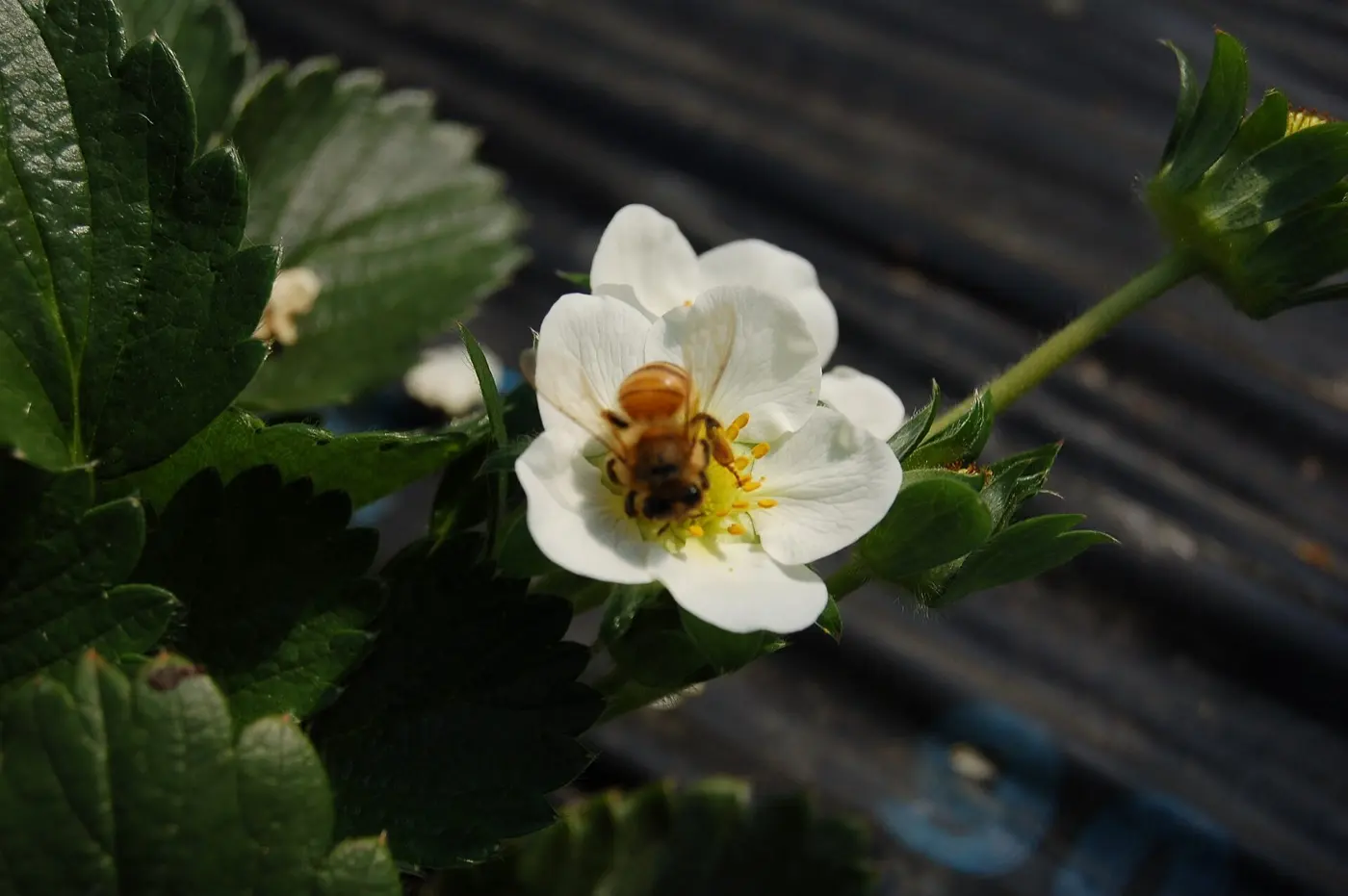
Every achene started out as a single pistil. That means behind every neatly shaped strawberry lie hundreds of individual pollinations. Strawberry farmers who grow their crops in greenhouses often release honeybees for just this reason: to have them walk all over the flowers and deliver pollen to every last pistil.

The next time you eat a strawberry, take a moment before that first bite to look at its surface. Each of those tiny specks marks a pollination that succeeded inside the flower.