What does the “short” in shortcake mean?
In baking, “short” means crisp and crumbly. The name first meant cakes made from that kind of dough.
Fluffy sponge cake, snow-white cream and red strawberries on top. In Japan, say “shortcake” and that is exactly the picture everyone sees. It shows up at birthdays and at Christmas, and it is practically the face of Western-style cakes there.
But what, exactly, is “short” about it? Is it a low cake? A quick one to make? In fact, the word comes from a slightly surprising meaning of the English word. And if you order a “shortcake” in the United States, you will get something quite different from the Japanese version.
“Short” can mean crumbly
“Short” is best known as the opposite of “long,” but in baking it also means crisp and crumbly. A pastry or dough that breaks apart tenderly in the mouth is described as short.
How did “short” come to mean “crumbly”? When you mix flour with water and knead it, proteins form a network called gluten, and the dough becomes stretchy. Work in plenty of fat such as butter or lard, though, and those connections are disrupted, as if the gluten strands had been cut short. Instead of stretching, the dough snaps and crumbles. That is a short dough.
The name of the baking fat “shortening” comes from the same idea: it is what makes a dough short. Scotland’s traditional shortbread crumbles so delightfully for the very same reason.
In America, shortcake is a biscuit
The English word “shortcake” is old. It already appears in a cookbook published in London in 1588. Back then, though, it described a plain, unleavened baked treat.
In 19th-century America, as baking soda and baking powder spread, shortcake changed dramatically. By the 1850s, “strawberry shortcake,” with berries sandwiched in a leavened dough, had become popular, and by the 1860s cream had joined the layers too.
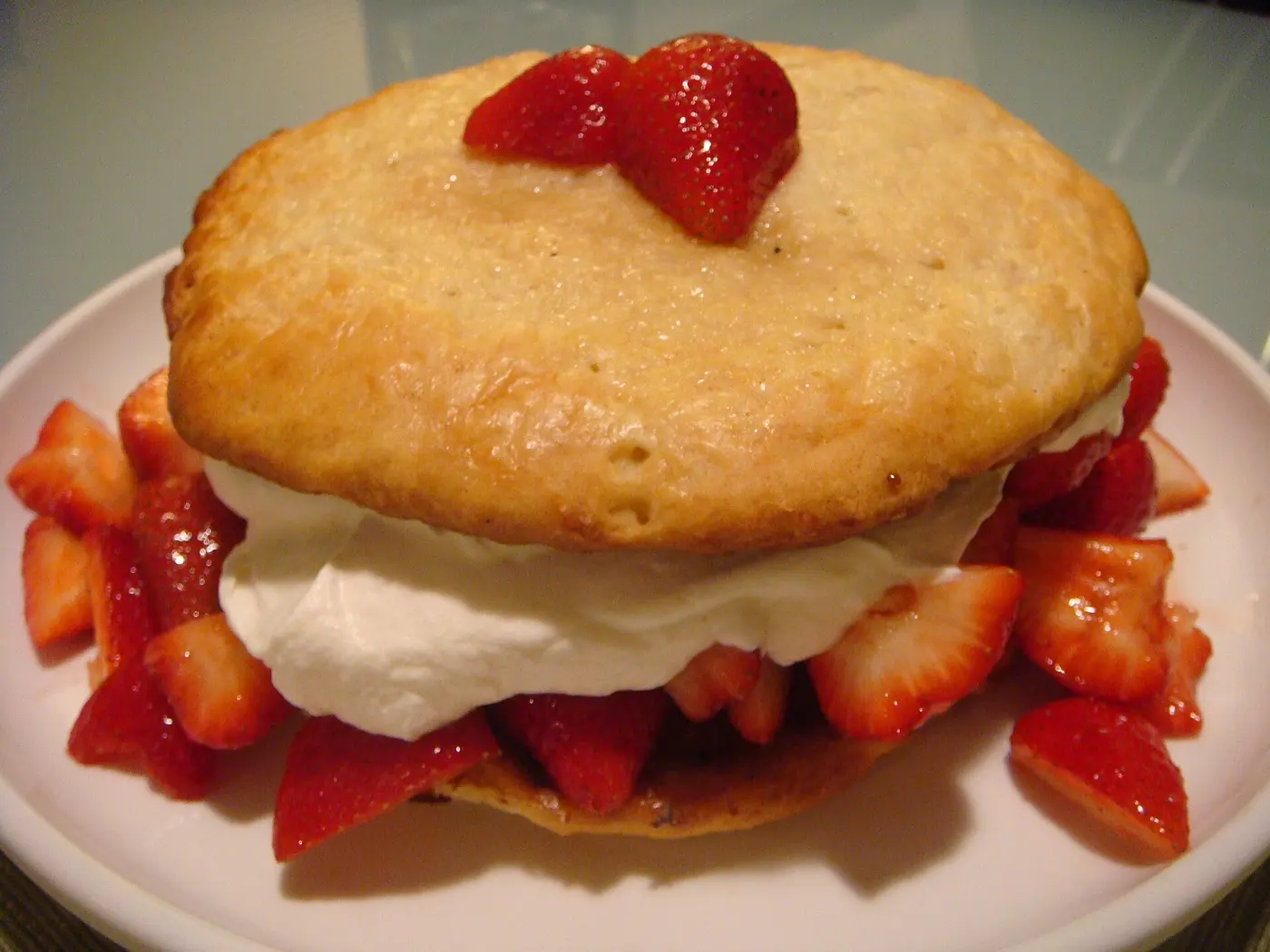

American shortcake still takes this form. Its base is a “biscuit,” something between bread and cake. Because shortening or butter is worked into the flour before baking, it is crisp outside and soft inside. It is split horizontally and filled with sugared strawberries and whipped cream.
In Japan, it became a sponge cake
So why is Japanese shortcake made with sponge?
The best-known story involves Fujii Rin’emon, founder of the confectioner Fujiya. In 1912 he traveled to the United States to study the Western confectionery business, and there he came across shortcake made with biscuit dough. He reworked it to suit Japanese tastes, using a soft, fluffy sponge cake instead, and is said to have put it on sale in 1922 (the 11th year of the Taishō era).
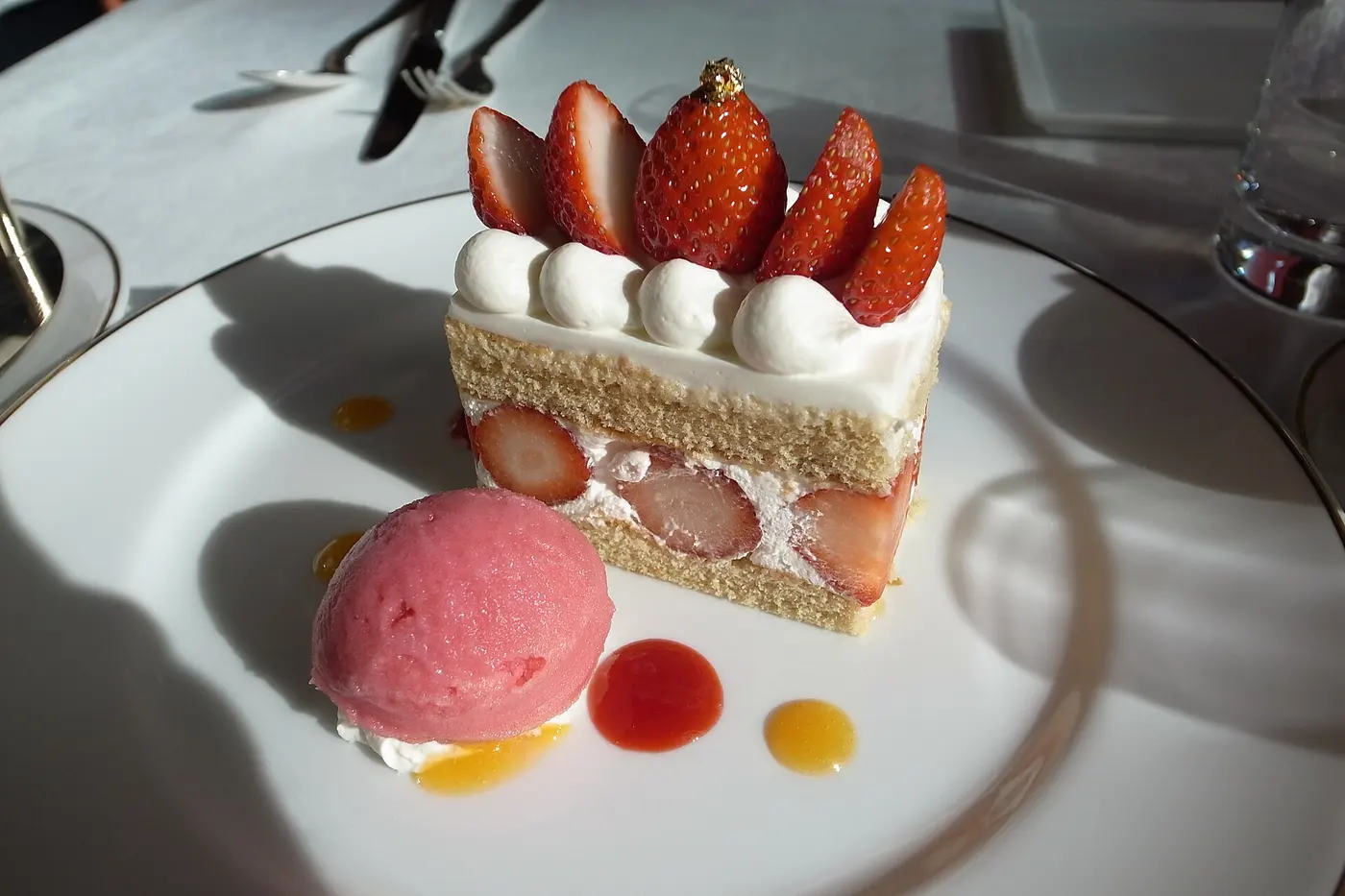

Who first made a sponge shortcake in Japan, however, is not clear. Another theory credits Kadokura Kuniteru, founder of the confectioner Colombin, who had trained in France. Accounts differ. Either way, it seems certain that during the Taishō era (1912–1926), Japanese pastry chefs turned an American home-style dessert into something soft and distinctly Japanese.
Only the name was carried over from America; the contents became something else entirely. In Japan you sometimes hear explanations like “because it’s quick to make,” but the word’s original meaning lies in that crisp, crumbly dough. Today the Japanese version has become established as a cake in its own right, sometimes introduced abroad as “Japanese shortcake.”