Is the wasabi at conveyor-belt sushi the real thing?
It depends on the shop or product. Many are mostly horseradish, but some places use real wasabi.
50%
At a conveyor-belt sushi restaurant, where plates of sushi glide past on a moving track, you tear open a little packet of wasabi and stir it into your soy sauce. Most of us know that sharp jolt that shoots up the nose and makes you squeeze your eyes shut. But is that really the wasabi that grows in clear mountain streams?
The short answer: it depends on the restaurant and the product. And even when it isn’t real wasabi, it is less a fake than “wasabi” made from a different plant.
Two kinds of “wasabi”
Two main plants go by the name wasabi. One is hon-wasabi (本わさび), “true wasabi,” native to Japan. It is grown slowly, over several years, in streams and fields fed by cold spring water. The other is seiyō wasabi (西洋わさび), “Western wasabi,” a European native known in English as horseradish. It is the plant you probably know as the white, grated condiment served with roast beef. In Hokkaido, horseradish that has gone wild is called yama-wasabi (“mountain wasabi”) and is loved as a local flavor.
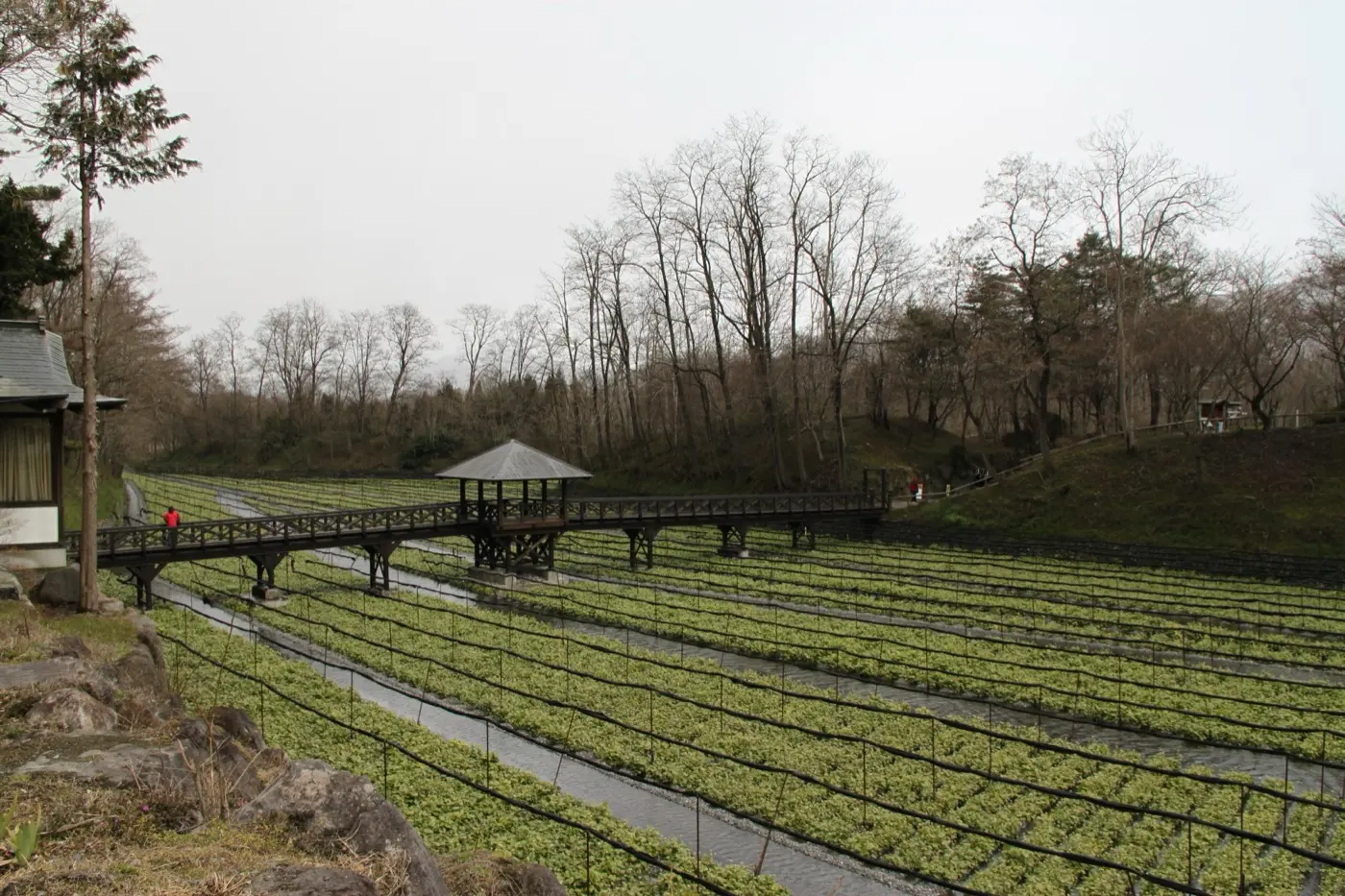

Both belong to the cabbage family, and the source of their heat is the same. Their personalities, though, are quite different. True wasabi takes so much time and effort to grow that it is expensive, while horseradish is hardy and easy to grow, with thick roots that produce a large yield. Horseradish is naturally whitish, but with a little coloring it takes on the green look of wasabi.
The ingredients list doesn’t lie
Pick up a tube of wasabi paste and look at the ingredients on the back. On many products, the first item listed is seiyō wasabi: horseradish. In Japan, ingredients must be listed in order of quantity, so that tells you it is the main player.
Some products, on the other hand, advertise hon-wasabi shiyō (本わさび使用, “made with real wasabi”) or hon-wasabi iri (本わさび入り, “contains real wasabi”). The two sound alike but mean different things. Under the voluntary standards of an industry group, the Japan Processed Wasabi Association, a product may say “made with real wasabi” if true wasabi makes up 50% or more of the wasabi in it, and must say “contains real wasabi” if it is less than 50%. In other words, “contains” can be used as long as there is any true wasabi in it at all.
The packets and pots at conveyor-belt sushi restaurants often hold this kind of processed wasabi. But some restaurants grate fresh true wasabi, and some chains deliberately choose products containing real wasabi, so you can’t lump them all together. If you are curious, the surest way to find out is to check the label on the packet.
Heat that appears the instant you grate it
Here is a surprise: if you bite into a wasabi root as it is, you will hardly feel that sharp heat at all. The pungent compound isn’t sitting inside the root to begin with.
Inside wasabi cells, a non-pungent substance called sinigrin and an enzyme called myrosinase are stored in separate places. When grating breaks the cells open, the two meet and react, producing a pungent compound called allyl isothiocyanate. It evaporates and rushes up into your nose: that is the source of the sharp sting. People say you should grate wasabi slowly, in circles, on a fine grater, to break the cells down thoroughly and keep the reaction going.
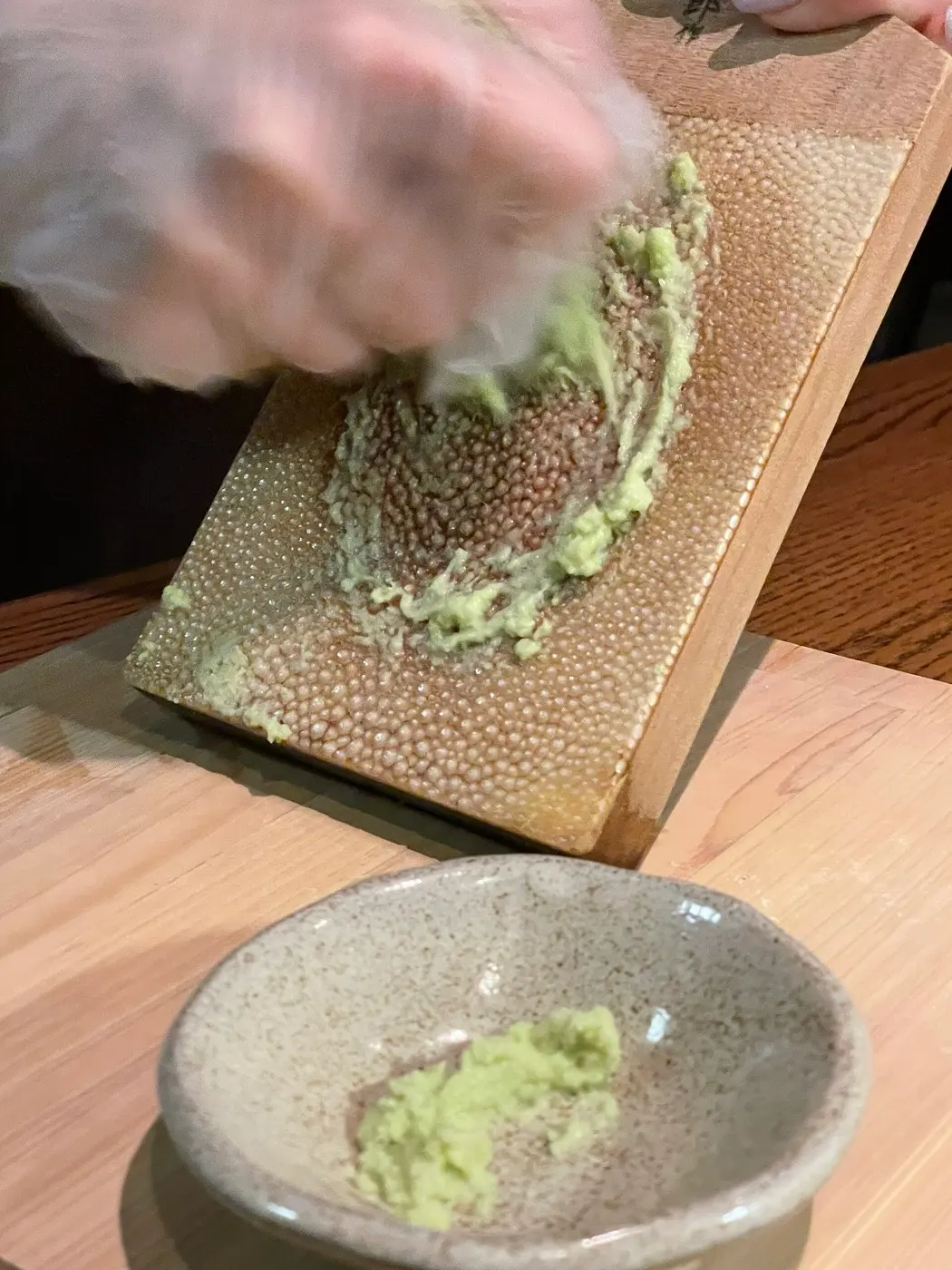

Horseradish contains allyl isothiocyanate too, and in sheer heat it is even said to beat true wasabi. What sets true wasabi apart is a fresh, deep flavor, created by other aromatic compounds as well, and a faint sweetness.
The aroma escapes the longer you wait
Freshly grated true wasabi gets noticeably hotter and more fragrant if you let it sit for a few minutes, because the enzyme reaction takes a little time. But the pungent compounds it produces evaporate easily and drift off into the air as time passes. That is why grated wasabi left out too long loses both its heat and its aroma.
So the best moment to enjoy true wasabi is a brief window a few minutes after grating. There is a good reason high-end sushi restaurants grate wasabi right in front of their customers.