Were fortune cookies born in Japan?
Their roots appear to lie in Japan’s tsujiura senbei, and Japanese immigrants were the ones who spread them in America.
Eat at a Chinese restaurant in the United States and a small baked treat usually arrives with the check. It looks like a circle of dough folded in half and then bent again. Crack it open and out comes a slip of paper bearing a fortune, something like “Your hard work is about to pay off.” This is the fortune cookie.
In America it is firmly established as the “Chinese restaurant dessert,” but it is said to be rarely seen in mainland China. So where was this cookie born? The clues, surprisingly, lead to Japan.
A cracker baked by the gates of a shrine
Near Fushimi Inari Taisha, the famous shrine in Kyoto, there are shops that still bake tsujiura senbei. A batter of wheat flour and sugar with miso and sesame is baked thin, folded while still hot, and a fortune slip much like an omikuji (the paper fortunes sold at shrines) is tucked into it.
The shape is nearly identical to a fortune cookie, but there are differences. The Japanese version is a little larger and browner, with the toasty flavor of miso and sesame. And the paper is usually said to be pinched into the fold rather than sealed inside.
Tsujiura originally meant a kind of divination: standing at a crossroads (tsuji) in the evening and reading good or bad omens in the words of whoever happened to pass by. Later, the slips of paper printed with fortunes came to be called tsujiura too, and in the Edo period (1603–1868) people walked the streets selling them. Tucking such a slip into a sweet gave you tsujiura senbei, which were reportedly enjoyed as a bit of fun at banquets and in the pleasure quarters.
An illustration from 1878
A major boost for the theory of Japanese origin came from the research of Yasuko Nakamachi. In a book published in 1878, she found an illustration of an apprentice baking tsujiura senbei in a cracker shop. That was at least 30 years before fortune cookies appeared in America.
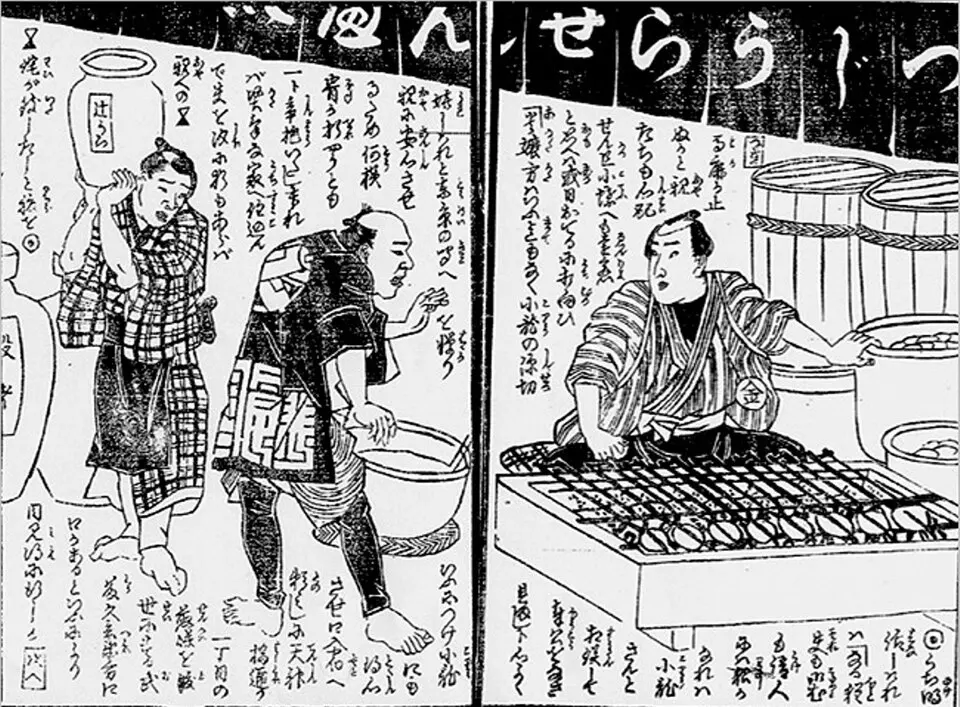

Her research became widely known in 2008, when the American journalist Jennifer 8. Lee introduced it in The New York Times. Lee also described the cookie’s Japanese roots in detail in her book on the history of Chinese food in America.
Japanese immigrants carried it across
So how did the cracker cross the ocean? The key figures are the Japanese immigrants who moved to California in the Meiji era (1868–1912).
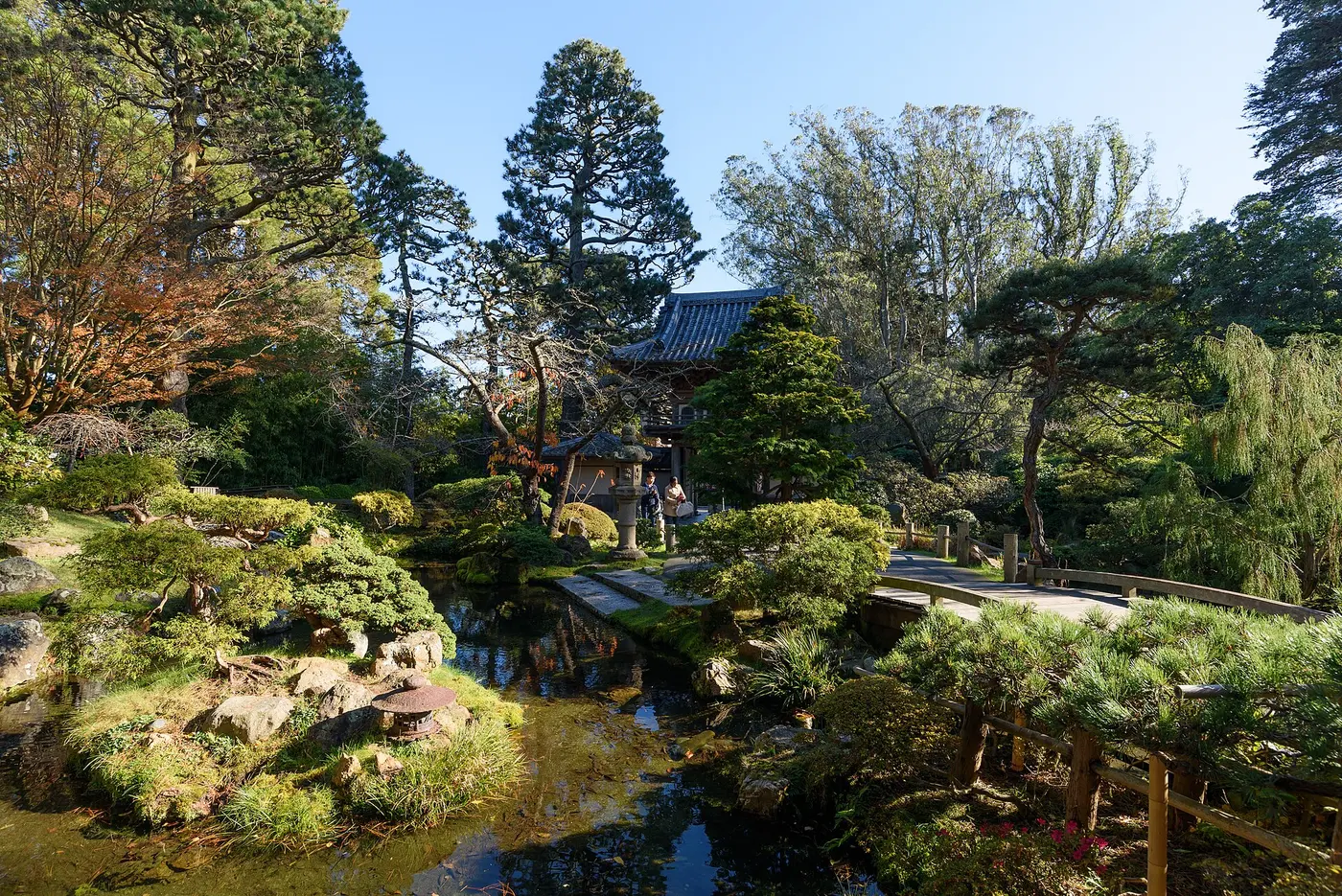
Golden Gate Park in San Francisco is home to the Japanese Tea Garden. Makoto Hagiwara, the Japanese immigrant who ran the garden, is said to have served crackers with fortunes inside to visitors in the early 20th century. They were baked by a Japanese confectionery in San Francisco. A Japanese confectionery in Los Angeles has also claimed to be the original. Either way, it appears that Japanese bakers gradually adjusted the taste to suit American palates, and that this led to the fortune cookie we know today.

In the 1910s and 1920s, a fair number of Chinese restaurants were run by Japanese Americans. At the time, Chinese food was far more familiar to Americans than Japanese food. Japanese confectioners supplied cookies to these restaurants, and the image of “the sweet you get at Chinese restaurants” took hold.
How a war changed its “nationality”
The decisive turn came with World War II. In 1942, the US government sent Japanese Americans on the West Coast to internment camps. Many Japanese confectioneries had no choice but to close, and Chinese American manufacturers stepped into the gap and began mass production.
After the war, fortune cookies spread across the country as a Chinese restaurant staple. Today about 3 billion are said to be made worldwide every year, most of them eaten in the United States. One factory in New York alone reportedly turns out more than 4.5 million a day.
Born in Japan as tsujiura senbei, carried to America by Japanese immigrants, and spread nationwide by Chinese Americans: folded inside this little cookie is not just a fortune, but a history of immigrants.