Why does eating pineapple make your tongue tingle?
An enzyme called bromelain, which breaks down protein, is thought to irritate the surface of your tongue.
A perfectly ripe pineapple is hard to stop eating, one piece after another. Then, little by little, your tongue and the inside of your mouth start to tingle and sting. In bad cases your tongue can even feel rough. It doesn’t happen much with other sweet-tart fruits like oranges or strawberries.
Another odd thing is that canned pineapple is fine; only fresh pineapple does this. Follow the reason, and you discover a certain “digestive power” that pineapple possesses.
Digesting your tongue, just a little
Pineapple juice contains an enzyme called bromelain. Bromelain breaks down protein, which makes it a type of protease. In other words, it does a job similar to the digestive enzymes at work in our stomach and intestines.
And the lining of our tongue and mouth is made of protein too. While you are eating pineapple, bromelain is thought to act on the proteins coating the surfaces inside your mouth, gradually damaging the defenses that protect the lining. Then acids such as citric acid, which pineapple has plenty of, seep in, and you feel it as that prickly sting. You could say that while you are eating the pineapple, the pineapple is eating you back, just a tiny bit.
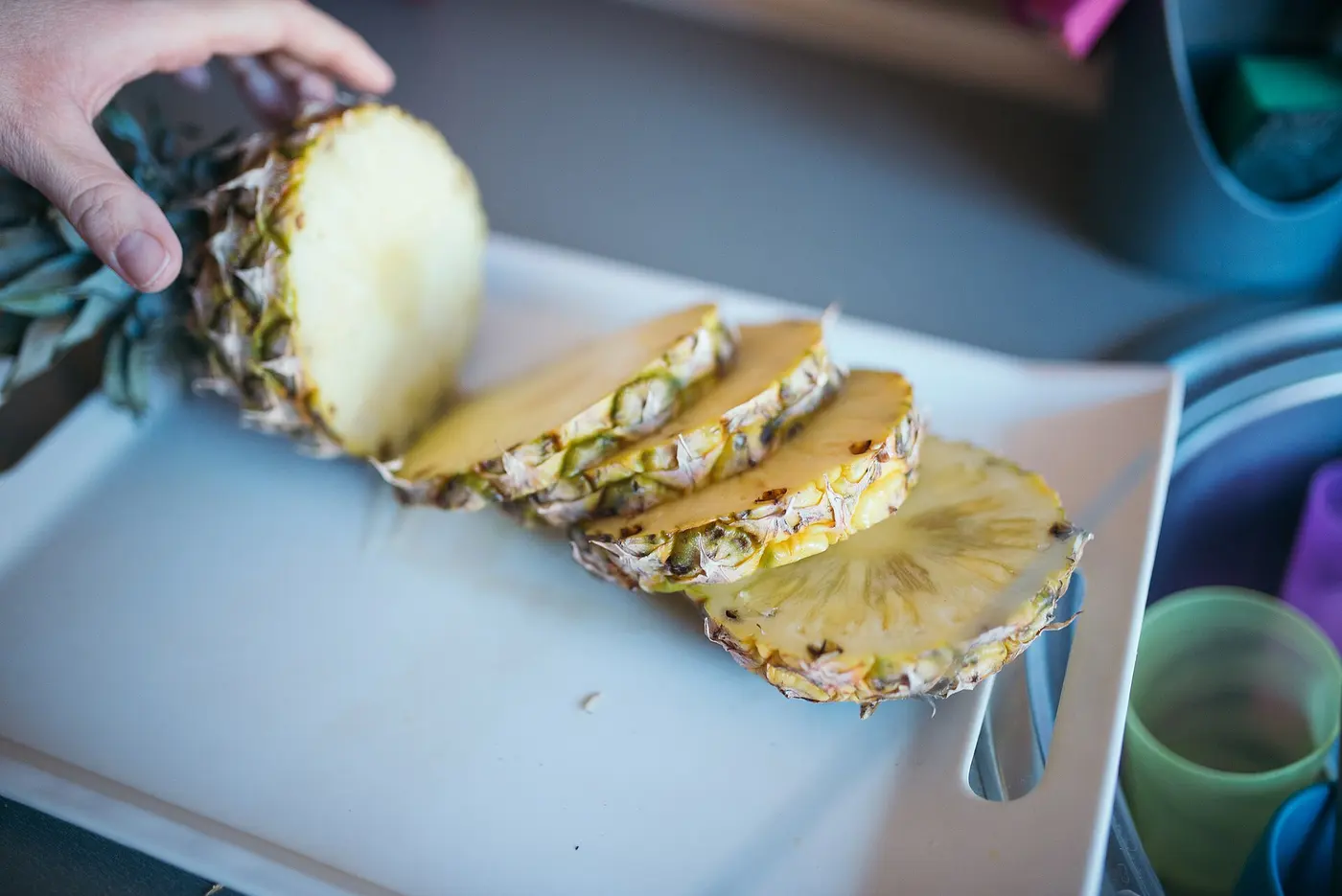

There is no need to worry, though. The lining of the mouth is tissue that renews itself quickly, and once you stop eating, the feeling usually fades on its own. Any bromelain you swallow is itself a protein, so it gets broken down in your stomach by your own digestive enzymes. If the tingling lasts a long time, or your lips or throat swell, it could be a fruit allergy, so it is wise to see a doctor.
Do needle-like crystals play a part?
Another cause often mentioned is crystals of calcium oxalate. The flesh of a pineapple is known to contain needle-shaped crystals so fine you can only see them under a microscope.
One theory is that these tiny needles touch the tongue and make minute scratches, heightening the irritation. The crystals are also said to be more plentiful in unripe fruit, and some people feel that young, still-sour pineapples are more likely to sting. Exactly how much each of these factors contributes is still not entirely clear.
Heat calms it down
Bromelain has a weakness: it doesn’t stand up to heat. Like many enzymes, it loses its shape when heated and stops working. That is why canned pineapple rarely makes your tongue sore: it is heated during processing.
You can see this property clearly in the kitchen. Try making a gelatin dessert with fresh pineapple, and it will never set. Gelatin is made of a protein called collagen, and bromelain breaks it down. Use canned pineapple instead, or set the dessert with agar, a gelling agent made from seaweed, and it turns out just fine.
Some dishes, on the other hand, put this power to good use. Soaking meat in fresh pineapple or its juice is said to break down the protein just enough to make it tender. Kiwifruit, papaya and figs contain similar protein-digesting enzymes and are also known as fruits that are hard to set in gelatin.
One fruit, many flowers
Pineapple looks like one big fruit, but it is actually a “multiple fruit,” made up of many small fruits joined together. Each of the scale-like segments on the surface started out as a single flower. More than 100 flowers bloom in a spiral around the stem, each turns into a fruit, and they fuse together as they grow into one mass.
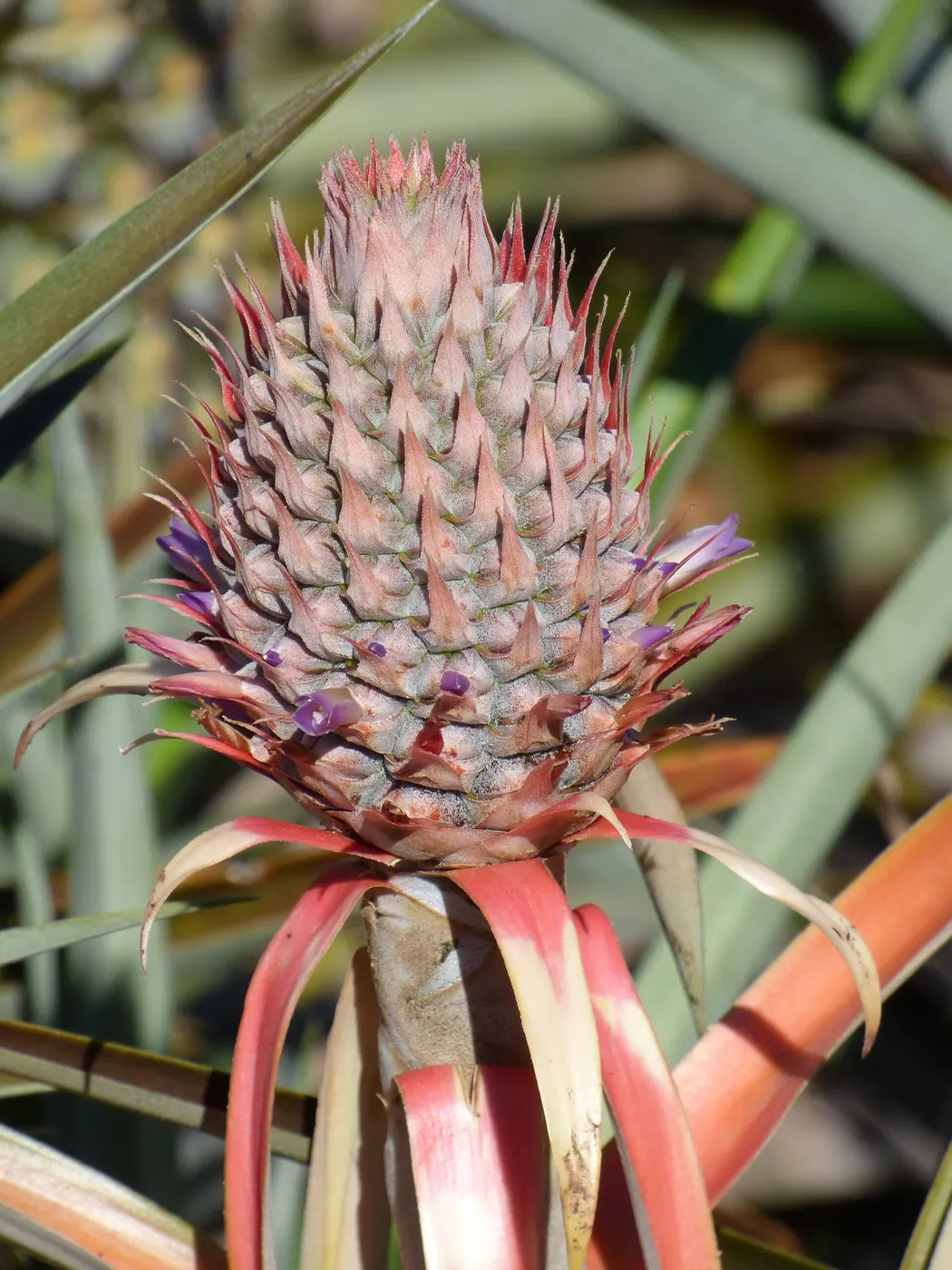

Bromelain is found not only in the flesh but in large amounts in the stem as well. That is why pineapple stems have also been used as a raw material for extracting the enzyme.