Can tardigrades survive in space?
Dried out in a dormant state, they survived 10 days exposed to the vacuum of space. That doesn’t mean they could live there.
Take a pinch of moss from the roadside, soak it in water and look at it under a microscope, and you may spot a tiny, plump creature with eight stubby legs lumbering about. That is a tardigrade.
Tardigrades can withstand vacuum, radiation and extreme heat and cold, and they are sometimes billed as the toughest animals on Earth. Scientists have even exposed living tardigrades to open space. So can tardigrades really survive in space?
Little water bears in the moss
Tardigrades are not insects. They belong to a group of their own, the phylum Tardigrada. Even adults are only about 0.5 millimeters (0.02 inches) long. Around 1,500 species are known, living in seas and lakes as well as in moss and lichen on land.
The secret of land-dwelling tardigrades lies in a state called anhydrobiosis, “life without water.” When the moss they live in dries out, they pull in their legs and shrink into a little barrel shape known as a tun. Their water content drops from over 70 percent to 3 percent or less, and their life processes all but stop. Add water, and they start moving again.
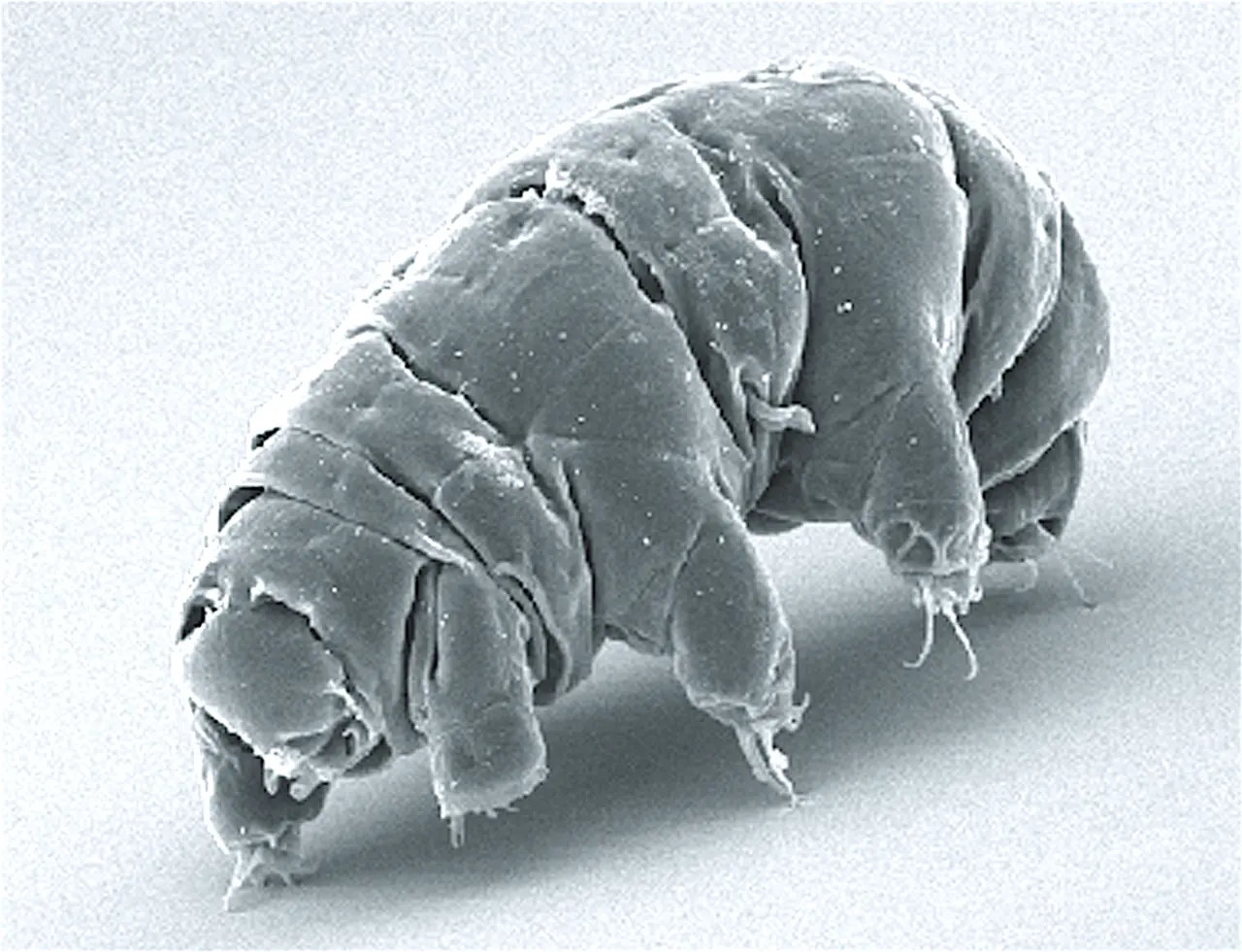

Into the vacuum of space, 2007
In September 2007, dried-out tardigrades rode into orbit aboard Foton-M3, an uncrewed Russian satellite carrying experiments for the European Space Agency (ESA). The experiment was led by Ingemar Jönsson of Kristianstad University in Sweden. The satellite circled Earth at about 260 to 280 kilometers (160 to 175 miles), and for 10 days the tardigrades were left exposed to open space.
The results were astonishing. Tardigrades exposed to the vacuum of space alone revived at almost the same rate as those kept on the ground. Back on Earth and given water, they laid eggs, and those eggs hatched into healthy young.
Ultraviolet light from the Sun, however, was a serious hurdle. Tardigrades that also received UV radiation survived at much lower rates, and in the group exposed to the full range of the Sun’s UV, only three animals, all Milnesium tardigradum, came back to life. Even so, tardigrades became the first animals known to have survived exposure to both the vacuum of space and solar UV.
Tough only while dormant
There is an important catch: tardigrades are only this tough while they are dried out and dormant. An ordinary tardigrade moving around in water is not especially robust. They can endure harsh conditions, but they cannot eat, grow or reproduce in them. In space, too, they were simply waiting it out in their dried state.
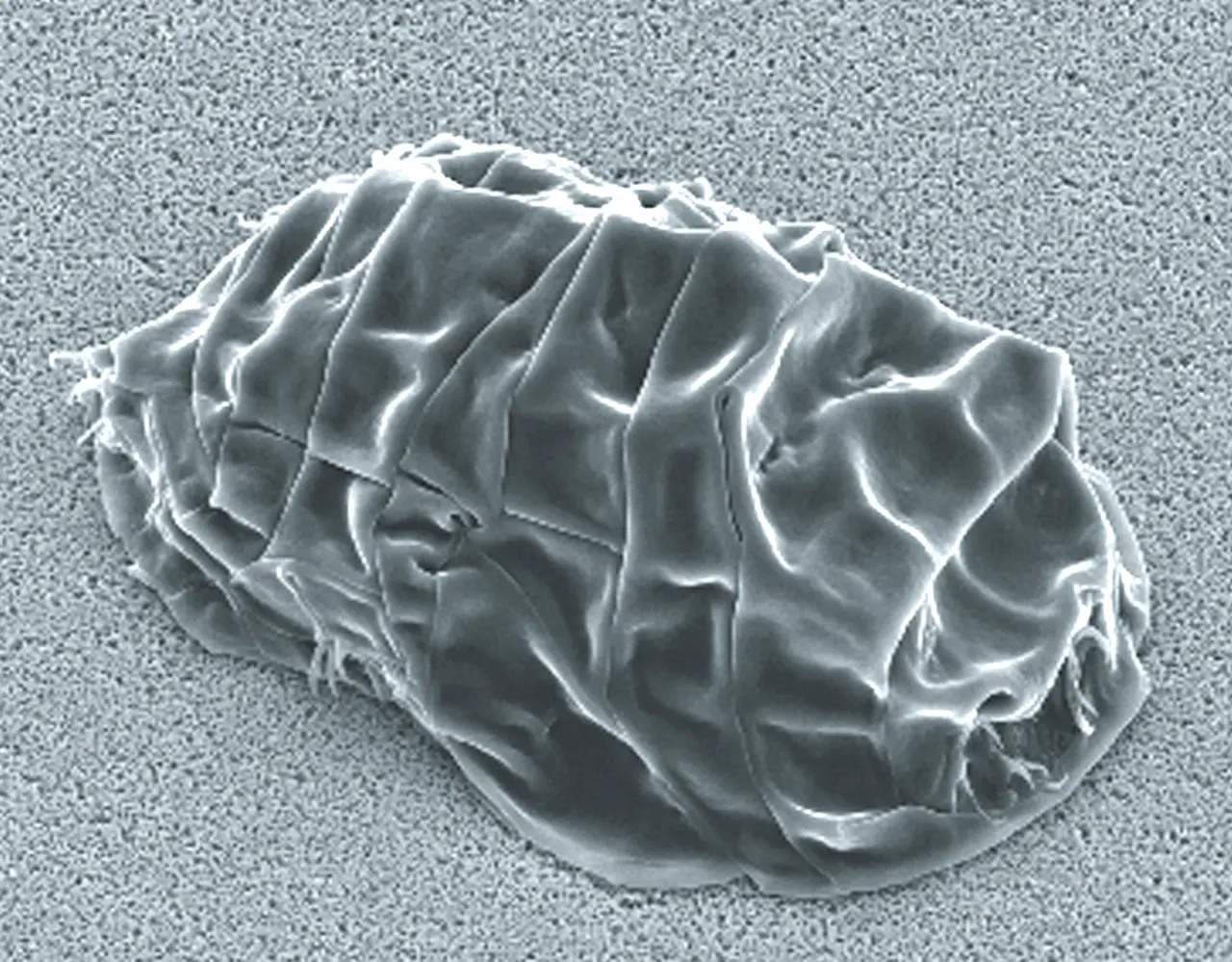

Japan has played a part in uncovering how they do it. Ramazzottius varieornatus, known in Japan as the yokozuna tardigrade after sumo’s highest rank, was found in moss on a bridge over the Toyohira River in Sapporo, and it is especially good at surviving drought. In 2016, a research group including the University of Tokyo found in its genome a protein unique to tardigrades, which they named Dsup. When human cells grown in the lab were made to produce Dsup, X-ray damage to their DNA fell by about 40 percent.
Tardigrades on the Moon
On April 11, 2019, Beresheet, a privately built Israeli lunar lander, failed in its landing attempt and crashed on the Moon. It turned out to be carrying a few thousand dried tardigrades, packed alongside a “lunar library” recording human knowledge.
Could they still be alive? In 2021, a British research team froze tardigrades into a dormant state, fired them from a gun and slammed them into sand. Animals that hit at up to 825 meters per second (about 1,850 miles per hour) could be revived, but at higher speeds their bodies broke apart. Whether Beresheet’s crash went beyond that limit is unclear. Even if some tardigrades did come through intact, there is no water on the lunar surface to wake them up.