Do naked mole-rats never grow old?
Their risk of dying barely rises with age, which is rare, but they are not immortal and can even get cancer.
37years
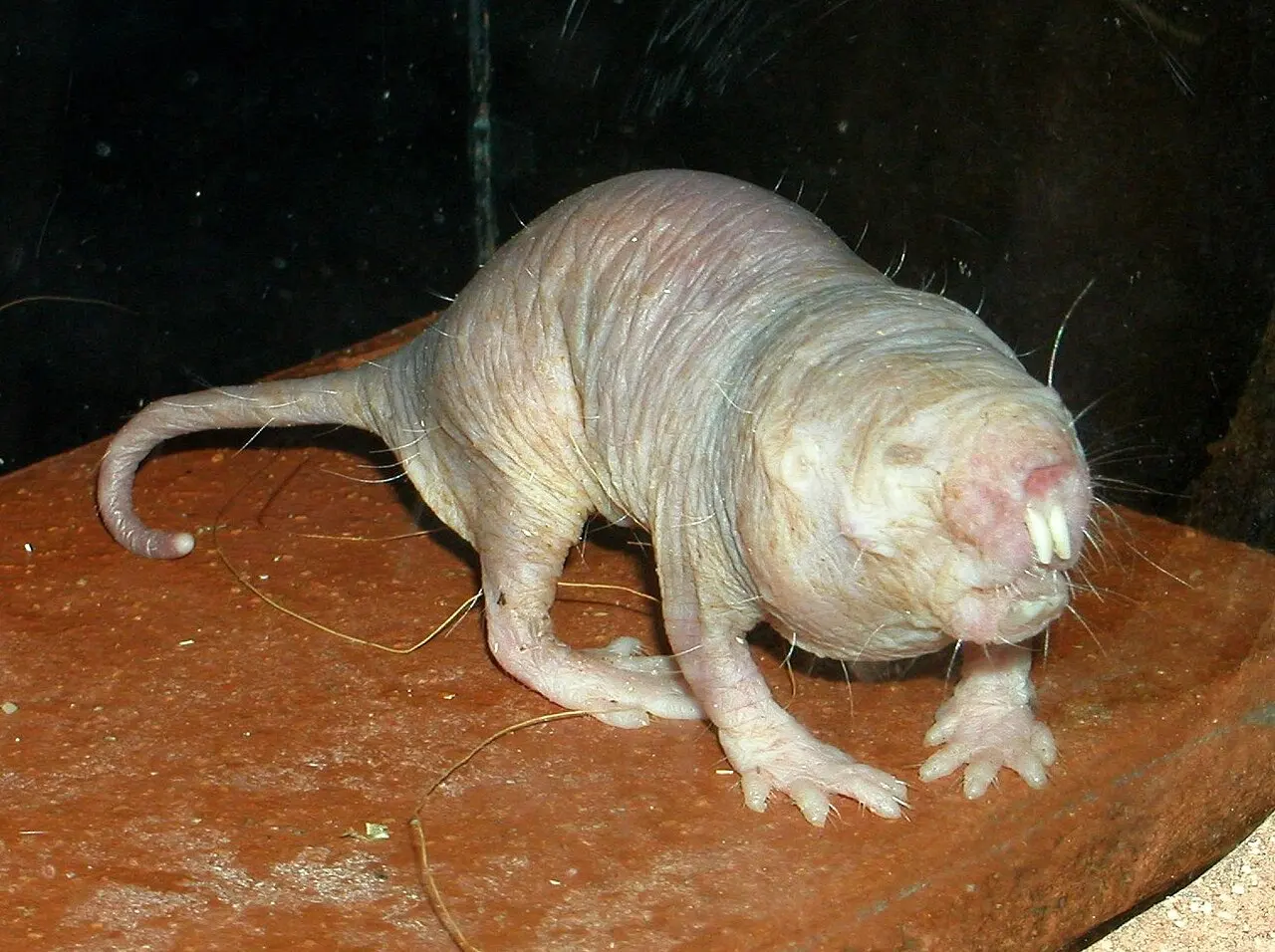
A wrinkled pink body with almost no hair, and a pair of big front teeth jutting out of its mouth. The naked mole-rat is a rodent you won’t forget once you’ve seen it. Its Japanese name, hadaka-debanezumi, means roughly “naked bucktoothed rat,” which sums it up nicely.
Its looks are not the only remarkable thing about it. This animal has drawn intense interest from scientists who study aging, and it is sometimes even described as an animal that does not grow old. How much of that is true?
An underground colony with a queen
Naked mole-rats dig tunnels and live underground in the dry lands of eastern Africa, in countries such as Kenya, Ethiopia and Somalia. They are about 7 to 8 centimeters (3 inches) long and weigh around 30 to 40 grams (1 to 1.5 ounces), a little bigger than a house mouse.
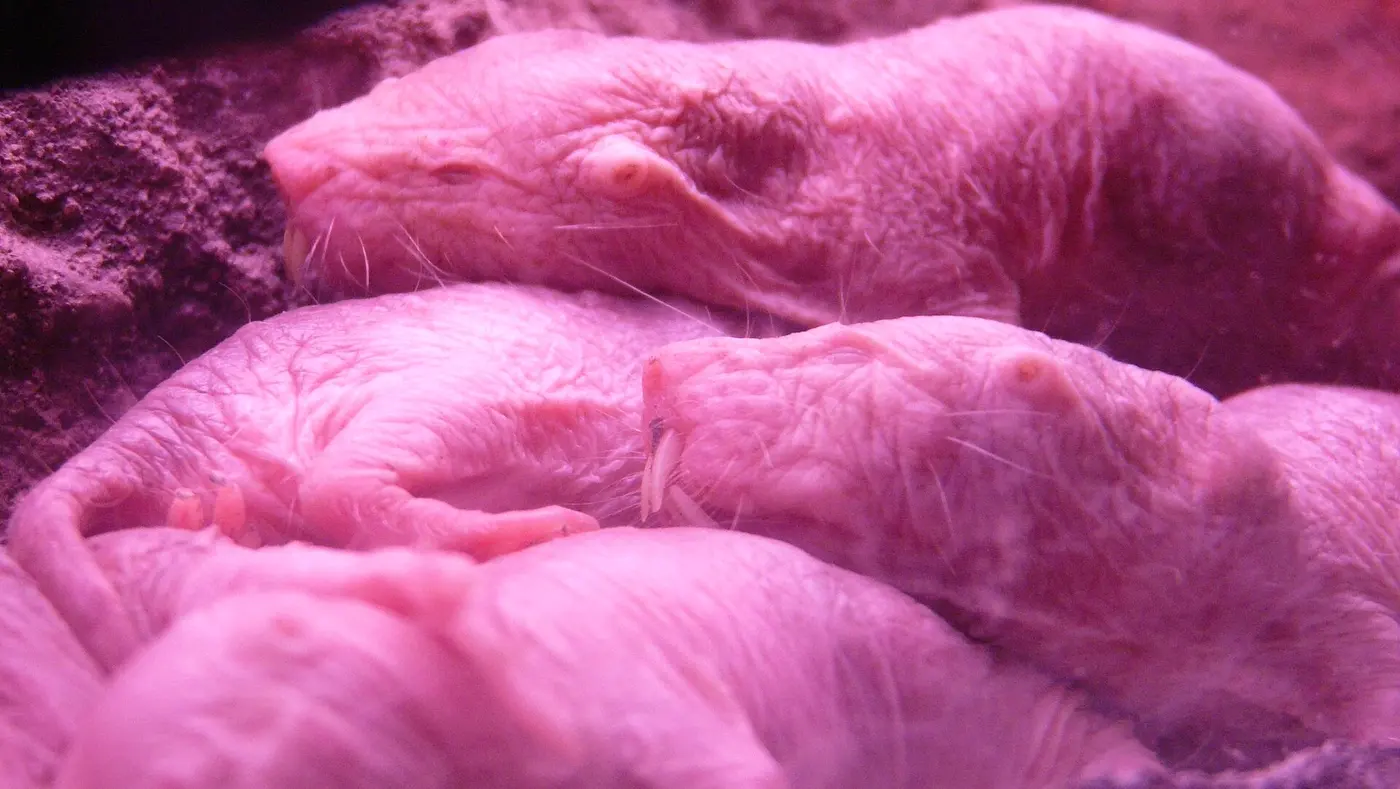
Their way of life is unusual too. Colonies average about 70 animals, and some with nearly 300 have been found. Within each colony, only one female, the queen, gives birth. The others support the group by digging tunnels, carrying food such as roots and tubers, and looking after the young. They are one of the very few mammals with a society like that of ants or bees.

A rodent that lives beyond 37
The main reason naked mole-rats attract so much attention is their lifespan. Other rodents of a similar size live only a few years, even in captivity. Naked mole-rats, by contrast, have been recorded living more than 37 years in captivity, making them the longest-lived rodents known.
And they don’t just live long. Compare old individuals with young ones, and there is said to be almost no difference in heart function, muscle mass or ability to reproduce. Queens keep having pups well into old age.
Their bodies are astonishingly tough in other ways too. Their crowded underground nests can run low on oxygen. In an experiment published in 2017, naked mole-rats kept for 18 minutes in air with no oxygen at all recovered fully once they were returned to normal air.
A risk of death that doesn’t climb with age
In 2018, a team including the American researcher Rochelle Buffenstein analyzed records of 3,299 naked mole-rats collected over more than 30 years and published the results in the journal eLife.
Normally, animals become more likely to die as they get older. In humans, the risk of dying roughly doubles every eight years after age 30. This pattern is known as the Gompertz law, after a 19th-century researcher, and it holds for mice, horses and many other mammals.
In naked mole-rats, however, the daily chance of death for adults stayed at about 1 in 10,000 and barely rose with age. The researchers described the species as a “non-aging mammal.”

Not immortal
Not aging, however, is not the same as not dying. A daily death risk of 1 in 10,000 is small, but it is not zero. Other researchers have also questioned how the data should be read, arguing that it was too early to call the animal “non-aging.”
Naked mole-rats are famous for rarely getting cancer, but they are not completely immune. In 2016, cancer was reported in two zoo-kept individuals in the United States, aged 20 and 22.
Even so, research into the secrets behind their resistance to aging and cancer continues around the world. In Japan, a group led by Kyoko Miura of Kumamoto University announced in 2023 that naked mole-rats have a mechanism that makes aged (senescent) cells die off and be cleared away more readily. Because such cells are less likely to build up in their bodies, this may help explain their resistance to aging and cancer. Not ageless, but aging very slowly: that is the picture of the naked mole-rat that science has today.