How many ants are there in the world?
A 2022 estimate says about 20 quadrillion. Together they outweigh all wild birds and wild mammals combined.
20quadrillion
Sit on a park bench and look down at your feet, and there is usually a line of ants somewhere. In the garden, in the cracks of a sidewalk, on a mountain trail in summer, a day without seeing a single ant is the rare one.
Ants live on nearly every continent except Antarctica, and more than 13,000 species have been named. So if you counted every ant on the planet, how many would there be? The question sounds hopeless, yet a group of researchers decided to tackle it head-on.
An “ant census” built from 489 studies
In 2022, a research team including Patrick Schultheiss and Benoit Guénard of the University of Hong Kong published a paper estimating the world’s ant population in the Proceedings of the National Academy of Sciences (PNAS), a US scientific journal.
The team drew on records that researchers around the world had built up over the years: the number of ants that fell into cup-shaped traps sunk into the ground, the number found in a scoop of leaf litter, and so on. They gathered data from 489 studies covering every continent and a wide range of environments, then applied the ant densities for each type of place to the whole planet.
The result: at least 3 quadrillion ants living on the ground surface alone. Add the ants in the trees and those hidden inside nests where surveys can’t see them, and the total came to roughly 20 quadrillion, a 2 followed by 16 zeros. Taking the world’s population as about 8 billion people, that works out to some 2.5 million ants per person.
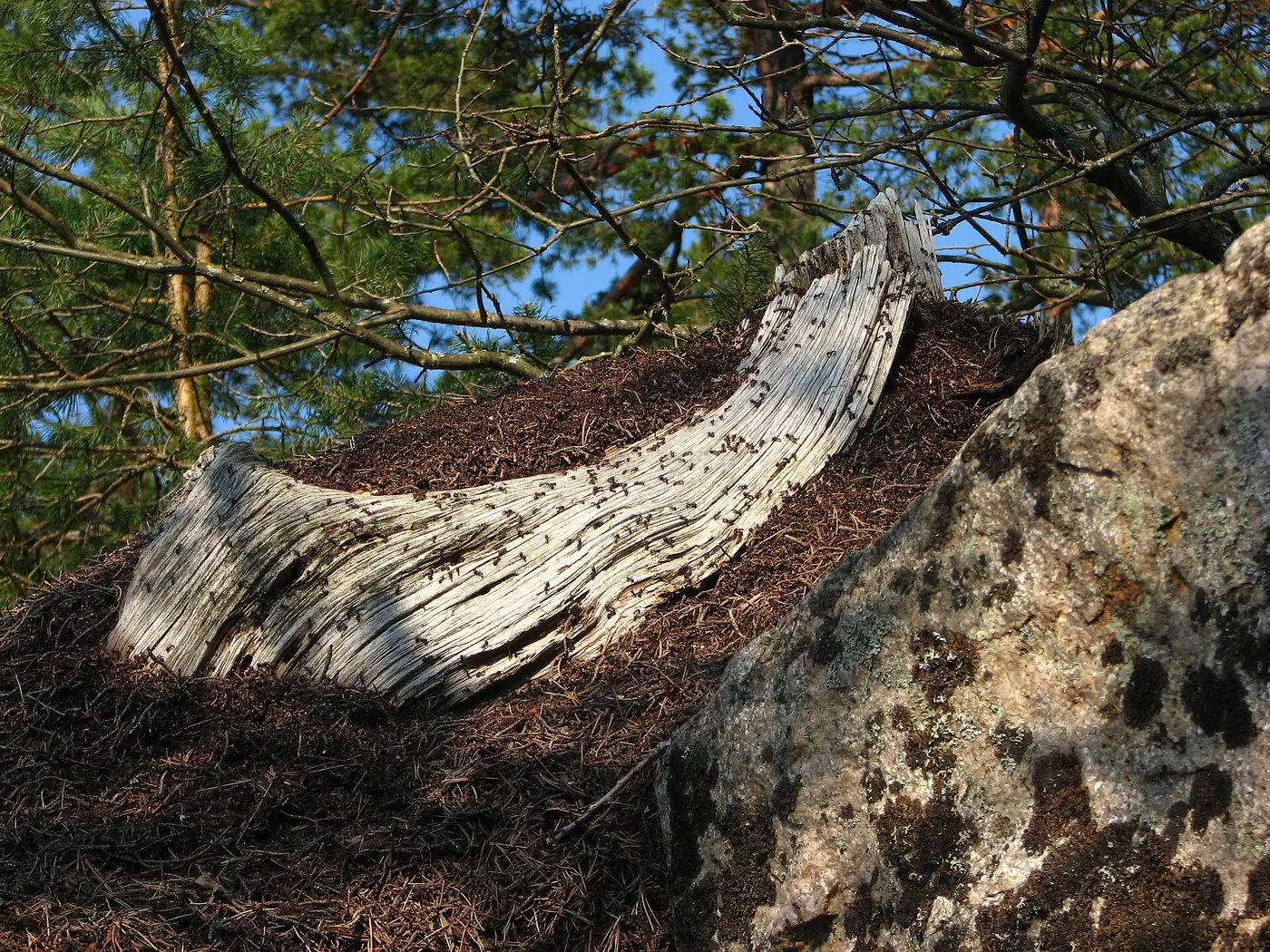

From guesswork to data
People had tried to estimate the number of ants before. Bert Hölldobler and E. O. Wilson, two of the best-known authorities on ants, assumed that Earth has about a quintillion insects and that around 1 percent of them are ants, which suggested about 10 quadrillion ants. They later revised this to a range of 1 to 10 quadrillion.
The insect figure behind that guess, however, came from taking insect densities measured in southeastern England and simply stretching them across all of Earth’s land. Even the person who did that calculation described it as a “questionable occupation.” The 2022 study was the first serious estimate based on real survey data from around the world.
Weighing them up
The team estimated weight as well as numbers. Body measurements from 534 ant species put the average dry weight of a worker ant at 1.24 milligrams. The smallest weighed just 0.004 milligrams and the largest 57 milligrams, a huge range across species.
Multiply by 20 quadrillion, and you get about 12 million tonnes of carbon. That is more than all the wild birds and wild mammals on Earth put together.
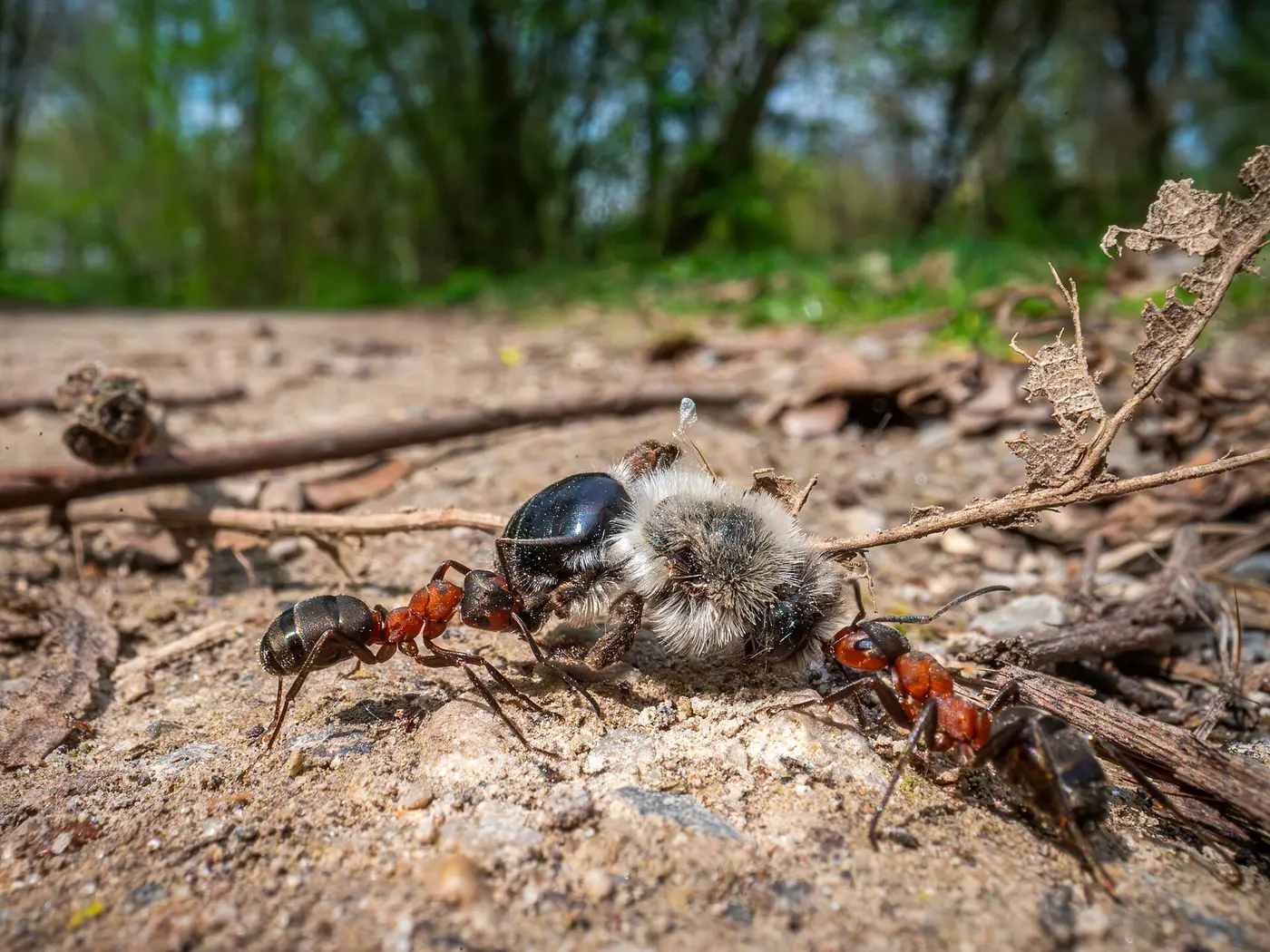

You may also have heard that all the ants in the world weigh as much as all the humans. In this estimate, ants came to only about 20 percent of human biomass, and the paper notes that there is little solid evidence behind that claim.
Crowded tropics, blank spots on the map
Ants are not spread evenly across the globe. Ground-dwelling ants are concentrated in the tropics and subtropics, and their density varied about sixfold between environments. Ants living in leaf litter were most abundant in forests, while ants that roam the ground in search of food were, perhaps surprisingly, most numerous in dry regions.
Data were scarce for much of Africa and northern Asia, however, and the researchers themselves acknowledge large gaps in our knowledge for some regions and environments. The figure of 20 quadrillion is a conservative estimate. The true number of our tiny neighbors may be even higher.