What is the largest leaf in the world?
By length, a raffia palm leaf about 26 m long. As one undivided leaf, a giant waterlily over 3 m across.
26m
Akitabuki, a giant butterbur that grows wild from Akita Prefecture north through Hokkaido, has leaves up to 1.5 meters (5 feet) across on stalks about 2 meters tall. In the legends of the Ainu, the Indigenous people of northern Japan, there are little people called Korobokkuru said to live beneath butterbur leaves, and with leaves this big, sheltering from the rain under one doesn’t seem far-fetched.
Look further afield, though, and you will find leaves that put these to shame. But the answer to “Which leaf is the biggest?” depends on what you mean by big.
A single leaf more than 25 meters long
For sheer length, the champion is Raphia regalis, a raffia palm from Africa. It grows in moist lowland forests in Angola, Cameroon, the Republic of the Congo, Gabon and Nigeria. Its trunk stays buried underground, so above the surface it looks as if only leaves are rising from the earth.
In 1977, the French botanist Francis Hallé reported the measurements of one of these leaves. The blade was 16.47 meters long and the petiole, or leaf stalk, 9.44 meters, for a total of 25.91 meters (85 feet), about the height of an eight-story building. It is considered the largest known leaf in the plant kingdom.
You might wonder whether that is really a leaf and not a branch. Palm leaves like this are what botanists call pinnately compound leaves: a single thick central axis lined with rows of small leaflets. They may look like many leaves bunched together, but botanically they count as one.
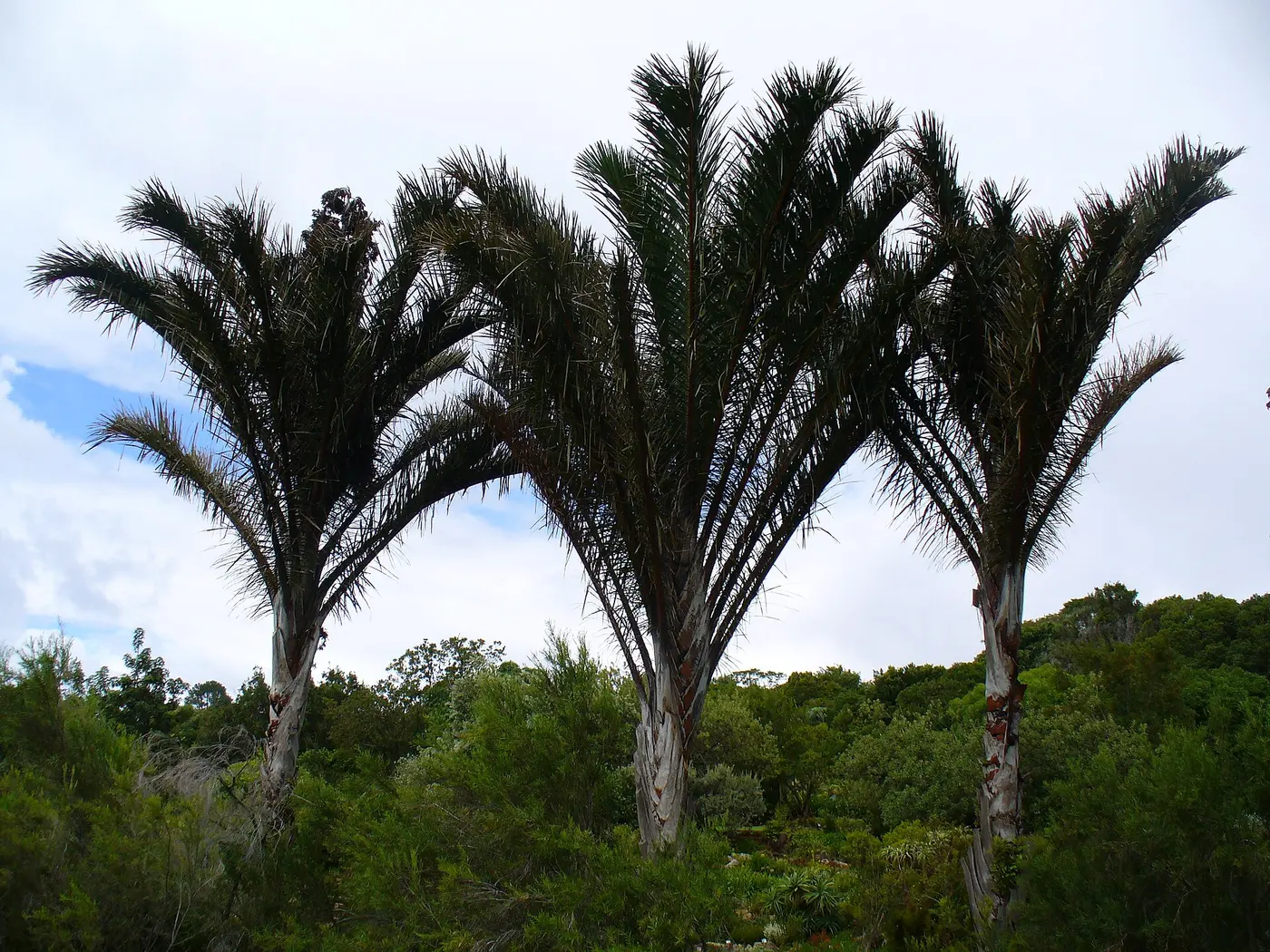

Incidentally, the raffia used to make hats and baskets is a fiber obtained from the leaves of palms in this group.
As one undivided leaf, the giant waterlily wins
What if we compare only undivided leaves, single blades not split into leaflets? Here the record belongs to the giant waterlilies of South America.
In 2012, a leaf on a plant grown at La Rinconada, a nature park in Santa Cruz, Bolivia, reached 3.2 meters (10.5 feet) across, with an area of 7.55 square meters. Guinness World Records recognizes it as the world’s largest undivided leaf. The previous record holder was a leaf from a giant taro relative recorded in 1966 in Sabah, Malaysia, measuring 3.02 meters long and 1.92 meters wide.
The twist is that, until very recently, nobody realized the record-holding plant was a new species. Carlos Magdalena and his colleagues at the Royal Botanic Gardens, Kew, in England studied it closely, genetics included, and in 2022 described it as a new species, Victoria boliviana. Kew even held a drawing made from an 1845 specimen, but for a long time the plant had been taken for one of the species already known.
The ribs that inspired a building
The giant waterlily’s leaf is shaped like an enormous tray, with a rim rising about 10 to 20 centimeters. Tiny holes in the surface let rainwater drain away, and on the underside thick veins run in a network that holds the huge leaf up.
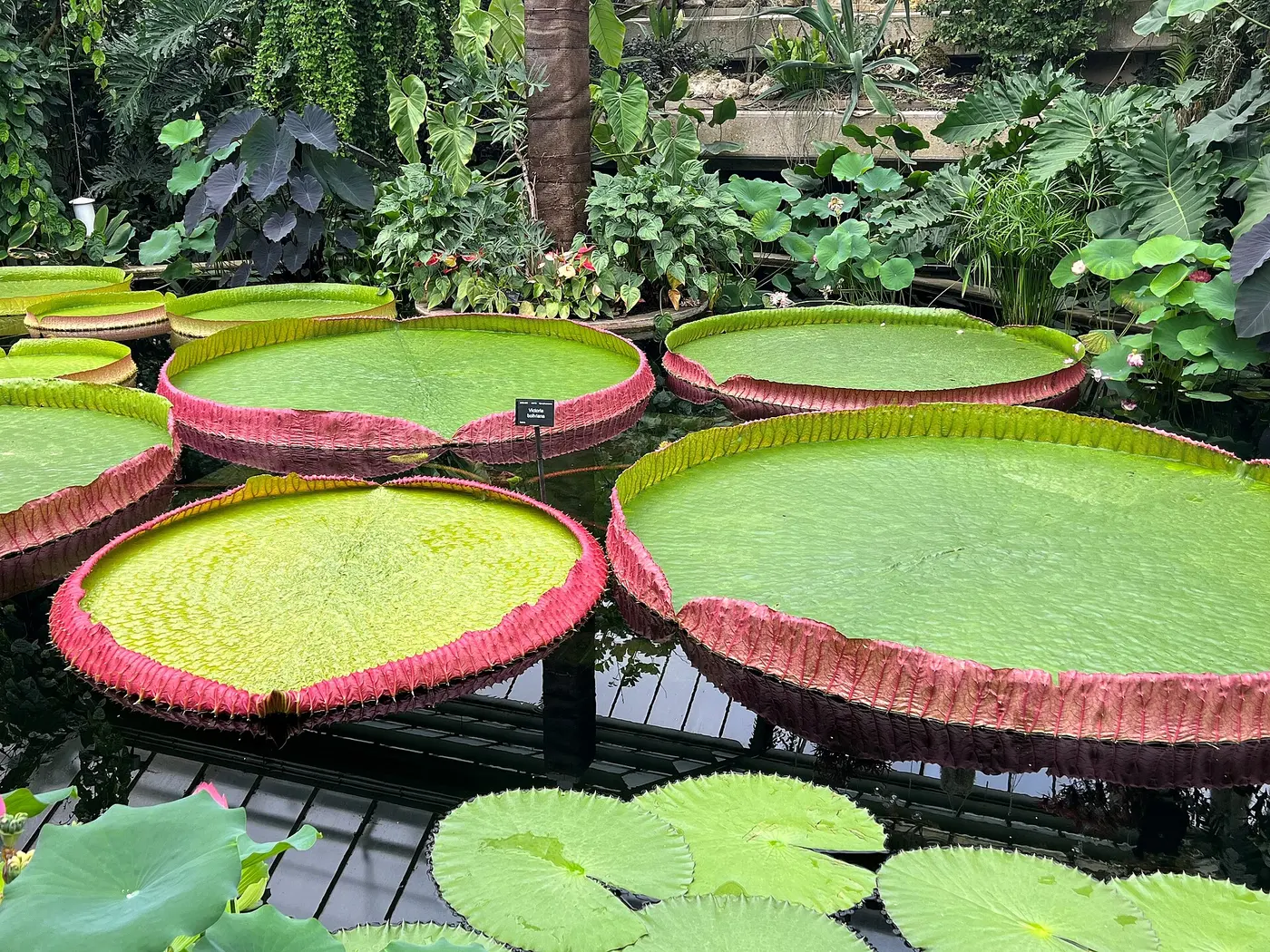

That ribbed underside has earned a place in architectural history. In 1849, the English gardener Joseph Paxton became the first to bring a related species, Victoria amazonica, into flower in Britain. He later designed the Crystal Palace, the vast glass building that housed the Great Exhibition of 1851 in London, and its structure is said to have been inspired by the veins of this leaf.
Change the yardstick, and the champion changes. The raffia palm for length, the giant waterlily for area: each stands at the top in its own category as the “world’s largest leaf.”