What is the smallest flower in the world?
The flower of the floating watermeal plants. It measures only about 0.1 to 0.2 millimeters.
0.1〜0.2mm
When it comes to the world’s biggest flower, Rafflesia, which can reach nearly a meter (about 3 feet) across, is famous. So how small is the world’s smallest flower?
The answer may be floating on the surface of a pond or rice paddy. Have you ever seen fine green specks spread in a thin film over the water? Each and every one of those specks is a plant that produces real flowers.
Each speck is a whole plant
The smallest flowers belong to the watermeals, aquatic plants of the genus Wolffia. About 11 species are known worldwide. In Japan, one species, Wolffia globosa, has been recorded from the Kantō and Hokuriku regions of Honshu westward to Okinawa.
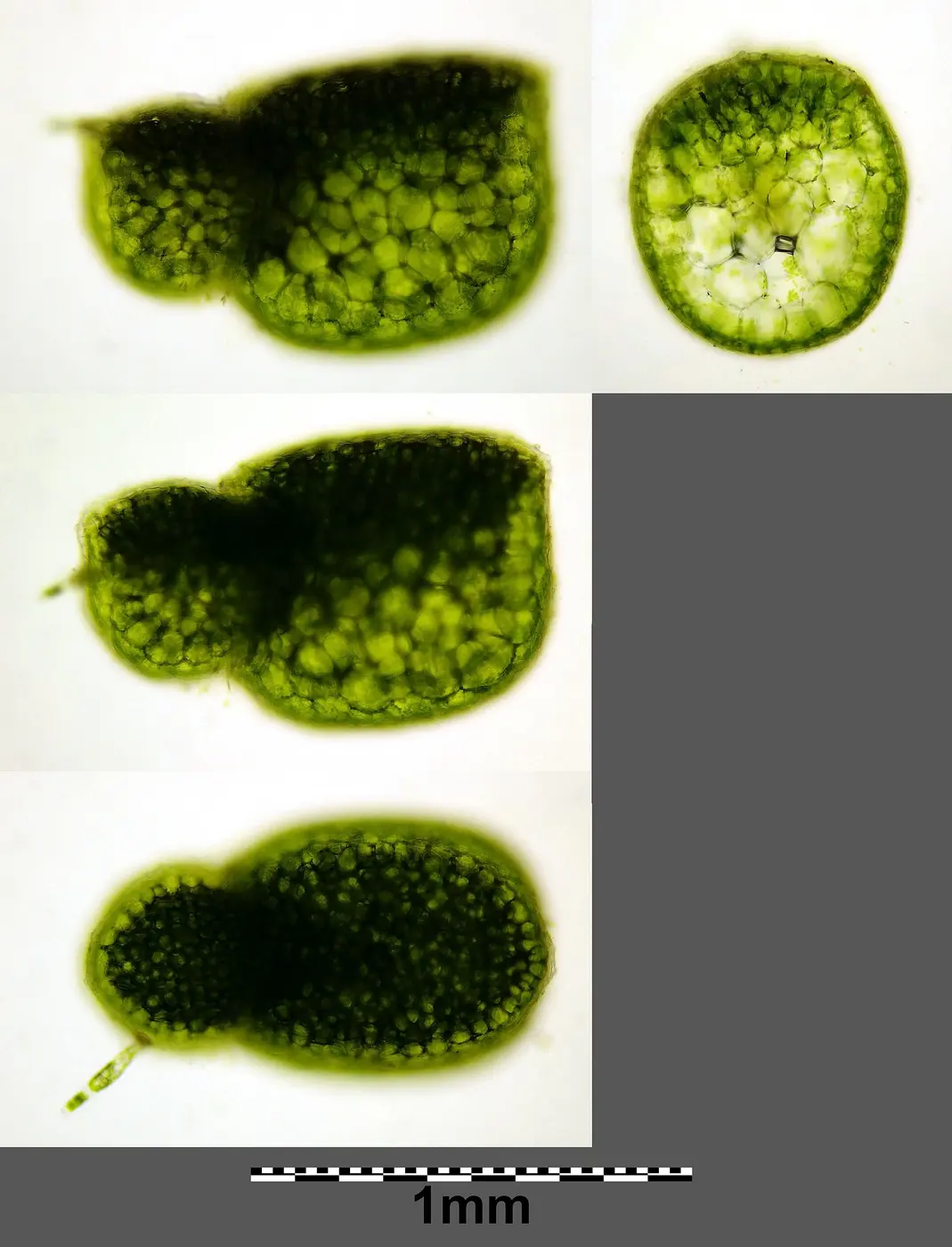
These plants are astonishingly small. Guinness World Records describes a single plant as less than 1 millimeter long and only about 0.3 millimeters wide. The Japanese species measures 0.3 to 0.8 millimeters long and weighs about 150 micrograms. Put one on your fingertip and it is almost impossible to tell from a grain of sand. The English name, watermeal, comes from the way the plants look like cornmeal scattered on the water.
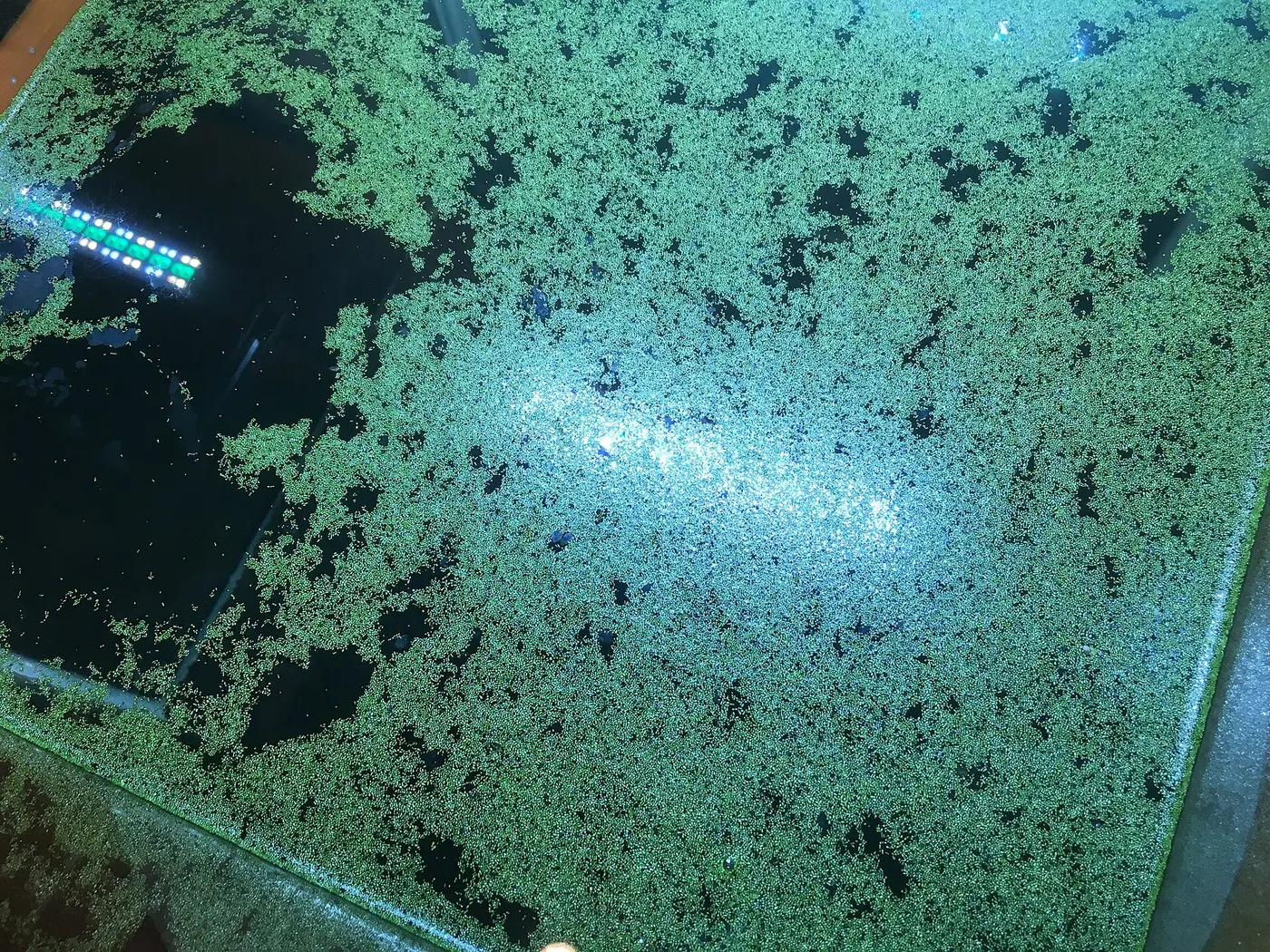

Their bodies are about as simple as a plant can get. There are no roots, and no distinction between leaf and stem. The common duckweed often seen in rice paddies at least has thin roots dangling below it, but watermeal doesn’t even have those. The rounded green speck is called a frond, and the speck itself is the entire body of the plant. Among flowering plants, or seed plants, this group is considered the smallest in the world.
A flower in a tiny pit
So where does the flower bloom? It appears in a small pit near the middle of the frond’s upper surface. There are no petals, just one stamen and one pistil. At about 0.1 to 0.2 millimeters, it is smaller than the period at the end of this sentence. Compared with a Rafflesia nearly a meter wide, that is a difference of roughly 5,000 to 10,000 times.
In the Japanese species, the flowering season is July to October, but actual flowering is said to be extremely rare. To find one, you would need a microscope and a good deal of luck.
After flowering, a fruit forms containing just one seed. The fruit of Wolffia angusta, which grows in Australia and nearby regions, is only about 0.25 millimeters long and weighs around 70 micrograms. The group with the world’s smallest flowers also produces the world’s smallest fruit.
Multiplying without flowers
If they so rarely flower, how can these plants multiply enough to blanket a pond? The secret is that they grow new bodies out of their own.
A daughter frond buds from a pocket at one end of the parent frond, grows, and eventually breaks away to live on its own. By repeating this over and over, the plants keep multiplying. One species, Wolffia microscopica, has been reported to double in number in about 29 hours, said to be the fastest growth of any flowering plant.

They are tiny, they multiply fast, and they are nutritious too. Some reports say 30 to 40 percent of their dry weight is protein, and they have also been reported to contain vitamin B12, which is unusual for a plant. In Thailand, watermeal is sold in markets under the name pham, and in the northeastern Isan region in particular it has long been a familiar ingredient in cooking. These tiny water plants are now drawing researchers’ attention as a food of the future.