What is the oldest tree in the world?
For a single trunk, a US pine called Methuselah, estimated at about 4,850 years. Count roots, and some are older still.
4850years
The Great Pyramid at Giza, in Egypt, is said to have been built in the 2500s BCE. At that time, on a mountaintop far away in North America, a single pine had already been alive for several hundred years. And that tree is still alive today.
Deciding on the “oldest tree in the world” is trickier than it sounds, though. What counts as “one tree,” and how do you measure its age? The answer changes depending on how you think about those questions.
Count the rings, and it’s Methuselah
The most reliable way to confirm a tree’s age is to count its rings. Researchers twist a thin, hollow tool into the trunk and draw out a pencil-like core that reaches the center, then count the rings one by one. Because the tree doesn’t have to be cut down, the method works on living trees.
Among single-trunk trees whose age has been confirmed this way, one of the very oldest is Methuselah, which stands in the White Mountains of eastern California. It is a Great Basin bristlecone pine, named after the figure in the Hebrew Bible said to have lived to the age of 969.
According to a core taken by a researcher in 1957, it sprouted around 2833 BCE. If that is right, the tree is more than 4,850 years old. Part of the original core no longer survives, however, and later researchers rechecking the evidence have suggested it may be somewhat younger. To protect the tree, its location has not been made public; all that is known is that it stands somewhere along a forest trail.
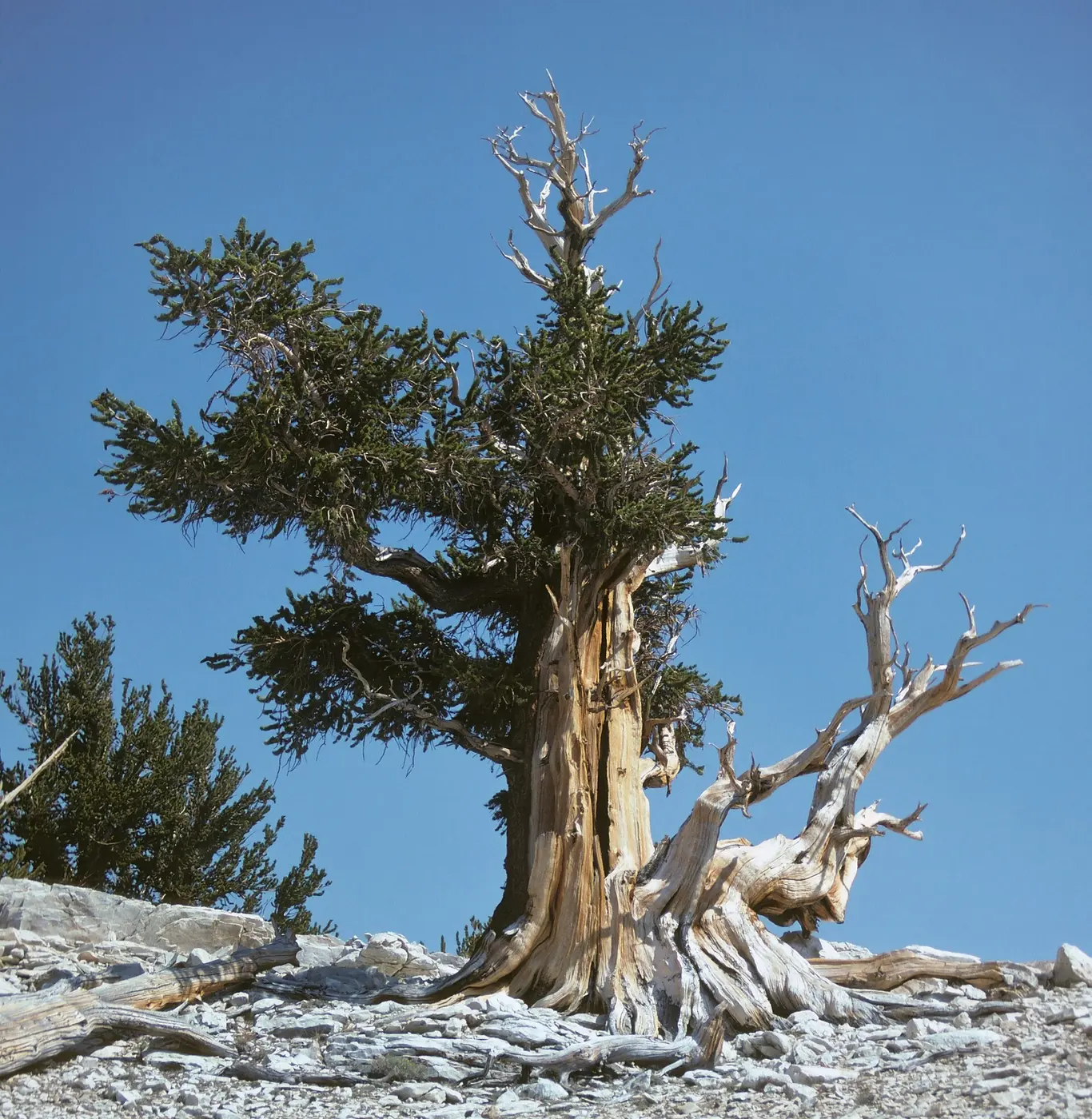

There are challengers for the throne. In 2022, a study suggested that a giant alerce, or Patagonian cypress, in Chile might be more than 5,000 years old. But its trunk is so thick that no core can reach the center, so the figure remains a statistical estimate based on data from surrounding trees.
The harsher the conditions, the longer the life
Bristlecone pines grow on dry mountain slopes more than 3,000 meters (about 10,000 feet) above sea level. Rain is scarce, winters are bitterly cold, and the growing season is very short. Growth is extremely slow, and each year’s ring is very thin.
Surprisingly, this harshness is thought to be the secret of their longevity. Slow-grown wood is dense and full of resin, which makes it resistant to rot fungi and insects. Other plants are sparse, so wildfires rarely spread. And even when most of the trunk dies, the tree can keep its branches and needles alive through a single narrow strip of surviving bark. Green branches sprouting from a twisted, bleached trunk that looks long dead: that distinctive look of an old bristlecone pine is also the mark of its survival strategy.
Prometheus, the tree that was cut down
There was in fact a tree that may have been older than Methuselah: Prometheus, a pine of the same species that stood in the mountains of Nevada.
In 1964, a graduate student studying traces of ancient glaciers cut the tree down with permission from the authorities. When its rings were counted afterward, there were at least 4,862 of them. Only after it had been felled did anyone realize it was the oldest tree known at the time. The episode stirred up fierce debate and is said to have helped build momentum for protecting ancient trees.
Count the roots, and the numbers jump
Widen the definition of “one tree,” and the record is rewritten in a flash. The best-known example is Old Tjikko, a Norway spruce on Fulufjället mountain in central Sweden. It was found in 2004, and the researcher who discovered it is said to have named it after his late dog.
It looks like a spindly little tree, and its trunk above ground is thought to be only a few hundred years old. But when fragments of roots and other material found in the soil at its base, genetically identical to the tree, were radiocarbon dated, they turned out to be about 9,500 years old. When a trunk dies, a new one grows from the same base; branches that touch the ground put down roots. In this way the same individual is thought to have kept itself alive since the end of the last ice age.
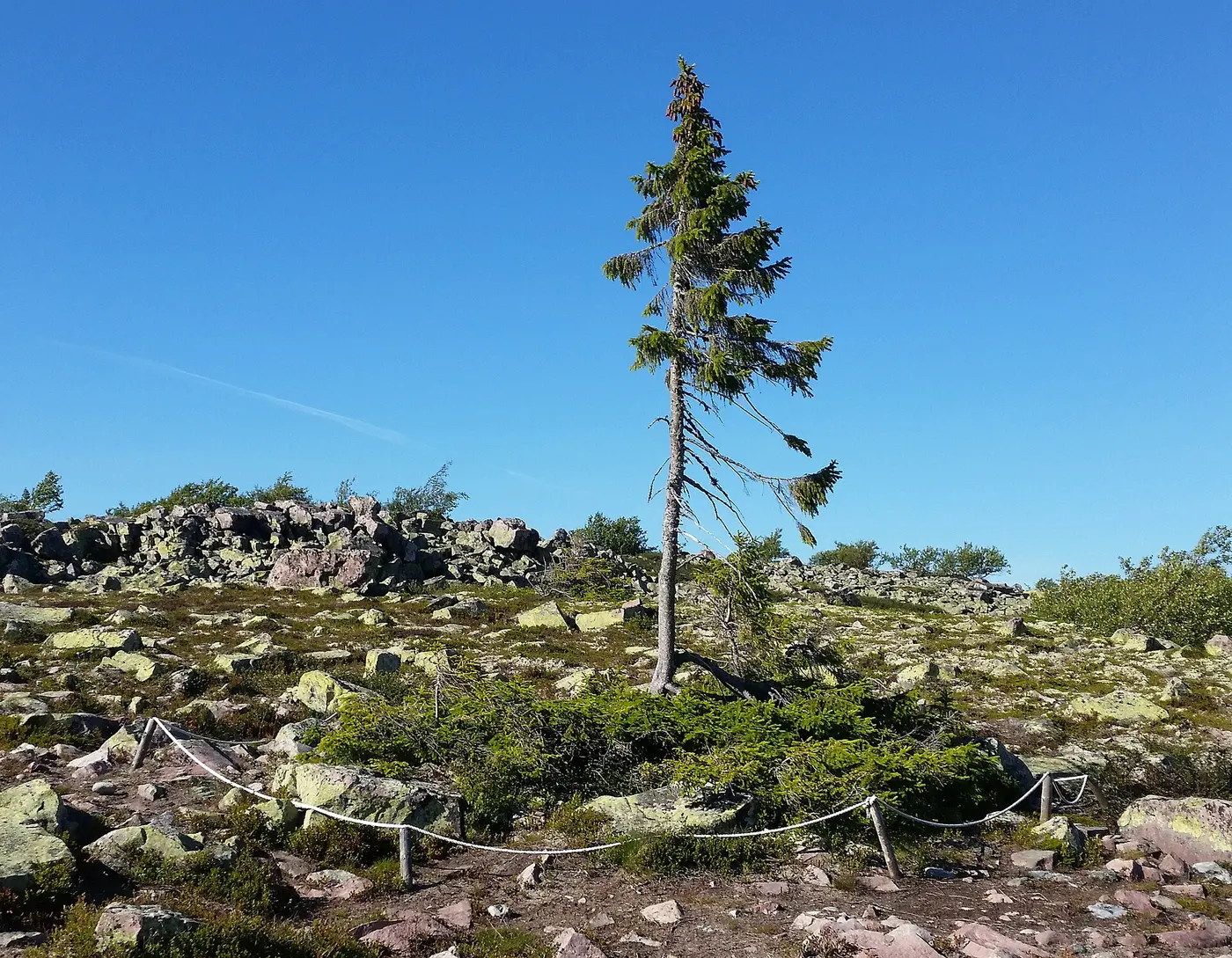

Among clones linked by their roots, some are estimated to be older still, such as Pando, the aspen grove in Utah. The oldest trunk that can be confirmed by its rings, or the oldest life connected through its roots? Depending on which yardstick you choose, the answer swings anywhere from several thousand to tens of thousands of years.