Is Everest really the tallest mountain in the world?
From sea level, yes. From the seafloor it’s Mauna Kea, and from Earth’s center it’s Chimborazo.
10,200m
Ask people to name the world’s tallest mountain, and nearly everyone will say Mount Everest. That answer is not wrong, of course. But it comes with a condition we rarely say out loud: “measured from sea level.”
To measure the height of a mountain, you have to put the “zero” of your yardstick somewhere. Put that zero somewhere other than sea level, and an entirely different mountain steps forward to claim the title.
The champion from sea level: Everest
Everest, towering in the Himalayas, was confirmed as the world’s highest peak in the mid-19th century. During the survey of India that Britain was carrying out at the time, surveyors measured angles to the summit from distant observation points and calculated its height using trigonometry. The mountain was first known simply by a number, “Peak XV,” and in 1856 its height was announced as about 29,002 feet. According to a well-known anecdote, the calculation actually came out to exactly 29,000 feet, but because such a round number might have been mistaken for a rough estimate, 2 feet were added before it was announced.
For a long time afterward, the standard figure was 8,848 meters, based on surveys from the 1950s. In 2020, China and Nepal remeasured the mountain jointly and announced a new elevation of 8,848.86 meters (about 29,032 feet). Known as Chomolungma in Tibet and Sagarmatha in Nepal, this mountain is the undisputed champion when it comes to height above sea level.
Measure from the ocean floor, and it’s Mauna Kea
But what if we measured mountains from their base instead?
Everest sits on top of the Tibetan Plateau and the Himalayan ranges, which are already very high to begin with. Mauna Kea, on the island of Hawaii, has an elevation of only about 4,207 meters, but its slopes continue all the way down to the deep floor of the Pacific Ocean. Measure from the base of the mountain to its summit, including the part hidden underwater, and its height comes to about 10,200 meters (roughly 33,500 feet). That beats Everest’s elevation by more than 1,000 meters.
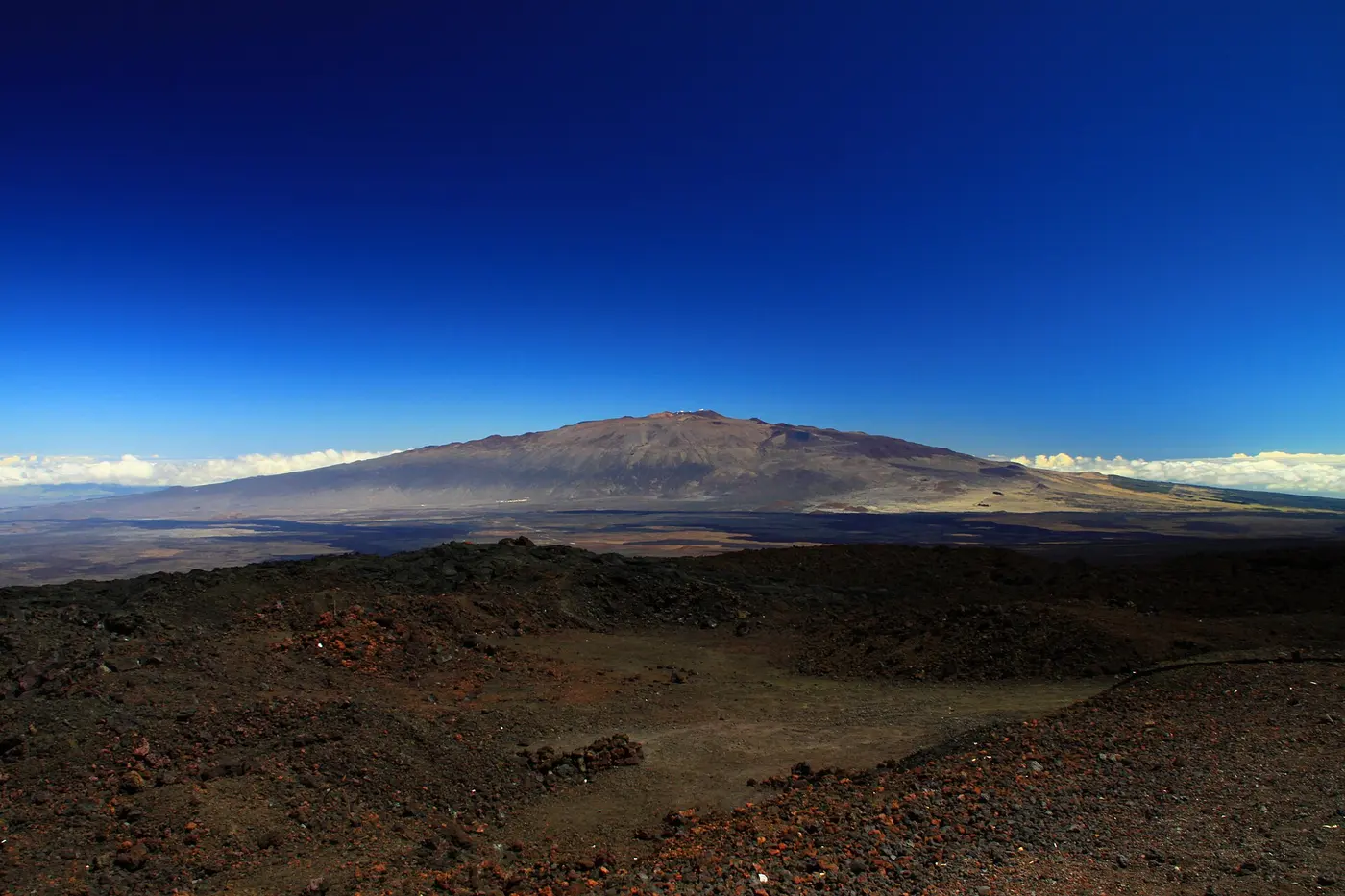

The Mauna Kea we can see is, quite literally, just the tip of the iceberg. More than half of the mountain is hidden beneath the sea. Because the air near the summit is clear and dry, it is also famous as a gathering place for observatories from around the world, including Japan’s Subaru Telescope.
Measure from Earth’s center, and it’s Chimborazo
We can even be bold and put the zero of our yardstick at the center of the Earth. The question then becomes: which mountain’s summit is closest to space?
This is where the shape of the Earth comes into play. Our planet is not a perfect sphere. Its rotation makes it bulge slightly around the equator, so the distance from the center to the equator is about 20 kilometers greater than the distance from the center to the North Pole.
The mountain that benefits most from this bulge is Chimborazo, in Ecuador in South America. At about 6,263 meters, it is more than 2,500 meters lower than Everest. But because it lies just south of the equator, it stands on top of the Earth’s bulge. As a result, its summit is about 6,384 kilometers from the center of the Earth—about 2 kilometers farther than the summit of Everest, which lies at around 28 degrees north.
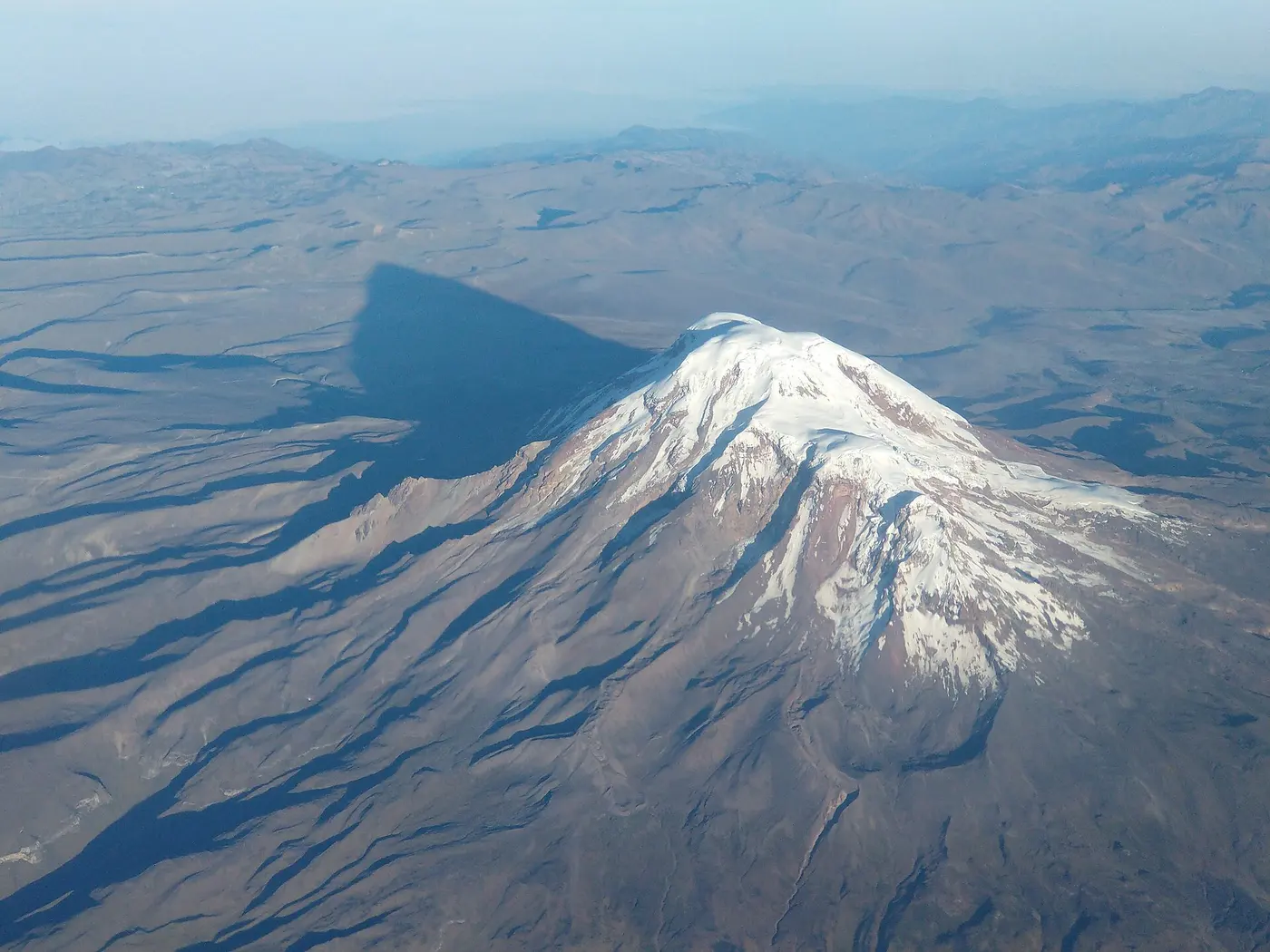

In fact, there was a time, before the Himalayas were properly surveyed, when Chimborazo was believed to be the highest mountain in the world. There is something rather satisfying about the way a change of yardstick puts the old champion back on the podium.
Tall compared with what?
Line them up like this, and you can see that the answer to “What is the world’s tallest mountain?” depends on how you ask the question. From sea level, it is Everest; from its base, Mauna Kea; from Earth’s center, Chimborazo. Each is correct, and each is the world’s tallest.
Sea level, the standard behind what we normally call “elevation,” is a handy convention for maps and mountaineering. But it is still just one yardstick that humans happened to choose. Look at the assumptions hidden behind numbers we take for granted, and our familiar planet starts to look a little different.